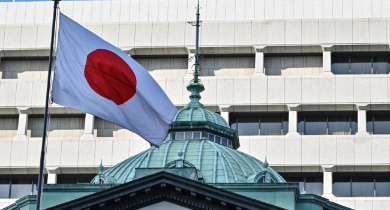
The Bank of Japan (BoJ) has raised its benchmark interest rate by 25 basis points to 1.0 per cent, marking a 31-year high as it moves to contain inflationary pressures linked to the ongoing Middle East conflict.
The decision, announced on Tuesday, is the first rate hike since December and lifts borrowing costs in Japan to their highest level since 1995. It comes amid global economic turbulence triggered by the recent war in the Middle East, even after reports of a peace deal between the United States and Iran.
The BoJ said the Japanese economy has remained relatively supported by strong corporate earnings and improving employment conditions, despite higher crude oil prices weighing on economic activity.
“While higher crude oil prices have been exerting downward pressure on economic activity, the economy has generally been supported by factors such as high levels of corporate profits and an improvement in the employment and income situation,” the central bank stated.
Japan’s consumer price index has remained below the BoJ’s 2 per cent target, partly due to government energy subsidies. However, the central bank warned that rising oil prices are increasingly feeding into business costs and could eventually spill over into consumer inflation.
“Price pass-through stemming from the rise in crude oil prices has been progressing at a relatively fast pace in business-to-business transactions, which could spread to an increase in consumer prices across a wide range of items,” it said.
The bank also noted that inflation expectations in the medium to long term have been rising, increasing the risk of underlying inflation exceeding its 2 per cent stability target.
Looking ahead, the BoJ said it would continue tightening monetary policy gradually while closely monitoring developments in global energy markets and geopolitical risks.
“In this regard, it will consider the timing and pace of adjustment, while closely monitoring the impact of the future course of the situation in the Middle East on Japan’s economic activity and prices,” the bank said.
The rate hike follows global monetary tightening trends, including recent increases by the European Central Bank and Indonesia, as central banks respond to rising energy prices and inflationary pressures linked to supply disruptions.
The United States and Iran recently agreed to end a three-month conflict and reopen the Strait of Hormuz, a critical global oil shipping route through which about one-fifth of global crude previously passed.
However, analysts say it may take time for global trade flows and oil supply chains to fully normalise, meaning inflationary pressure could persist in the near term.
Japan, which relies on the Middle East for around 90 per cent of its crude oil imports, has been particularly exposed to energy market volatility.
The country’s economy has also been affected by a weakening yen, driven by high oil prices and the widening interest rate gap between Japan and the United States. The yen recently traded near 160 against the dollar, prompting government intervention estimated at about 11.7 trillion yen ($72 billion) to stabilise the currency.
Following the BoJ’s announcement, the yen briefly strengthened, while Japan’s Nikkei 225 index climbed above 70,000 points for the first time.
BoJ Deputy Governor Shinichi Uchida is expected to brief the media following the decision, standing in for Governor Kazuo Ueda, who is currently hospitalised.
The central bank remains under pressure to balance inflation control with economic growth concerns, as policymakers debate the pace of further tightening amid political and market sensitivities. One board member voted against the rate hike, signalling internal divisions over the policy direction.