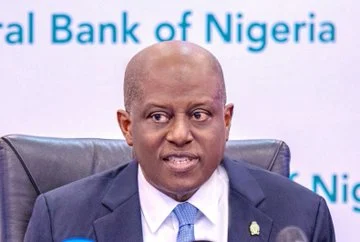
The Central Bank of Nigeria has confirmed that 30 banks have successfully met the new minimum capital requirements under the ongoing banking sector recapitalisation programme.
The announcement was made on Thursday by the Governor of the Central Bank of Nigeria, Olayemi Cardoso, during a Distinguished Alumni Lecture at St Gregory’s College in Lagos.
The development marks a key milestone as the March 31, 2026 compliance deadline for the recapitalisation exercise approaches.
Cardoso described the recapitalisation programme as a strategic reform aimed at strengthening the country’s financial system and positioning banks to support Nigeria’s long-term economic growth.
“This initiative is much more than a regulatory adjustment,” Cardoso said during his address.
“It is a strategic reform designed to ensure that Nigeria’s banking sector is strong enough to support the scale of investment needed for the country’s economic transformation,” he added.
The CBN governor explained that stronger capital bases would deliver significant benefits for both the banking sector and the wider economy.
According to him, increased capital would improve the resilience of banks, enhance their ability to support businesses through lending, and boost confidence among depositors and investors.
“Strong capital brings three critical benefits,” Cardoso explained.
“First, it protects banks against unexpected shocks. Second, it expands their ability to lend, supporting businesses and economic activity across the country. And third, it strengthens confidence among depositors, investors, and international partners.”
The Central Bank also disclosed that a total of 33 banks have raised additional capital through various channels, including rights issues, initial public offerings, and private placements.
While 30 banks have already satisfied the capital requirements for their respective licence categories, the remaining institutions are currently undergoing the regulator’s routine verification process.
The verification is being conducted in line with the established compliance timeline ahead of the March deadline.
Reflecting on the broader impact of the reforms, Cardoso emphasised the importance of confidence within the financial system.
“In finance, confidence is everything,” he said.
He also noted that the recapitalisation programme forms part of a wider strategy by the Central Bank to strengthen the country’s financial environment.
According to him, the bank’s return to orthodox monetary policy has also contributed to efforts aimed at stabilising Nigeria’s economy.
Looking ahead, Cardoso encouraged young Nigerians to view the evolving financial landscape as an opportunity.
“By combining innovation with discipline, technology with integrity, and opportunity with responsibility, we can ensure that Nigeria’s financial system not only adapts to the digital age but thrives in it,” he said.