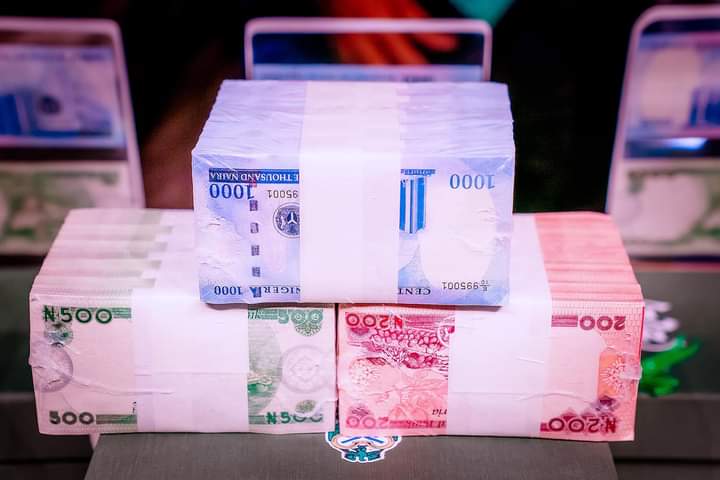
The Central Bank of Nigeria (CBN) has announced a major revision of its cash withdrawal policy, with the new rules set to take effect from January 1, 2026.
Under the revised framework, the apex bank has scrapped the special authorisation that previously allowed individuals to withdraw up to ₦5 million and corporate entities ₦10 million once monthly.
According to a circular released on Tuesday, December 2, 2025, and signed by the Director of the Financial Policy & Regulation Department, Dr. Rita I. Sike, the new measures are designed to reduce the cost of cash management, strengthen security, and curb money laundering risks linked to heavy reliance on physical cash.
The CBN explained that earlier cash policies were introduced in response to evolving economic conditions but now require streamlining to reflect present-day realities.
“These policies, issued over the years in response to evolving circumstances in cash management, sought to reduce cash usage and encourage accelerated adoption of other payment options, particularly electronic payment channels. With the effluxion of time, the need has arisen to streamline the provisions of these policies to reflect present-day realities,” the CBN stated.
Under the new rules: Individuals may withdraw up to ₦500,000 per week across all channels, Corporate entities are limited to ₦5 million per week.
Withdrawals above these limits will attract excess withdrawal charges of 3% for individuals and 5% for corporates. The charges will be shared between the CBN and financial institutions.
Daily withdrawals from Automated Teller Machines (ATMs) will now be capped at ₦100,000 per customer, with a weekly maximum of ₦500,000. These figures will count toward the cumulative weekly withdrawal limit.
The apex bank also confirmed that all currency denominations may now be loaded in ATMs. Meanwhile, the over-the-counter encashment limit for third-party cheques remains ₦100,000, and such transactions will also form part of the weekly withdrawal limit.
Deposit Money Banks (DMBs) are required to: Submit monthly reports on cash withdrawals above the approved thresholds, Report on cash deposits to the relevant supervisory departments, Create separate accounts to warehouse charges collected on excess withdrawals.
The revised policy exempts revenue-generating accounts of federal, state, and local governments, as well as the accounts of microfinance banks and primary mortgage banks, from both the new withdrawal limits and excess charges.
However, the CBN confirmed that exemptions previously granted to embassies, diplomatic missions, and donor agencies have now been withdrawn.
The bank added that the new circular supersedes some earlier directives, while remaining consistent with others as outlined in its appendices.