ADVERTISEMENT
  • Africa
  • World
  • Our Shows
    • Entrepreneurship
    • Destination Business
    • 101business TV Show
Business 360 News
  • Home
  • Africa
    • East Africa
    • West Africa
    • South Africa
  • News
    • Feature
  • Economy
    • Maritime
    • Agriculture
      • Agribusiness
    • Energy
      • Electricty
      • Oil
      • Petrol
      • Gas
  • Finance
    • Insurance
    • Tax
    • Real Estate
  • Capital Market
  • Tech
    • ICT
    • Solar Energy
    • Electric Vehicles
    • Blockchain
    • IoT
    • AI
    • EV
  • SMEs
    • Success Stories
    • Start-Ups
    • Entrepreneurship
  • Global Economy
    • UK
    • US
    • Russia
    • CHINA
    • Japan
  • Business 360 Weekly
No Result
View All Result
  • Home
  • Africa
    • East Africa
    • West Africa
    • South Africa
  • News
    • Feature
  • Economy
    • Maritime
    • Agriculture
      • Agribusiness
    • Energy
      • Electricty
      • Oil
      • Petrol
      • Gas
  • Finance
    • Insurance
    • Tax
    • Real Estate
  • Capital Market
  • Tech
    • ICT
    • Solar Energy
    • Electric Vehicles
    • Blockchain
    • IoT
    • AI
    • EV
  • SMEs
    • Success Stories
    • Start-Ups
    • Entrepreneurship
  • Global Economy
    • UK
    • US
    • Russia
    • CHINA
    • Japan
  • Business 360 Weekly
No Result
View All Result
Business 360 News
No Result
View All Result
Home Finance

Chapel Hill Denham Warns CBN Banking Structure Is Hurting Nigerian Banks’ Competitiveness

Victoria Emeto by Victoria Emeto
May 18, 2026
in Finance
0
CBN Bars Banks from Granting Credit to Large Borrowers with Non-Performing Loans

Investment banking and research firm Chapel Hill Denham has raised concerns over the structure of Nigeria’s banking regulation, warning that the framework is creating an uneven competitive environment for local lenders and forcing them to over-capitalise operations across Africa.

The firm made the observation in its report titled “The Nigerian Banking Paradox: High Returns, Deep Discounts,” which examined how Nigeria’s supervisory banking model affects the competitiveness and valuation of domestic financial institutions.

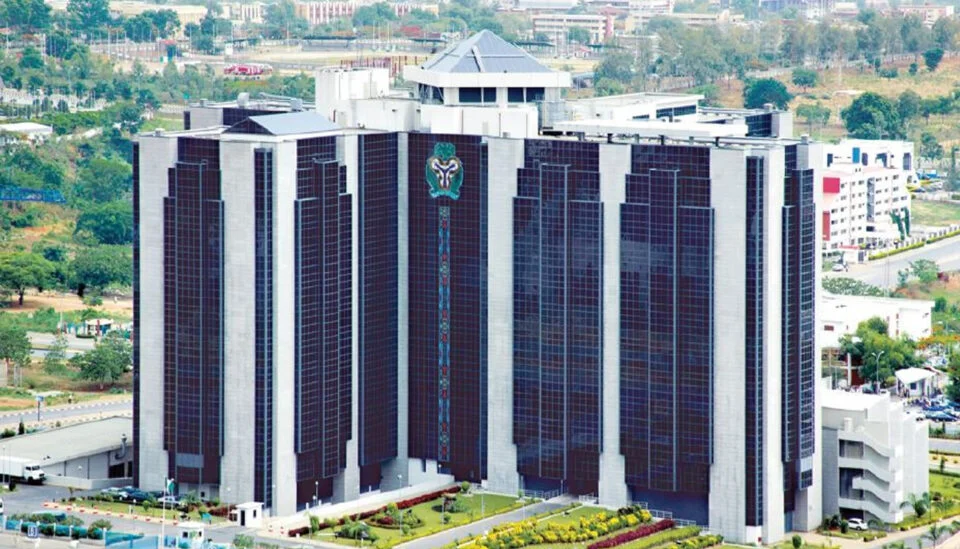
According to the report, Nigeria operates a consolidated supervision model that differs from the “segregation model” commonly used in several African countries. Under Nigeria’s system, all international banking operations are consolidated under the Nigerian parent bank, placing the entire banking group under the oversight of the Central Bank of Nigeria.

Chapel Hill Denham explained that the structure gives the apex bank complete visibility into banking exposures and allows it to avoid regulatory loopholes often associated with fragmented supervision.

“All international operations are consolidated into the Nigerian bank, giving the CBN full group-wide oversight responsibility, complete visibility of all exposures, and the ability to avoid the regulatory gaps that fragmented supervision can create,” the report stated.

However, the investment firm argued that the system imposes significant costs on Nigerian banks. These include higher capital requirements, strict cash reserve obligations, and extensive compliance reporting.

The report noted that the framework has created what it described as an “unlevel domestic playing field” between Nigerian banks and foreign-owned lenders operating in the country.

According to Chapel Hill Denham, international banks such as Standard Chartered Nigeria, Citibank Nigeria, and Stanbic IBTC Holdings can operate local subsidiaries with a minimum capital requirement of N200 billion, the same threshold applied to domestically-focused institutions.

In contrast, Nigerian banks seeking international licences are required to maintain a minimum capital base of N500 billion.

The report said the N300 billion capital gap gives foreign banks greater flexibility to channel funds into profitable Nigerian business segments, while Nigerian lenders are compelled to maintain significantly larger capital buffers to support regional expansion plans.

Chapel Hill Denham further stated that Nigerian banks tend to over-capitalise their subsidiaries across Africa relative to local market requirements in those countries.

Despite the added regulatory burden, the report acknowledged that Nigerian banks benefit from being perceived as highly capitalised institutions, which strengthens their credibility and helps them secure regulatory approvals in other African markets.

Last month, the CBN confirmed that 33 banks successfully met the revised minimum capital requirements introduced under its recapitalisation programme.

Under the revised framework:

International banks are required to maintain a minimum capital base of N500 billion.

National banks must hold at least N200 billion.

Regional banks are required to maintain N50 billion.

Non-interest banks must maintain N20 billion for national licences and N10 billion for regional licences.

The apex bank disclosed that the banking industry raised N4.65 trillion during the 24-month recapitalisation exercise. It also stated that capital adequacy ratios across the sector now exceed Basel regulatory benchmarks.

According to the CBN, about 72.55 percent of the funds raised came from domestic investors, reflecting rising local investor confidence in the banking sector.

The report also highlighted structural limitations linked to Nigeria’s Financial Holding Company framework and the Companies and Allied Matters Act.

Chapel Hill Denham noted that current regulations only permit two layers of corporate hierarchy, unlike the more flexible multi-layered structures used in Europe and Asia.

Another major concern identified in the report is the 10 percent rule under BOFIA Section 19(8)(c), which caps aggregate equity investments in foreign subsidiaries at 10 percent of shareholders’ funds unimpaired by losses.

“In practice, this 10% cap now binds most tightly on cross-border banking subsidiaries, not just on non-bank ventures such as fintechs or insurance,” the report stated.

The investment firm warned that as foreign subsidiaries continue to grow, Nigerian banks may be forced to either raise additional capital locally or reduce ownership stakes in overseas operations.

Chapel Hill Denham argued that Nigeria’s banking framework prevents foreign operations from being structurally separated from the Nigerian parent bank, increasing the capital burden on local lenders compared to competitors in countries such as South Africa, Kenya, and Morocco.

The report also criticised the CBN’s Cash Reserve Ratio policy, warning that the sector could be losing trillions of naira annually due to the current framework.

According to Chapel Hill Denham, the effective 50 percent Cash Reserve Ratio sterilises half of customer deposits without interest payments, limiting profitability, capital efficiency, and investor valuation despite Nigerian banks posting some of the strongest returns on equity across Africa.

The firm added that macroeconomic uncertainty and regulatory constraints continue to weigh heavily on Nigerian bank valuations compared to peers in other African markets.


Previous Post

Nigeria Secures Ratings Trifecta as S&P Upgrades Sovereign Credit Score to “B”

Next Post

Niger Chamber Hails Dangote Group as Driver of Africa’s Industrial Transformation

Victoria Emeto

Victoria Emeto

Next Post
Dangote Group Records First Oil from Upstream Assets, Targets Higher Output

Niger Chamber Hails Dangote Group as Driver of Africa’s Industrial Transformation

Leave a Reply Cancel reply

Your email address will not be published. Required fields are marked *

  • Trending
  • Comments
  • Latest
FMDQ Exchange Admits Flour Mills of Nigeria’s ₦30.00bn Commercial Paper Notes

FMDQ Admits TSL SPV PLC ₦12.00 billion Series 1 Guaranteed Fixed Rate Infrastructure Bond to its Platform

March 11, 2021
NCAC inaugurates Creative Industry Sub-Committees

NCAC inaugurates Creative Industry Sub-Committees

September 20, 2020
#EndSARS: Protesters receive heavy gun fire at Lekki toll gate

#EndSARS: Protesters receive heavy gun fire at Lekki toll gate

October 21, 2020
SMEs in Nigeria must be ready to grow with or without Government …Evans Edozie, C.E.O., Cospharma Nig. Ltd.

SMEs in Nigeria must be ready to grow with or without Government …Evans Edozie, C.E.O., Cospharma Nig. Ltd.

September 21, 2020
‘The existence of a production hub in Nigeria will go a long way for the Fashion Industry’. FUNMI RUFAI LADIPO, President Fashion Designers Association of Nigeria.(FADAN)

‘The existence of a production hub in Nigeria will go a long way for the Fashion Industry’. FUNMI RUFAI LADIPO, President Fashion Designers Association of Nigeria.(FADAN)

25
Goldlink’s restructures board

Goldlink’s restructures board

10
Airtel Africa Plc gets admitted to the NSE Main Board

Airtel Africa Plc gets admitted to the NSE Main Board

6
Stallion Tank Farm resumes operations

Stallion Tank Farm resumes operations

3
DAPPMAN Opposes Dangote Refinery’s Fresh Lawsuit Over Fuel Import Licences

DAPPMAN Opposes Dangote Refinery’s Fresh Lawsuit Over Fuel Import Licences

May 18, 2026
Dangote Group Records First Oil from Upstream Assets, Targets Higher Output

Niger Chamber Hails Dangote Group as Driver of Africa’s Industrial Transformation

May 18, 2026
CBN Bars Banks from Granting Credit to Large Borrowers with Non-Performing Loans

Chapel Hill Denham Warns CBN Banking Structure Is Hurting Nigerian Banks’ Competitiveness

May 18, 2026
Nigeria Secures Ratings Trifecta as S&P Upgrades Sovereign Credit Score to “B”

Nigeria Secures Ratings Trifecta as S&P Upgrades Sovereign Credit Score to “B”

May 18, 2026
Business 360 News

Business 360 News is a Business and Financial News Platform with an SMEs drive. Published by 360 Network Limited, and created with the aim of disseminating unbiased business stories to readers within and outside Nigeria, providing in-depth analysis of our stories from a critical perspective against the backdrop of realities, actualities, objectivity and balance.

Follow Us

Browse by Category

  • Africa
  • Agribusiness
  • Agriculture
  • AI
  • Art
  • Arts
  • Aviation
  • Banking
  • Blockchain
  • Business 360 Weekly
  • Business news
  • Business Travels
  • Capital Market
  • CHINA
  • Corporate
  • Cryptocurrency
  • Destination Business
  • East Africa
  • Economy
  • Education
  • Electric Vehicles
  • Electricty
  • Energy
  • Entertainment
  • Entertainment
  • Entrepreneurship
  • EV
  • Fashion
  • Fashion
  • Feature
  • Finance
  • Gas
  • Global Economy
  • Health
  • Hospitality
  • ICT
  • Insurance
  • IoT
  • Japan
  • Lifestyle
  • Luxury
  • Maritime
  • Meetings
  • Mortgage
  • News
  • NGOs
  • Oil
  • Petrol
  • Political Economy
  • politics
  • Real Estate
  • Real Estate
  • SMEs
  • Society
  • Solar Energy
  • South Africa
  • Sports
  • Start-Ups
  • Stocks
  • Success Stories
  • Tax
  • Tech
  • Tourism
  • Transportation
  • UK
  • Uncategorized
  • US
  • World

Recent News

DAPPMAN Opposes Dangote Refinery’s Fresh Lawsuit Over Fuel Import Licences

DAPPMAN Opposes Dangote Refinery’s Fresh Lawsuit Over Fuel Import Licences

May 18, 2026
Dangote Group Records First Oil from Upstream Assets, Targets Higher Output

Niger Chamber Hails Dangote Group as Driver of Africa’s Industrial Transformation

May 18, 2026
  • Africa
  • World
  • Our Shows

© Business 360 News - Business, Finance And SMEs News | Design by Manifest!

No Result
View All Result
  • Home
  • Africa
    • East Africa
    • West Africa
    • South Africa
  • News
    • Feature
  • Economy
    • Maritime
    • Agriculture
      • Agribusiness
    • Energy
      • Electricty
      • Oil
      • Petrol
      • Gas
  • Finance
    • Insurance
    • Tax
    • Real Estate
  • Capital Market
  • Tech
    • ICT
    • Solar Energy
    • Electric Vehicles
    • Blockchain
    • IoT
    • AI
    • EV
  • SMEs
    • Success Stories
    • Start-Ups
    • Entrepreneurship
  • Global Economy
    • UK
    • US
    • Russia
    • CHINA
    • Japan
  • Business 360 Weekly

© Business 360 News - Business, Finance And SMEs News | Design by Manifest!