Djibouti continues to occupy an important position in regional security and humanitarian discussions because of its location between the Horn of Africa and the Arabian Peninsula.
The country sits close to the Bab el-Mandeb Strait, a major maritime passage connecting the Red Sea to the Gulf of Aden and the wider Indian Ocean.
Its geographical position makes it an important point for international shipping, regional trade and military activities.
However, the same location also exposes the country to the effects of instability in neighbouring regions, particularly the Horn of Africa and Yemen.
One of the major humanitarian concerns affecting the wider region is the movement of people fleeing conflict and insecurity.
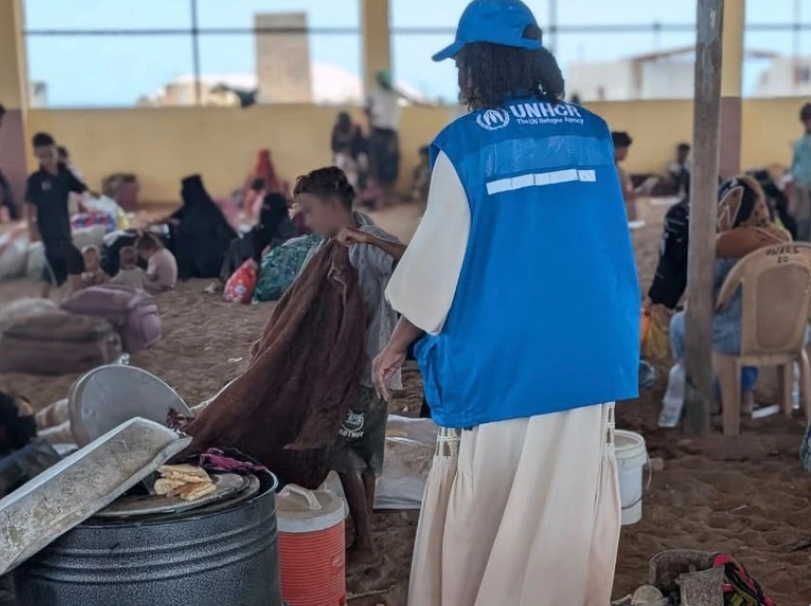
In September 2026, the United Nations High Commissioner for Refugees (UNHCR) reported that escalating hostilities along Yemen’s western coast had displaced more than 100,000 people within the country and forced thousands more to seek safety in Djibouti.
The development highlighted the humanitarian importance of Djibouti as a destination for people escaping violence across the Bab el-Mandeb Strait.
Yemen conflict increases displacement concerns
The conflict in Yemen has continued to create serious humanitarian challenges for communities across the country.
According to UNHCR, fighting along Yemen’s western coast forced families to leave their homes, with many crossing into neighbouring areas in search of safety.
Some displaced families arrived in Djibouti after travelling across the sea.
The movement of refugees places additional pressure on humanitarian organisations responsible for providing shelter, food, healthcare and other essential assistance.
Families fleeing conflict often arrive with limited belongings and require immediate support.
For host communities, increasing displacement can also create additional demands on public services and local infrastructure.
Djibouti’s geographical position makes it particularly relevant to humanitarian responses involving people moving between Yemen and the Horn of Africa.
Bab el-Mandeb remains important to global shipping
Beyond humanitarian concerns, the Bab el-Mandeb Strait is one of the world’s strategically important maritime passages.
The narrow waterway connects the Red Sea to the Gulf of Aden and provides a route towards the Suez Canal, which is important for trade between Europe, Asia and other international markets.
Disruptions in the region can affect shipping schedules, insurance costs and international supply chains.
Security threats around the Red Sea and Gulf of Aden have therefore attracted considerable attention from shipping companies, governments and international security organisations.
Djibouti’s location near this corridor has strengthened its strategic importance in international maritime affairs.
The country also hosts several foreign military facilities, reflecting its importance to international security operations in the region.
Humanitarian response remains essential
The humanitarian situation requires continued cooperation between Djibouti’s authorities, international organisations and humanitarian partners.
Support for displaced families includes access to temporary accommodation, medical assistance, clean water and protection services.
Longer-term responses are also important because displacement can continue even after immediate fighting decreases.
Refugees may require assistance with education, employment and integration into host communities.
The situation also demonstrates the relationship between security, migration and economic stability in the Horn of Africa.
For Djibouti, managing humanitarian needs while maintaining its role as an important regional transport and maritime centre remains a significant challenge.
The September UNHCR report provides an important picture of the humanitarian pressures linked to the Yemen conflict. It should not, however, be interpreted as a newly announced development on 23 November without a more recent update.