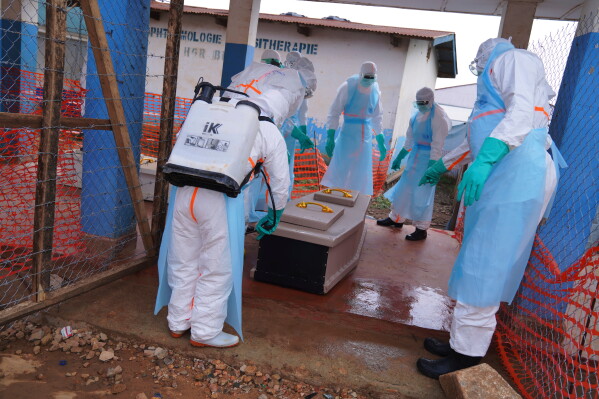
The Ebola outbreak in the Democratic Republic of Congo is showing signs of improvement, with new infections falling by more than 20 per cent, although the World Health Organisation has warned that transmission remains elevated in several communities.
WHO officials said incident cases declined by 20.3 per cent, while deaths dropped by 24.2 per cent across the latest two 14-day periods.
As of September 26, health authorities had recorded 8,067 confirmed cases, including 3,901 deaths and 2,070 recoveries.
The outbreak has spread across 63 health zones in seven provinces — Haut-Uele, Ituri, Nord-Kivu, Sud-Kivu, Tshopo, Bas-Uele and Sud-Ubangi.
Ituri Remains Major Concern
The decline in infections represents an encouraging development after months of intense transmission.
In Ituri, one of the areas significantly affected by the outbreak, case incidence has gradually declined from the peak recorded in mid-August.
However, the improvement is uneven.
WHO identified Mandima, Nia Nia and Mongbwalu among areas where transmission trends remain particularly concerning.
That means declining national numbers cannot yet be interpreted as the outbreak being brought fully under control.
Early Treatment Could Save More Lives
One of the most serious problems confronting health workers is the number of patients dying outside medical facilities.
WHO has stressed that receiving care early can significantly improve a patient’s prospects of survival.
However, many people continue to die at home or within their communities because they cannot reach appropriate health facilities quickly enough.
Delays in seeking treatment, combined with problems involving access and patient referrals, continue to complicate the outbreak response.
Health Infrastructure Remains Critical
The situation highlights how controlling infectious disease outbreaks depends on more than identifying the pathogen.
Communities require functioning clinics, trained personnel, transport systems, referral mechanisms and sufficient medical supplies.
WHO officials have also stressed the importance of reliable oxygen availability for severely ill patients.
The latest decline in infections and fatalities therefore offers cautious encouragement, but the size of the outbreak and continued transmission in individual hotspots mean public-health interventions remain critical.
The priority for authorities will be sustaining the downward trend while improving early detection and ensuring infected people reach treatment before their condition becomes critical.