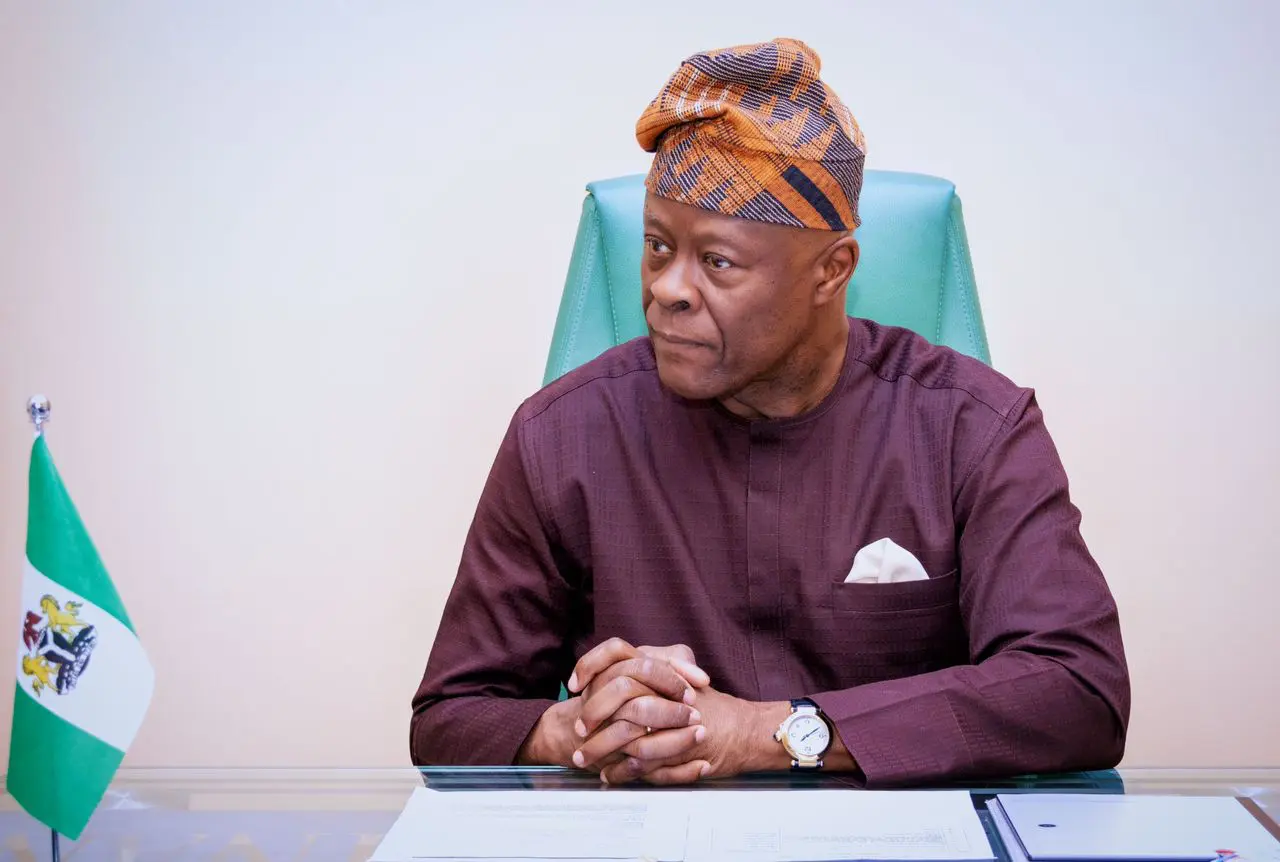
Nigeria’s Minister of Finance and Coordinating Minister of the Economy, Wale Edun, has warned that many African countries are grappling with commercial borrowing costs exceeding 10 per cent, describing the situation as unsustainable for development.
Edun made the remarks in an interview with China Global Television Network (CGTN) at the just-concluded African Union Summit in Addis Ababa, where African leaders deliberated on economic cooperation, financing gaps and development strategies.
According to him, “African economies and African countries are finding themselves paying well over 10% per annum for commercial debt.” He noted that such high interest rates make it difficult for governments to invest adequately in infrastructure, education, healthcare and industrialisation.
“That is not a sustainable way to finance development,” he said, adding that African nations are calling for reforms to the global financial system to enable fairer and lower borrowing rates.
Edun explained that sufficient global capital and technical expertise exist to design innovative risk-sharing mechanisms that could reduce borrowing costs for developing countries. He said better risk mitigation structures would encourage lenders to offer cheaper financing to African economies.
The minister also highlighted shifts in the global economic landscape, pointing to what he described as a gradual withdrawal from multilateral cooperation and a rules-based trading system. He warned that developing countries typically benefit from expanding global trade and that weakening multilateral frameworks could limit growth opportunities.
To counter these global headwinds, Edun said African nations must strengthen domestic economic fundamentals through reforms, prudent fiscal management and improved financial systems capable of absorbing external shocks.
He argued that existing international financial structures, designed decades ago, no longer adequately reflect current challenges such as climate change, rising debt burdens and constrained capital flows.
“A new developmental model, a new financing model, must come up,” he said.
Citing recent data, Edun noted that developing countries paid approximately $173 billion in debt servicing in 2024, while foreign direct investment into those economies remained below $100 billion. He said the imbalance means more resources are leaving developing nations to service debt than are entering through investment or development assistance.
He warned that the trend places significant strain on government budgets, diverting funds from growth-enhancing projects to debt repayments.
Edun concluded that improving access to affordable financing, alongside domestic economic reforms, is essential for Africa to achieve sustainable growth, reduce poverty and strengthen its competitiveness in the global economy.