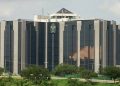
The Federal Government has earmarked N7bn for the ongoing solarisation of the Presidential Villa, Abuja, as part of efforts to address Nigeria’s persistent power supply challenges.
The allocation is contained in the 2026 Appropriation Bill submitted to the National Assembly in December, a copy of which was obtained by our correspondent.
According to the budget proposal, under the State House Headquarters, N7bn was set aside for the “solarisation of the Villa with solar mini-grid.” This follows a N10bn allocation for the same project in the 2025 budget.
The solarisation of the Presidential Villa suggests that the Federal Government may be joining other public and private institutions that have turned to alternative energy sources amid frequent national grid collapses. The move is also expected to reduce energy costs by cutting dependence on diesel-powered generators.
The project had attracted public criticism in 2025 after reports emerged that N10bn was allocated for a solar power installation at Aso Rock. However, the Director-General of the Energy Commission of Nigeria, Mustapha Abdullahi, defended the initiative, stating that it was unsustainable for the Presidential Villa to continue paying an estimated N47bn annually in electricity bills.
According to Abdullahi, the solar power project would provide uninterrupted and clean energy while reducing pressure on the national grid.
In the 2026 budget proposal, the State House also earmarked N311m for electricity charges. Records show that the State House spent a total of N483.34m on electricity bills in 2024, representing a 40.17 per cent increase from the N344.82m spent in 2023.
The budget further allocated N1.99bn for plant and generator costs, N22.23m for cooking gas, and N156.66m for fuelling motor vehicles.
Speaking on TVC News on Tuesday, the Managing Director of the Rural Electrification Agency, Abba Aliyu, said Nigeria currently has the highest number of people without access to electricity globally.
According to him, over 82 million Nigerians live in unserved or underserved areas, adding that the government has identified these communities and the most cost-effective means of providing them with electricity.
In the 2026 Appropriation Bill, the Federal Government allocated over N1.1tn to the power sector, an increase from the N900bn budgeted in 2025.
A breakdown of the proposal shows that the Ministry of Power received N1,107,103,148,958. Of this amount, capital expenditure accounted for N1.09tn, personnel costs stood at N4.21bn, while overhead costs were N6.17bn.
The Ministry of Power headquarters was allocated N418.86bn, while the Rural Electrification Agency received the highest allocation of N504.77bn. The Nigerian Electricity Management Services Agency got N6.1bn, the National Power Training Institute received N20.72bn, N2.11bn was set aside for Nigeria Electricity Liability Management Limited, while the Transmission Company of Nigeria was allocated N154.52bn.
However, stakeholders have raised concerns that the budget contains no explicit provision for electricity tariff support or subsidy payments, estimated by operators at about N200bn monthly.
Reacting to the development, the Managing Director and Chief Executive Officer of the Association of Power Generation Companies, Joy Ogaji, said the omission highlighted the level of priority accorded to the power sector.
She said the development suggested a shift away from explicit budgetary recognition of revenue shortfalls, effectively transferring the financial burden to operators across the power value chain, particularly generation companies and gas suppliers, who currently receive about 34 per cent of market payments amid delayed remittances and rising sector debts.