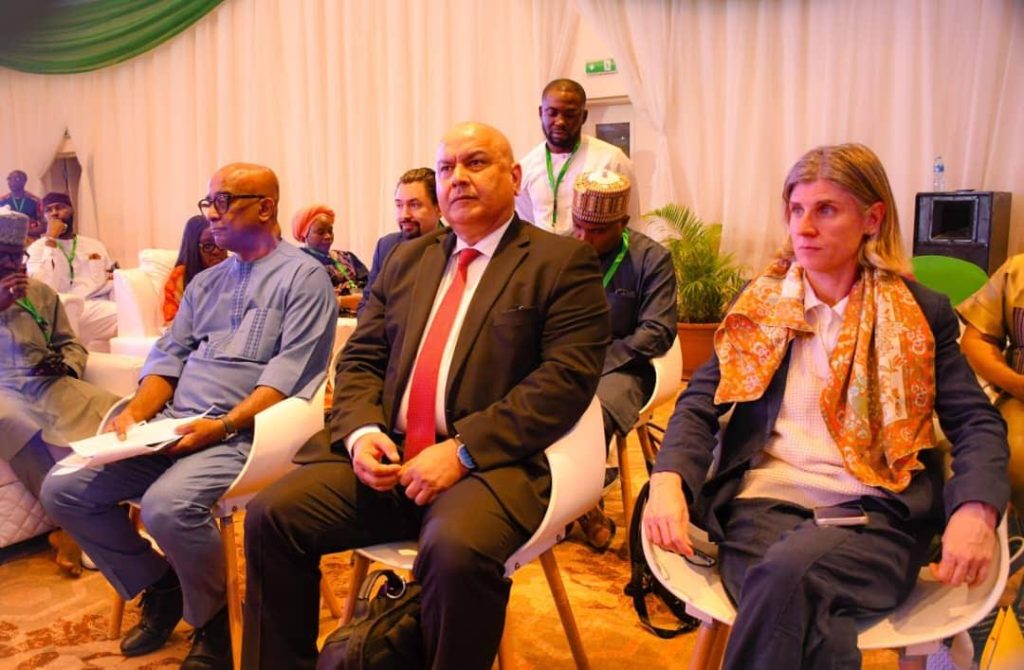
The Federal Government has launched the $500 million Sustainable Power and Irrigation for Nigeria (SPIN) Project, a major initiative designed to improve dam safety, expand irrigation infrastructure and increase hydropower generation across the country.
Speaking at the launch in Abuja, the Minister of Water Resources and Sanitation, Joseph Utsev, described the project as a strategic intervention aimed at improving water resource management and strengthening Nigeria’s food security.
Utsev explained that the project, supported by the World Bank, will modernise irrigation systems, optimise dam operations and integrate sustainable power generation to increase agricultural productivity and stimulate economic growth.
He said the initiative aligns with the Renewed Hope Agenda of Bola Ahmed Tinubu, which prioritises food security, economic resilience and sustainable infrastructure development.
The minister stressed the urgent need for Nigeria to reduce its heavy reliance on rain-fed agriculture due to increasing climate variability and unpredictable rainfall patterns.
“With increasing climate variability, erratic rainfall patterns and growing food demand, Nigeria must invest decisively in modern, climate-resilient irrigation systems,” Utsev said.
According to him, the SPIN Project is built around four key components. These include institutional strengthening for water resource management, modernisation of irrigation infrastructure, improvement of dam operations and safety, and effective project management.
Utsev also highlighted the importance of Water Users Associations (WUAs) in ensuring participatory irrigation management. He explained that farmers will take part in the operation and maintenance of irrigation facilities to ensure long-term sustainability.
The minister commended states that have already met the requirements to participate in the programme and encouraged others to take the necessary steps to benefit from the initiative.
“The opportunities presented by SPIN are significant, and the federal government remains committed to supporting all states prepared to meet the required conditions,” he added.
Also speaking at the event, the World Bank Country Director in Nigeria, Mathew Verghis, said recent economic reforms have helped stabilise the Nigerian economy and placed it on a new growth path.
He noted that the bank’s new Country Partnership Framework for 2026–2032 focuses on job creation, water security, food security and energy, while also strengthening collaboration with states and mobilising private sector investment.
Verghis said the SPIN Project builds on the success of the Transforming Irrigation Management in Nigeria (TRIMING) Project, which reached more than 1.7 million people and brought about 14,000 hectares of farmland under irrigation.
He added that SPIN will strengthen legal and institutional frameworks for Water Users Associations, promote participatory irrigation management, support hydropower investments and encourage public–private partnerships to expand farmer-led irrigation development.
According to him, the programme has already generated strong interest at the state level, with 31 states expressing interest and 23 meeting the eligibility criteria and moving towards technical implementation and funding disbursement.
The World Bank’s Global Director for Water, Saroj Kumar Jha, also noted that the project will improve water storage capacity, optimise dam performance and strengthen irrigation infrastructure to support food security and economic growth.
Jha said sustainable irrigation management through strong Water Users Associations will enable farmers maintain irrigation facilities while generating revenue through service fees.
He added that experiences from countries such as India, Indonesia and Vietnam show that participatory irrigation management significantly improves efficiency.
“The SPIN Project positions Nigeria as a model for water security and irrigation-led development in Africa. The World Bank remains committed to supporting the country in unlocking the economic potential of its water resources,” Jha said.