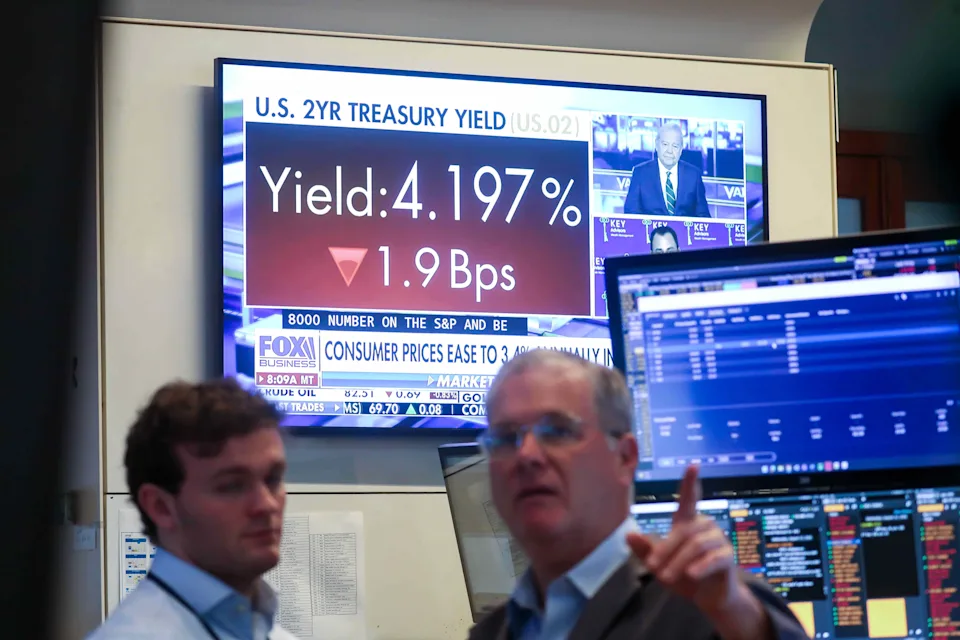
A global bond sell-off intensified as stronger-than-expected US economic data and weak demand at a government debt auction pushed Treasury yields to levels not seen in almost two decades.
The benchmark US 10-year Treasury yield stood around 5.11 per cent in Asian trading, after surging 15 basis points in the previous session.
It had climbed above 5 per cent for the first time since 2007 following weak demand at an auction of five-year US government notes, according to the Bloomberg report contained in the supplied roundup. Pasted text.txtTXT
Sell-Off Spreads Across Markets
The pressure quickly moved beyond the United States.
Government bonds declined across Japan, Australia and New Zealand, while emerging-market debt also came under pressure.
The dollar strengthened as traders increased expectations of further interest-rate increases by the US Federal Reserve.
That combination weighed on equities.
Asian stocks followed Wall Street lower, with the regional market falling about 0.6 per cent, while equity futures indicated that weakness could extend into European trading.
Higher Rates Raise Business Financing Costs
The rise in sovereign bond yields has significant implications for companies and governments.
Government debt typically provides a benchmark for pricing other forms of borrowing. When sovereign yields increase substantially, corporations may face higher costs when issuing bonds or refinancing existing obligations.
Companies with large debt requirements could therefore face additional financing pressure if elevated yields persist.
The repricing also affects equity valuations because investors can obtain higher returns from government securities, potentially making riskier assets less attractive.
Oil offered limited relief, with Brent crude retreating from its previous rally to trade around $102 per barrel in the period covered by the report.
For global markets, attention is increasingly shifting towards whether strong economic activity and elevated energy costs will force major central banks to maintain restrictive monetary conditions for longer than investors previously expected.