The Lagos Chamber of Commerce and Industry has projected a possible reduction in fuel prices in the coming days following the end of hostilities between the United States and Iran and the anticipated reopening of the Strait of Hormuz.
However, the chamber warned that lower fuel prices alone may not be enough to significantly improve Nigeria’s business environment, as inflation and high operating costs continue to weigh heavily on businesses and households.
President of the Lagos Chamber of Commerce and Industry, Leye Kupoluyi, stated that inflation remains a major challenge despite government efforts to stabilise prices.
His comments followed the latest report by the National Bureau of Statistics, which showed that headline inflation rose to 15.93 per cent in May 2026 from 15.69 per cent in April, marking the third consecutive monthly increase. Food inflation reached 16.96 per cent year-on-year, while the Consumer Price Index climbed to 140.7 in May from 138.3 in April.
Speaking in an interview, Kupoluyi said official inflation figures do not fully capture the difficult realities confronting businesses and consumers.
“I observed that while the numbers tell one story, the business environment tells another. Inflation continues to weigh heavily on manufacturers, MSMEs, traders and consumers due to rising costs for food, transportation, energy and logistics. Government intervention has helped prevent a surge, but containment is not comfort,” he said.
According to him, businesses continue to struggle with declining consumer demand and shrinking profit margins despite improvements in some macroeconomic indicators.
“The gap between nominal and real GDP growth confirms that prices are still eroding household income, and businesses are feeling that directly, in weaker footfall, compressed margins and cautious consumer spending. Despite inflation dropping sharply from year-ago levels, many Nigerians are yet to feel meaningful relief due to weak purchasing power and elevated business costs,” Kupoluyi stated.
He also pointed to the impact of the Central Bank of Nigeria’s Monetary Policy Rate, which remains at 26.5 per cent, making access to affordable credit difficult for businesses and consumers.
“With the MPR still elevated at 26.5 per cent, borrowing costs remain high, limiting credit growth, business expansion and consumer demand. Simultaneously, the power sector contracted 15.30 per cent in Q1 2026, meaning businesses are spending more to generate their own electricity, and that cost is being passed through to already price-sensitive consumers,” he said.
Kupoluyi described the business environment in May as one focused on survival rather than expansion.
“The business environment in May was one of cautious survival, not confident growth. The reforms are working at the macro level, but until energy costs fall, credit becomes accessible and food supply chains are secured, the private sector will remain in a holding pattern, resilient but not yet thriving,” he added.
Despite the challenges, the LCCI president expressed optimism that recent geopolitical developments could provide some relief.
“With the good news about the end of the US-Iran war and the possible opening of the Strait of Hormuz, we could see a drop in fuel prices soon. But without sustained relief from the high cost of doing business, we may still experience a tense business environment in the short term,” Kupoluyi said.
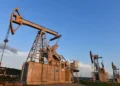
Oil prices have continued to decline following a ceasefire agreement between the United States and Iran aimed at restoring stability in the Middle East and reopening the Strait of Hormuz, a critical global oil shipping route.
Brent crude reportedly dropped from $87 per barrel to $83 per barrel after the peace agreement was announced, fueling expectations that petrol prices in Nigeria could decline to around N900 per litre if global market conditions remain favourable.
Also commenting on the inflation trend, Deputy President of the National Association of Small-Scale Industrialists, Segun Kuti-George, attributed rising prices to geopolitical tensions and disruptions in global oil trade.
“Inflation has certainly been on an upward trend extensively because of the war in Iran. Coupled with the closure of the Hormuz Strait by Iran and the blockade by the U.S., which has negatively impacted 20 per cent of petroleum-produced trade,” Kuti-George said.
He noted that rising energy costs have significantly affected both households and manufacturers.
“The impact has been huge. It has affected not only the households, but the manufacturers,” he stated.
Kuti-George added that while petrol prices have shown signs of moderation in some areas, cooking gas remains unaffordable for many Nigerians.
“You have a kilogramme of gas selling for N2,000 to N2,500 in a lot of places. Where it is a little bit less than that, the queue that you will find there is frustrating,” he said.
He expressed hope that the easing of tensions in the Middle East would reduce pressure on global petroleum markets, lower energy costs and contribute to moderating inflation in Nigeria.
Industry stakeholders believe that while lower fuel prices may provide temporary relief, sustainable economic improvement will depend on broader reforms that address energy costs, access to credit, food security and the overall cost of doing business in the country.