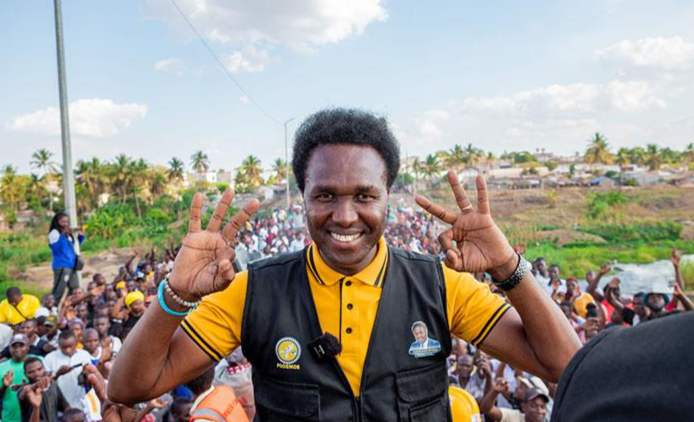
Mozambique’s opposition leader, Venâncio Mondlane, has gone on trial at the country’s Supreme Court over his alleged involvement in protests and demonstrations that followed the disputed 2024 presidential election.
The proceedings, which began on Tuesday, November 17, 2026, have attracted national and international attention because of their potential implications for political opposition, democratic institutions and the country’s judicial system.
Mondlane, a former presidential candidate and prominent opposition politician, faces several charges, including inciting terrorism, public incitement to commit crimes and encouraging collective disobedience.
The allegations are connected to his calls for demonstrations and work boycotts after he rejected the results of the October 2024 presidential election.
The election returned the ruling Frelimo party to power, with Daniel Chapo declared the winner. However, Mondlane and his supporters challenged the outcome, alleging irregularities and demanding greater transparency in the electoral process.
Following the announcement of the results, Mozambique experienced widespread demonstrations, political tension and clashes between protesters and security forces.
The protests affected several parts of the country and disrupted economic and commercial activities. Human rights organisations also raised concerns about the handling of demonstrations and the use of force against protesters.
Mondlane has consistently denied the allegations against him. He maintains that his public statements and political activities were intended to demand electoral transparency and accountability rather than encourage violence.
His defence is expected to challenge the prosecution’s interpretation of his statements and their alleged connection to the violence that followed the election.
The prosecution, however, argues that Mondlane used social media and other communication platforms to encourage actions that contributed to the unrest.
According to reports from Mozambique, the prosecution intends to present videos, intercepted telephone communications and financial information as part of its evidence.
The trial is expected to hear testimony from several witnesses presented by both the prosecution and the defence. Reports indicate that 12 prosecution witnesses and 20 defence witnesses are expected to participate, alongside additional witnesses and technical experts.
The case has raised questions about the relationship between political leadership and the country’s judicial institutions.
Some legal observers have warned that the court must carefully distinguish between political criticism, peaceful protest and criminal conduct. They argue that allegations must be established through credible evidence rather than assumptions about political activities.
The proceedings also come at a sensitive period for Mozambique, where political divisions following the 2024 election continue to influence public debate.
For the ruling government, the trial presents an opportunity for the justice system to address allegations connected to the post-election violence.
For opposition supporters, however, the prosecution represents a significant test of the country’s commitment to democratic participation and the protection of political rights.
The international community is also expected to monitor the proceedings, particularly regarding the fairness of the trial, the treatment of the defendant and the independence of the judiciary.
Mozambique remains an important country in Southern Africa because of its natural resources, energy investments and strategic position along regional trade routes.
Political instability could affect investor confidence and the country’s broader economic development if tensions are not properly addressed.
The outcome of the case could therefore influence not only Mondlane’s political future but also public confidence in Mozambique’s democratic institutions.
As the proceedings continue, attention will remain on whether the prosecution can establish its allegations and whether the court will provide a fair opportunity for the opposition leader to defend himself.
The case is likely to remain one of Mozambique’s most closely watched political and legal developments.