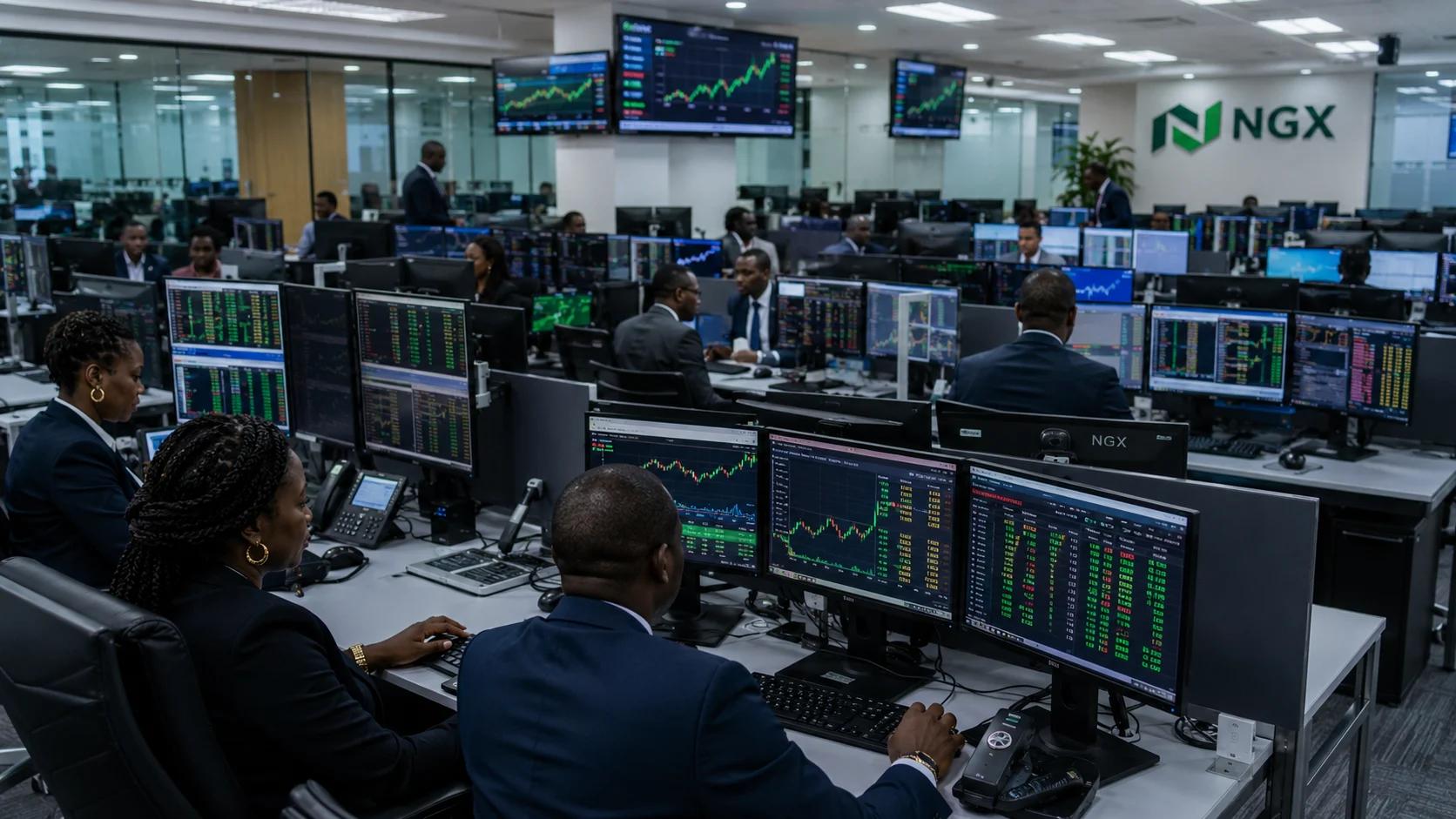
Nigeria’s equities market ended the previous trading week on a negative note, with investors losing approximately ₦108.7 billion in market value as selling pressure weighed on the Nigerian Exchange Limited (NGX).
Data for Friday, October 16, showed that the All-Share Index declined by 0.07 per cent to 247,486.89 points from 247,995.16 points in the preceding session.
Market capitalisation closed at approximately ₦160.69 trillion, while the index’s year-to-date gain remained above 60 per cent, according to the daily market report published by a licensed trading participant.
The decline followed a period of substantial appreciation in Nigerian equities, reflecting investor interest in selected banking, industrial, consumer and energy stocks.
Although the latest drop was modest in percentage terms, it illustrates the possibility of short-term corrections following a strong market advance.
Investors traded approximately 244.84 million shares in 31,339 deals, with the value of transactions reaching about ₦12.38 billion during the session.
The market’s performance reflects the interaction of stock-specific developments, corporate earnings, interest-rate expectations and broader economic conditions.
Banking shares have attracted considerable attention as investors assess the impact of recapitalisation, capital adequacy and earnings prospects across the sector. However, individual stocks continue to experience different price movements depending on their financial results and market expectations.
The latest performance also comes as the SEC advances its new capital-market development agenda, which aims to expand the size and economic relevance of Nigeria’s investment market over the coming decade.
For investors, the key question is whether the market can sustain its strong year-to-date performance while valuations adjust to corporate earnings and changing economic conditions.
A market correction does not necessarily indicate a reversal of the broader trend. However, investors should distinguish between gains supported by improving company fundamentals and price increases driven largely by sentiment.
The availability of reliable corporate disclosures and effective market supervision will remain important in supporting informed investment decisions.
With the next trading week beginning on Monday, market participants will be watching turnover, market breadth and the performance of major sectors for indications of whether buying interest will recover.
The latest decline therefore serves as a reminder that strong annual market returns do not eliminate short-term volatility, and that investment decisions should reflect individual risk tolerance and an assessment of underlying company performance.