Nigeria’s mobile telecommunications market is approaching 200 million active subscriptions, reinforcing the sector’s position as one of the most important pieces of infrastructure supporting the country’s increasingly digital economy.
Industry data cited in the latest market reports put Nigeria’s teledensity at approximately 90 per cent, reflecting the scale to which mobile connectivity has become integrated into daily economic activity.
The numbers matter for more than telecommunications companies.
Nigeria’s banking, fintech, e-commerce, logistics and entertainment industries increasingly depend on mobile networks to reach customers.
Telecoms Now Power Banking
A mobile phone has effectively become part of Nigeria’s financial infrastructure.
Customers use telecom networks to access mobile banking applications, USSD services, digital wallets and payment platforms.
Point-of-sale operators also depend on mobile data connections to process transactions.
That means poor network performance can quickly become a financial-services problem.
An outage that interrupts telecommunications can prevent customers from transferring money, completing card transactions or making electronic payments.
The relationship between telecoms and banking has therefore become increasingly difficult to separate.
The sector’s importance extends into ride-hailing, online shopping, digital media and remote work.
200m Doesn’t Mean 200m Nigerians
The subscription figure, however, should not be interpreted as meaning nearly 200 million individual Nigerians have mobile phones.
Many customers operate more than one SIM card, sometimes across different networks.
Subscription totals measure active connections rather than unique individuals.
That distinction is important when assessing digital inclusion.
Nigeria may have an enormous number of active mobile lines while still having communities where reliable broadband coverage and affordable internet access remain limited.
Teledensity consequently provides an indication of market scale but not a complete picture of connectivity quality.
Data Becomes Next Battleground
The telecommunications industry’s next phase will increasingly be about data rather than voice calls.
Smartphone adoption, streaming, fintech, cloud applications and artificial intelligence are increasing demand for faster and more reliable networks.
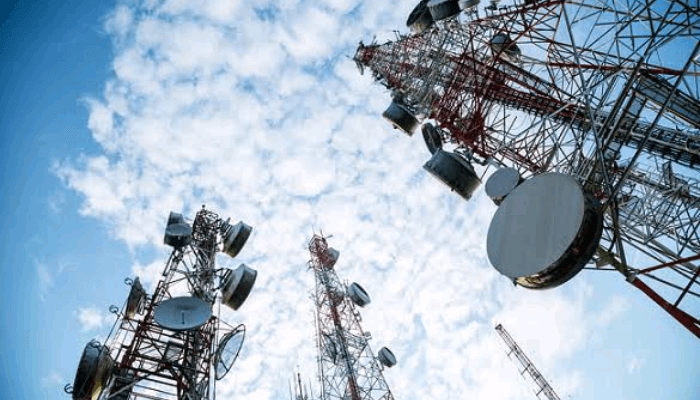
Operators consequently need continued investment in fibre infrastructure, towers, data centres and 4G and 5G capacity.
Nigeria’s approaching 200-million-subscription milestone demonstrates how large the market has become.
The bigger business question is whether the infrastructure supporting those connections can keep pace with the rapidly increasing amount of data each customer consumes.
For Nigeria’s wider economy, the answer matters enormously because telecommunications has moved from being merely another commercial industry to becoming infrastructure on which much of modern commerce depends.