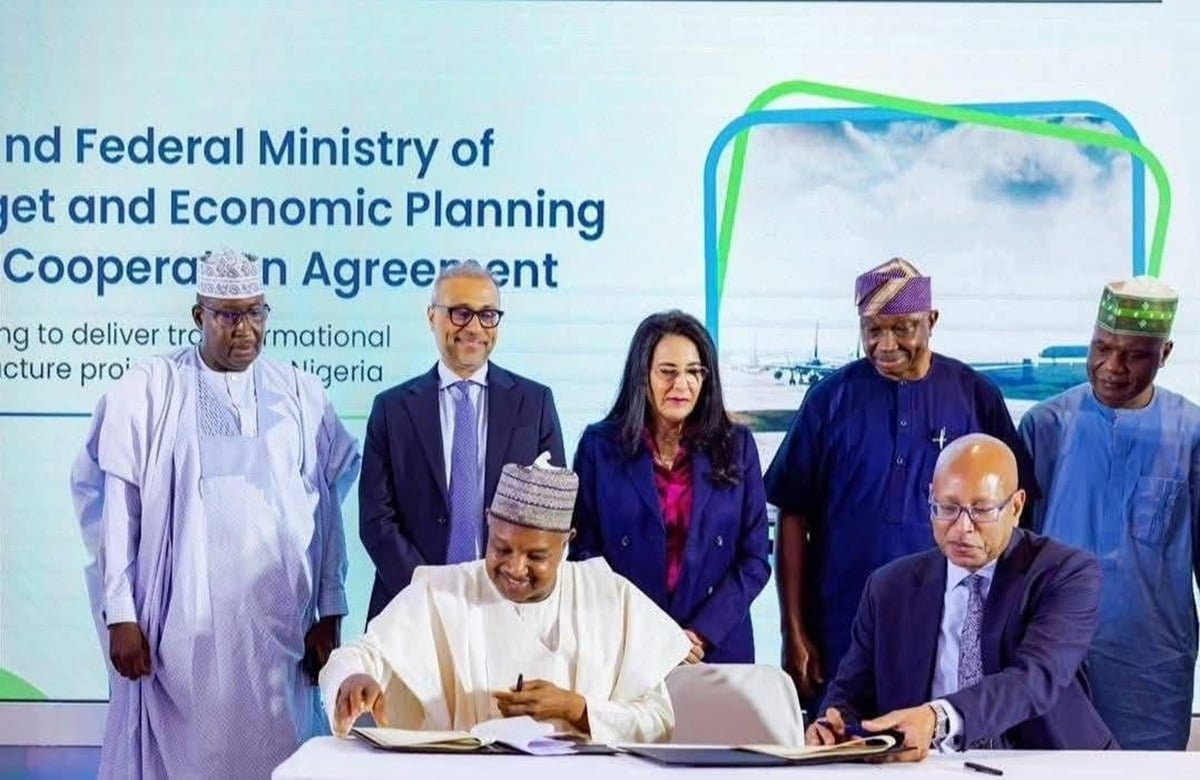
The federal government, through the Ministry of Budget and Economic Planning, has signed a cooperation agreement with the International Finance Corporation (IFC), a member of the World Bank Group, to enhance project preparation, mobilise private-sector funding, and accelerate the delivery of bankable infrastructure projects crucial to Nigeria’s economic growth.
The signing ceremony, held in Abuja on Tuesday, was attended by top government officials, including Senator Abubakar Bagudu, Minister of Budget and Economic Planning; Mr Wale Edun, Minister of Finance and Coordinating Minister of the Economy; and Dr Ali Pate, Minister of Health and Coordinating Minister of Social Welfare, as well as senior executives from the World Bank Group and IFC.
Speaking at the event, Bagudu described the agreement as a strategic move to address Nigeria’s extensive infrastructure needs, spanning rail, energy, water security, healthcare, and digital infrastructure. He noted that well-prepared, investment-ready projects are essential to attracting private-sector confidence and capital.
“Nigeria is a country brimming with opportunities. With a population of over 230 million, our needs are extensive. This agreement aims to prepare projects adequately so investors can have clarity on where to allocate capital,” Bagudu said, citing the growth of Nigeria’s digital economy from early mobile telephony investments as an example of the country’s absorptive capacity.
Ethiopis Tafara, IFC Vice President for Africa, highlighted that the agreement is the result of a year of close collaboration and shared vision. He emphasised that the initiative will strengthen budget planning and project preparation, facilitating the delivery of high-impact, investment-ready projects across key sectors. Tafara stressed that public-private partnerships are vital to bridging Nigeria’s infrastructure gap and that IFC is ready to assist federal and state governments in developing a credible project pipeline.
Dahlia Khalifa, IFC Regional Director for Central Africa and Anglophone West Africa, described the agreement as a milestone in Nigeria’s development journey. She noted that the collaboration will support transformative projects in transport, energy, digital infrastructure, and small and medium-sized enterprises, creating jobs, unlocking markets, and advancing shared prosperity. Khalifa highlighted IFC’s long-term engagement in Nigeria, including mobilising about US$20 billion in investments over the past five years.
The cooperation agreement underscores the federal government’s commitment to deepen partnerships with development finance institutions, strengthen public-private collaboration, and mobilise private capital to promote sustainable economic growth, job creation, and shared prosperity across Nigeria.