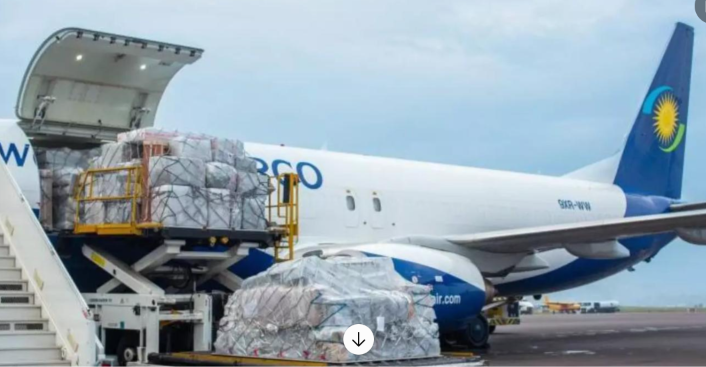
Nigeria has signed a three-year operational roadmap with RwandAir aimed at reducing air-cargo costs and improving access to East and Southern African markets for local exporters.
The agreement is expected to provide Nigerian businesses with more affordable transportation options for delivering products to other African countries, particularly those that have struggled with high international freight charges.
The partnership involves the Federal Ministry of Industry, Trade and Investment and Rwanda’s national carrier, RwandAir.
According to a report published by Nairametrics on November 17, 2026, the agreement was signed during the Creative Africa Nexus Weekend (CANEX WKND 2026) at the Wole Soyinka Centre for Culture and Creative Arts in Lagos.
The initiative is designed to support Nigeria’s participation in the African Continental Free Trade Area (AfCFTA) by addressing one of the major challenges affecting regional trade: the high cost of moving goods between African countries.
Under the arrangement, Nigerian exporters will have access to subsidised air-freight rates for shipments to selected destinations in East and Southern Africa.
The development could create additional opportunities for small businesses, manufacturers, agricultural producers and creative entrepreneurs seeking to expand beyond the Nigerian market. Nairametrics
Exporters to benefit from reduced freight charges
One of the major features of the agreement is the introduction of lower freight rates for eligible Nigerian businesses.
Historically, Nigerian exporters have paid commercial air-cargo charges ranging from approximately $3 to $10 per kilogram when transporting goods to some African destinations.
These charges have made it difficult for smaller businesses to compete in regional markets, particularly when transporting products with relatively low profit margins.
Under the new arrangement, shipments to Kigali will cost approximately $1.40 per kilogram for consignments below 1,000 kilograms.
Larger shipments will attract a reduced rate of approximately $1.20 per kilogram.
For shipments to Johannesburg, the reported rates range from $1.70 to $1.90 per kilogram.
Other destinations, including Nairobi, Lusaka and Harare, will attract rates ranging from approximately $1.50 to $1.80 per kilogram.
The lower charges could make air transportation more accessible to businesses that previously relied on expensive commercial freight arrangements.
However, the subsidised rates do not cover every expense involved in exporting goods.
Exporters will still be responsible for applicable minimum charges, a standard $15 air waybill fee, cargo handling, customs clearance and other statutory levies. Nairametrics
Partnership supports Nigeria’s AfCFTA ambitions
The agreement is linked to Nigeria’s broader efforts to increase non-oil exports and benefit from opportunities created by the African Continental Free Trade Area.
AfCFTA seeks to establish a more integrated African market by reducing trade barriers and improving the movement of goods and services between participating countries.
Although the agreement creates opportunities for businesses, transportation costs and logistical challenges have continued to limit the ability of many African exporters to access markets across the continent.
The Nigeria-RwandAir cargo arrangement is intended to address some of these problems by providing a more affordable air-freight option.
The Minister of Industry, Trade and Investment, Jumoke Oduwole, said the arrangement would help Nigerian businesses transport their products to international customers more efficiently.
The minister highlighted the potential benefits for businesses dealing in Nigerian clothing, food products, spices and other locally produced goods.
The government is also seeking to use the initiative to strengthen non-oil exports and reduce the country’s dependence on crude oil earnings.
According to the report, Nigeria’s non-oil exports reached a record $6.1 billion in 2025, highlighting the growing importance of alternative export earnings to the economy. Nairametrics
Small businesses and creative entrepreneurs stand to benefit
Small and medium-sized enterprises are among the businesses expected to benefit from the initiative.
Many Nigerian entrepreneurs produce goods that could attract customers in other African countries but face difficulties reaching those markets because of transportation costs.
For example, fashion designers, clothing manufacturers, food processors and producers of locally made consumer goods may find it easier to send products to customers in countries covered by the arrangement.
Creative businesses could also benefit from improved access to international customers and distributors.
The initiative may encourage more entrepreneurs to consider regional expansion rather than concentrating entirely on domestic sales.
However, businesses will still need to meet the relevant export requirements, maintain product standards and ensure that their goods comply with destination-country regulations.
To qualify for the subsidised corridor, exporters must obtain an official AfCFTA Certificate of Origin from the Nigeria Customs Service.
This requirement is intended to ensure that the benefits are directed towards eligible goods manufactured or processed within Nigeria.
The certificate will also help establish the origin of exported products under the applicable trade arrangements. Nairametrics
Cargo corridor has already recorded shipments
The agreement builds on an earlier pilot programme that tested the air-cargo arrangement before the signing of the three-year roadmap.
Nairametrics reported that the corridor’s inaugural flight took place on June 19, 2026.
Since the beginning of the pilot phase, close to 20 shipments have reportedly moved through the route.
The new agreement is expected to provide a longer-term framework for maintaining the service and reviewing freight charges.
Both governments will continue engaging on cargo rates, distribution challenges and other issues that could affect the movement of goods.
RwandAir’s Regional Manager for West and Central Africa, Ginette Kadigiri, said more affordable transportation would enable Nigerian businesses to explore markets beyond their domestic operations.
The partnership is also expected to encourage producers to improve their products and develop new opportunities as they gain access to more customers.
For the airline, the arrangement provides an opportunity to strengthen cargo activities and expand its commercial relationship with Nigerian businesses. Nairametrics
Nigeria launches trade intelligence portal
Another important part of the initiative is the launch of the first phase of the Nigeria Trade Intelligence Portal.
The platform is designed to provide businesses with verified trade information, investment data and opportunities to connect with international buyers.
It also includes a Virtual Deal Room intended to facilitate business connections and support commercial transactions.
Access to reliable trade information is important for exporters because businesses need to understand market demand, potential customers, regulations and investment opportunities before entering new markets.
The portal could therefore complement the cargo arrangement by helping Nigerian businesses identify potential buyers and explore opportunities in other African economies.
Outlook
The Nigeria-RwandAir agreement represents an effort to address practical challenges affecting intra-African trade.
By reducing air-freight costs and improving access to regional markets, the initiative could support Nigerian exporters seeking to expand their businesses.
Its success, however, will depend on how effectively businesses use the arrangement, the consistency of the subsidised rates and the ability of the relevant institutions to address logistical challenges.
For Nigeria, stronger non-oil exports could help diversify foreign exchange earnings, create employment opportunities and improve the competitiveness of locally manufactured products.
The three-year roadmap will therefore be an important development to watch as the country continues pursuing greater participation in African regional trade.