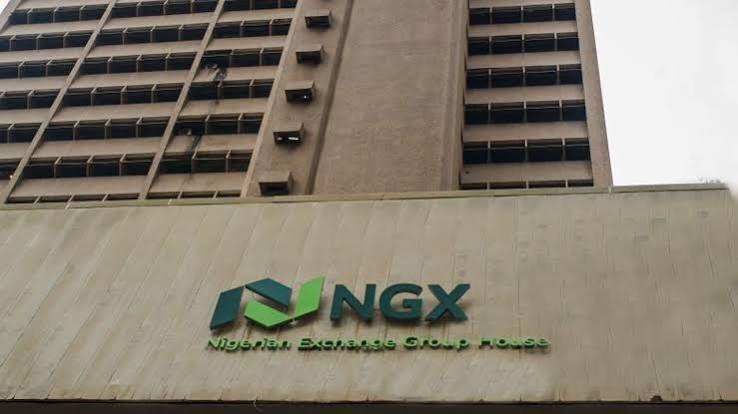
The Nigerian equities market sustained its bearish momentum as profit-taking activities in major stocks weighed on the performance of the Nigerian Exchange Limited (NGX), pushing the benchmark All-Share Index down by 0.7 per cent at the close of trading.
The decline was driven largely by losses in MTN Nigeria Communications, Ecobank Transnational Incorporated (ETI), Access Holdings and Zenith Bank, which fell by 4.8 per cent, 9.08 per cent, 5.1 per cent and 1.4 per cent, respectively.
Consequently, the All-Share Index closed at 243,989.31 points, while the market’s month-to-date return settled at -4.1 per cent. Despite the latest decline, the year-to-date return remained positive at 56.8 per cent.
Trading activity, however, recorded a significant increase, with total volume rising by 228.6 per cent to 1.61 billion shares. The transactions were valued at N39.56 billion and executed in 28,782 deals, indicating a substantial expansion in market activity despite the negative price movement.
FCMB Group emerged as the most actively traded stock by volume, with 704.66 million shares exchanged, while Fidelity Bank led transactions by value, recording trades worth N13.52 billion.
Performance across the sectoral indices was mixed. The Insurance index declined by 3.7 per cent, while the Banking index shed 1.3 per cent, reflecting the pressure on financial-sector stocks.
In contrast, the Industrial Goods and Consumer Goods indices recorded marginal gains of 0.3 per cent and 0.1 per cent, respectively. The Oil and Gas index closed unchanged.
Market breadth remained negative, with 24 stocks recording gains against 35 decliners, translating to a breadth ratio of 0.7x.
NAHCO and McNichols led the losers’ chart, shedding 10 per cent and 9.6 per cent, respectively. On the gaining side, FTG Insurance advanced by 10 per cent, while Cornerstone Insurance rose by 9.9 per cent to rank among the session’s strongest performers.
The session’s performance points to continued selling pressure in selected large-cap stocks, even as trading volumes expanded sharply. The divergence between rising transaction activity and the decline in the benchmark index suggests that increased market participation was not sufficient to offset losses in major counters.