ADVERTISEMENT
  • Africa
  • World
  • Our Shows
    • Entrepreneurship
    • Destination Business
    • 101business TV Show
Business 360 News
  • Home
  • Africa
    • East Africa
    • West Africa
    • South Africa
  • News
    • Feature
  • Economy
    • Maritime
    • Agriculture
      • Agribusiness
    • Energy
      • Electricty
      • Oil
      • Petrol
      • Gas
  • Finance
    • Insurance
    • Tax
    • Real Estate
  • Capital Market
  • Tech
    • ICT
    • Solar Energy
    • Electric Vehicles
    • Blockchain
    • IoT
    • AI
    • EV
  • SMEs
    • Success Stories
    • Start-Ups
    • Entrepreneurship
  • Global Economy
    • UK
    • US
    • Russia
    • CHINA
    • Japan
  • Business 360 Weekly
No Result
View All Result
  • Home
  • Africa
    • East Africa
    • West Africa
    • South Africa
  • News
    • Feature
  • Economy
    • Maritime
    • Agriculture
      • Agribusiness
    • Energy
      • Electricty
      • Oil
      • Petrol
      • Gas
  • Finance
    • Insurance
    • Tax
    • Real Estate
  • Capital Market
  • Tech
    • ICT
    • Solar Energy
    • Electric Vehicles
    • Blockchain
    • IoT
    • AI
    • EV
  • SMEs
    • Success Stories
    • Start-Ups
    • Entrepreneurship
  • Global Economy
    • UK
    • US
    • Russia
    • CHINA
    • Japan
  • Business 360 Weekly
No Result
View All Result
Business 360 News
No Result
View All Result
Home Economy

Nigeria’s Debt Burden Rises as Oil Production Slips

Oyinkansola Lemo by Oyinkansola Lemo
August 17, 2026
in Economy, Oil
0
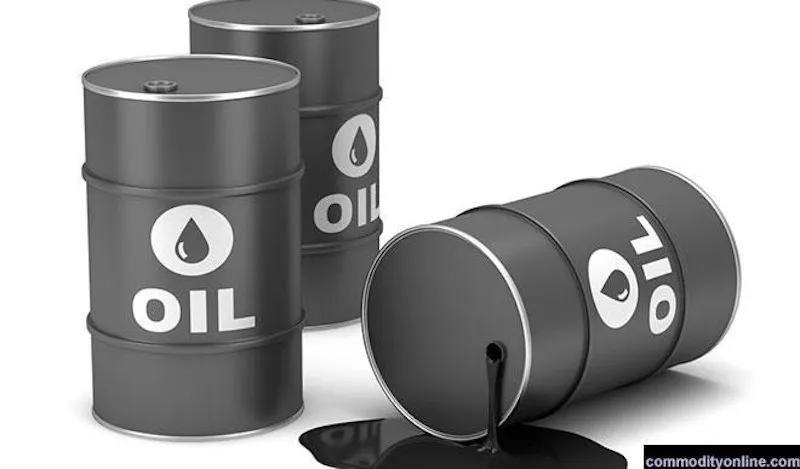
Nigeria’s Oil Output Drops to 1.43mbpd in August, Falls Below OPEC Quota

Nigeria’s public debt increased marginally in the first quarter of 2026, while crude oil production recorded its first decline in four months, highlighting continuing challenges for the country’s fiscal position and oil-dependent economy.

Data from the Debt Management Office (DMO) showed that Nigeria’s total public debt rose by 0.1% quarter-on-quarter to N159.35 trillion in Q1 2026, compared with N159.28 trillion at the end of 2025.

The increase comes as the Federal Government continues to rely on borrowing to finance public expenditure amid persistent revenue constraints.

Domestic Debt Accounts for More Than Half of Total Debt

Domestic borrowing remained the largest component of Nigeria’s public debt.

Total domestic debt increased by 3.0% quarter-on-quarter to N87.40 trillion, representing 54.8% of the country’s total public debt.

The increase reflected higher debt stocks at both the state and federal government levels.

State government debt increased by 3.7% during the quarter, while Federal Government debt rose by 3.0%.

The continued increase in domestic borrowing highlights the pressure facing government finances as authorities seek to fund expenditure commitments and bridge revenue gaps.

Naira Appreciation Reduces External Debt Value

Nigeria’s external debt stock, meanwhile, declined by 3.3% quarter-on-quarter to N71.95 trillion, compared with N74.43 trillion in the fourth quarter of 2025.

The decline in naira terms was largely linked to the appreciation of the Nigerian currency during the quarter.

The naira appreciated by approximately 3.5%, moving from N1,435.26 per US dollar in Q4 2025 to N1,386.22 per dollar in Q1 2026.

However, the picture was different when external debt was measured in US dollars.

External debt increased marginally by 0.1% quarter-on-quarter to approximately $51.90 billion, from $51.86 billion previously.

The increase reflected additional disbursements from multilateral lenders and higher syndicated loans, particularly those connected to capital projects.

The African Development Bank Group accounted for approximately $74.82 million in additional disbursements during the period.

On a year-on-year basis, Nigeria’s total public debt increased by 6.7%.

Government Borrowing Expected to Increase

Nigeria’s debt burden could rise further during the remainder of 2026 as the government seeks to finance its budget deficit.

The 2026 Federal Government budget provides for a deficit of N31.46 trillion, while current estimates put the likely deficit at about N26.88 trillion.

With government revenues still under pressure, additional borrowing is expected to remain an important source of financing.

Public debt is projected to reach approximately N183.58 trillion by the end of 2026, equivalent to about 36.2% of GDP.

While Nigeria’s debt-to-GDP ratio remains below levels seen in some other emerging markets, the cost of servicing debt remains an important concern because rising borrowing can place additional pressure on government finances.

Nigeria’s Oil Production Falls in July

Meanwhile, Nigeria’s crude oil production declined in July following four consecutive months of increases.

Data from the Nigerian Upstream Petroleum Regulatory Commission showed that crude oil production, including condensates, fell by 3.7% month-on-month to 1.67 million barrels per day (mb/d) in July.

Production stood at approximately 1.74 mb/d in June.

The decline was largely associated with operational challenges at some major oil terminals.

Production at the Erha terminal dropped by 49.9% during the month, while output at the Akpo terminal declined by 29.9%.

These reductions significantly affected overall national production.

Other terminals also recorded smaller declines. Production at Escravos fell by 1.6%, Bonny declined by 1.4%, while Bonga recorded a marginal 0.1% reduction.

Some Oil Terminals Record Stronger Output

Despite the overall decline, several terminals recorded production increases during the month.

Tulja-Okwuibome posted the strongest increase, with output rising by 13.6%.

Forcados production increased by 8.7%, while Brass recorded a 6.3% increase. Odudu rose by 6.1%, and Agbami production increased by 3.1%.

However, the gains were insufficient to offset the significant production declines at Erha and Akpo.

The July figures underline the continuing volatility in Nigeria’s oil sector, where operational disruptions and infrastructure constraints can have a significant impact on national production.

Investment and Security Could Support Recovery

Nigeria’s oil production outlook remains cautiously positive.

Higher investment in the upstream sector, improvements in security conditions and the integration of new oil fields and evacuation routes could help raise production in the coming months.

However, intermittent shutdowns at oil terminals remain a major risk.

Infrastructure limitations and operational disruptions could continue to affect production and prevent Nigeria from consistently reaching higher output levels.

For 2026, the country’s average crude oil production estimate remains at approximately 1.70 million barrels per day.

Debt and Oil Production Remain Key Economic Indicators

The latest figures highlight two major issues confronting Nigeria’s economy: the need to manage rising public borrowing and the need to increase oil production.

Higher oil output would potentially provide additional government revenue and foreign exchange earnings, helping to strengthen public finances and support economic stability.

At the same time, managing the pace and cost of government borrowing will remain critical as Nigeria seeks to finance infrastructure and other public spending without placing excessive pressure on future budgets.

For investors and policymakers, developments in oil production, government revenues, borrowing requirements and debt servicing costs will remain important indicators of Nigeria’s economic outlook through 2026.


Tags: #CrudeOil#EconomicNews#NigeriaDebt#NigeriaEconomy
Previous Post

Global Economic Growth Faces Mixed Signals as Inflation Eases and Markets Rally

Next Post

Nigerian Equities Close Lower as Investors Adopt Cautious Stance

Oyinkansola Lemo

Oyinkansola Lemo

Next Post
NGX All-Share Index Surpasses 200,000 Points Amid Strong Market Rally

Nigerian Equities Close Lower as Investors Adopt Cautious Stance

Leave a Reply Cancel reply

Your email address will not be published. Required fields are marked *

  • Trending
  • Comments
  • Latest
FMDQ Exchange Admits Flour Mills of Nigeria’s ₦30.00bn Commercial Paper Notes

FMDQ Admits TSL SPV PLC ₦12.00 billion Series 1 Guaranteed Fixed Rate Infrastructure Bond to its Platform

March 11, 2021
NIBSS Downtime Causes Delays in Electronic Transactions, Fintechs Alert Customers

NIBSS Downtime Causes Delays in Electronic Transactions, Fintechs Alert Customers

June 7, 2024
NCAC inaugurates Creative Industry Sub-Committees

NCAC inaugurates Creative Industry Sub-Committees

September 20, 2020
Asian Stocks Hit Record High as US Tech Rebound Lifts Market Sentiment

Asian Stocks Hit Record High as US Tech Rebound Lifts Market Sentiment

February 10, 2026
‘The existence of a production hub in Nigeria will go a long way for the Fashion Industry’. FUNMI RUFAI LADIPO, President Fashion Designers Association of Nigeria.(FADAN)

‘The existence of a production hub in Nigeria will go a long way for the Fashion Industry’. FUNMI RUFAI LADIPO, President Fashion Designers Association of Nigeria.(FADAN)

25
Goldlink’s restructures board

Goldlink’s restructures board

10
Airtel Africa Plc gets admitted to the NSE Main Board

Airtel Africa Plc gets admitted to the NSE Main Board

6
Stallion Tank Farm resumes operations

Stallion Tank Farm resumes operations

3
Trading Ends Lower on Nigerian Exchange Limited as Profit-Taking Weighs on Key Stocks

NGX Market Capitalisation Falls by N106.24bn as Equities Close Bearish

August 18, 2026
FCCPC Withdraws Conditional Approval for Non-Compliant Digital Lenders

FCCPC Opens Probe Into Possible Cement Price Manipulation in Nigeria

August 18, 2026
Access Holdings, UBA Boards Approve 2025 Results, Proposed Dividends

Access Holdings Gets NGX Extension to File H1 2026 Audited Results

August 18, 2026
Oil Falls to Lowest in Over a Week as Trump Announces Israel-Iran Ceasefire

Treasuries, Asian Bonds Extend Losses as Oil Gains Amid Inflation and Geopolitical Concerns

August 18, 2026
Business 360 News

Business 360 News is a Business and Financial News Platform with an SMEs drive. Published by 360 Network Limited, and created with the aim of disseminating unbiased business stories to readers within and outside Nigeria, providing in-depth analysis of our stories from a critical perspective against the backdrop of realities, actualities, objectivity and balance.

Follow Us

Browse by Category

  • Africa
  • Agribusiness
  • Agriculture
  • AI
  • Art
  • Arts
  • Aviation
  • Banking
  • Blockchain
  • Business 360 Weekly
  • Business news
  • Business Travels
  • Capital Market
  • CHINA
  • Corporate
  • Cryptocurrency
  • Destination Business
  • East Africa
  • Economy
  • Education
  • Electric Vehicles
  • Electricty
  • Energy
  • Entertainment
  • Entertainment
  • Entrepreneurship
  • EV
  • Fashion
  • Fashion
  • Feature
  • Finance
  • Gas
  • Global Economy
  • Health
  • Hospitality
  • ICT
  • Insurance
  • IoT
  • Japan
  • Lifestyle
  • Luxury
  • Maritime
  • Meetings
  • Mortgage
  • News
  • NGOs
  • Oil
  • Petrol
  • Political Economy
  • politics
  • Real Estate
  • Real Estate
  • SMEs
  • Society
  • Solar Energy
  • South Africa
  • Sports
  • Start-Ups
  • Stocks
  • Success Stories
  • Tax
  • Tech
  • Tourism
  • Transportation
  • UK
  • Uncategorized
  • US
  • World

Recent News

Trading Ends Lower on Nigerian Exchange Limited as Profit-Taking Weighs on Key Stocks

NGX Market Capitalisation Falls by N106.24bn as Equities Close Bearish

August 18, 2026
FCCPC Withdraws Conditional Approval for Non-Compliant Digital Lenders

FCCPC Opens Probe Into Possible Cement Price Manipulation in Nigeria

August 18, 2026
  • Africa
  • World
  • Our Shows

© Business 360 News - Business, Finance And SMEs News | Design by Manifest!

No Result
View All Result
  • Home
  • Africa
    • East Africa
    • West Africa
    • South Africa
  • News
    • Feature
  • Economy
    • Maritime
    • Agriculture
      • Agribusiness
    • Energy
      • Electricty
      • Oil
      • Petrol
      • Gas
  • Finance
    • Insurance
    • Tax
    • Real Estate
  • Capital Market
  • Tech
    • ICT
    • Solar Energy
    • Electric Vehicles
    • Blockchain
    • IoT
    • AI
    • EV
  • SMEs
    • Success Stories
    • Start-Ups
    • Entrepreneurship
  • Global Economy
    • UK
    • US
    • Russia
    • CHINA
    • Japan
  • Business 360 Weekly

© Business 360 News - Business, Finance And SMEs News | Design by Manifest!