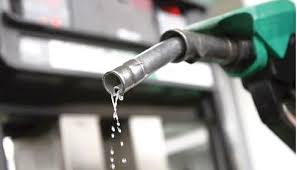
Nigeria’s inflationary pressure on transport fuels intensified in April 2026 as the average retail price of Premium Motor Spirit (petrol) rose sharply to N1,532.93 per litre nationwide.
This was disclosed in the latest Premium Motor Spirit Price Watch report released by the National Bureau of Statistics.
According to the report, petrol prices increased significantly on both a monthly and yearly basis, reflecting sustained pressure in Nigeria’s downstream petroleum market following deregulation reforms.
The development further highlights rising energy costs that continue to push transportation, logistics, and production expenses higher across the country.
Data from the report showed that the average retail price of petrol increased by 18.97 per cent month-on-month in April 2026.
On a year-on-year basis, the average petrol price rose by 23.69 per cent compared to N1,239.33 per litre recorded in April 2025.
The average retail price climbed from N1,288.54 in March 2026 to N1,532.93 in April 2026.
State-by-state analysis revealed significant price variations across the country.
Yobe recorded the highest average retail price at N1,599.05 per litre, followed by Edo at N1,595.74 and Bauchi at N1,589.07 per litre.
On the other hand, Niger recorded the lowest average retail price at N1,403.89 per litre, followed by Sokoto at N1,404.16 and Katsina at N1,406.28 per litre.
The report highlighted continued regional disparities in petrol pricing, driven by differences in supply chain efficiency, transportation costs, infrastructure quality, and proximity to fuel supply depots.
By geopolitical zone, the South-South recorded the highest average retail price at N1,566.76 per litre, while the North-West posted the lowest average price at N1,508.81 per litre.
Fuel pricing in Nigeria continues to be shaped by the effects of deregulation, foreign exchange pressures, distribution costs, and market-driven pricing mechanisms within the downstream petroleum sector.
The wide variation in state and zonal prices also reflects persistent infrastructure constraints, uneven distribution networks, and differing levels of competition among fuel marketers across the country.