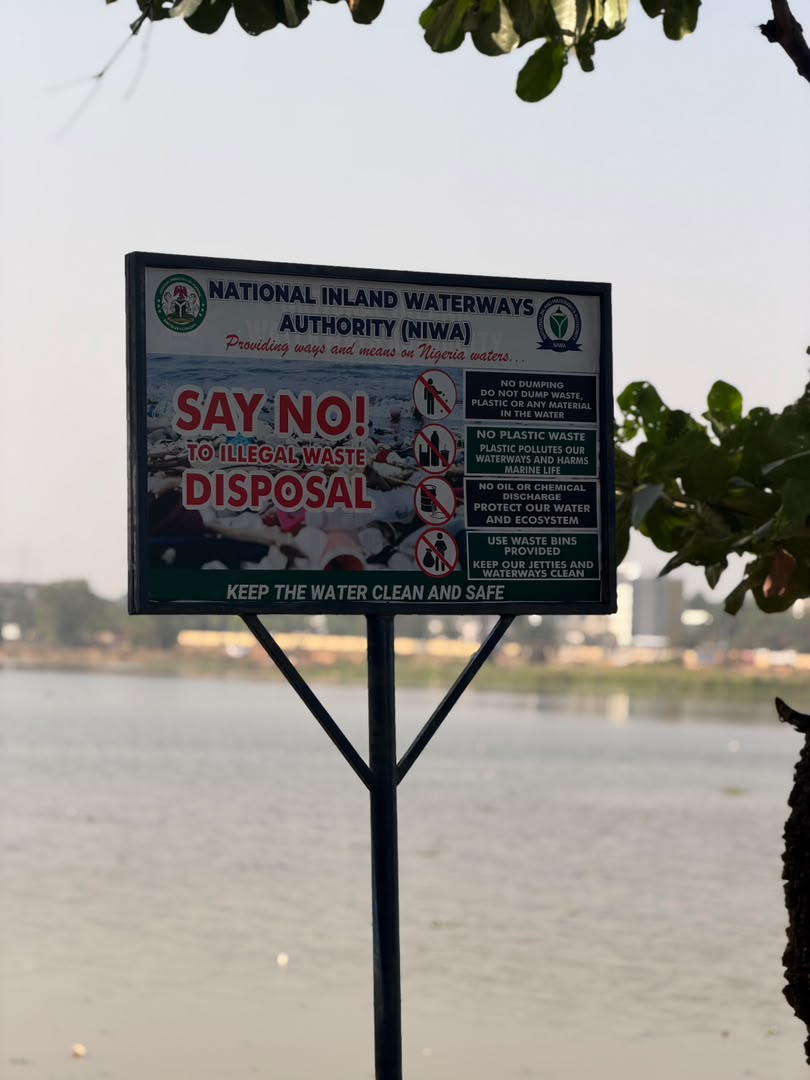
The National Inland Waterways Authority (NIWA) has commenced a water hyacinth clearance exercise on Jabi Lake in Abuja as part of efforts to improve the water body’s environmental condition, restore navigability and sustain tourism activities around the popular waterfront.
The exercise, which began on November 17, 2026, is aimed at addressing the growing presence of water hyacinth, an invasive aquatic plant that can obstruct waterways, affect water quality and create difficulties for boats and other water-based activities.
Jabi Lake is one of the notable recreational destinations in the Federal Capital Territory, attracting visitors interested in boating, relaxation and other tourism-related activities.
The clearance operation is being supervised by NIWA’s Abuja Area Manager, Hajia Aisha Eri, who is coordinating activities to ensure the effective removal of the invasive vegetation.
Speaking on the progress of the exercise, Eri said considerable progress had been recorded in clearing the aquatic weeds and restoring parts of the lake to conditions suitable for boating and other recreational activities.
She noted that the intervention reflected the Authority’s commitment to environmental sustainability and the effective management of inland waterways.
The exercise is also expected to support the development of water-based tourism by improving the appearance and accessibility of the waterfront.
Water hyacinth is widely recognised as one of the major challenges affecting inland waterways in several countries. When it grows excessively, the plant can form dense floating mats that restrict navigation, interfere with fishing activities and affect aquatic ecosystems.
Its accumulation can also obstruct water channels and increase the difficulty of operating boats in affected areas.
NIWA’s intervention is therefore intended to address these challenges while improving the safety and usability of Jabi Lake.
The exercise has also received the attention of the Authority’s Acting Managing Director, Mr. Umar Yusuf Girei, whose visit to the site demonstrated the agency’s institutional commitment to waterway management and environmental protection.
Girei explained that the clearance operation formed part of NIWA’s wider strategy to reclaim inland waterways, improve navigation and reduce risks associated with invasive aquatic vegetation.
According to him, removing the weeds would help create clearer navigation channels and reduce possible hazards for people using the waterway.
“NIWA remains steadfast in reclaiming our waterways for safe human navigation. By clearing these invasive weeds, the Authority is opening up unobstructed channels and drastically reducing the risk of marine accidents, ensuring that commerce, transportation and tourism around hubs like Jabi Lake remain smooth, reliable and secure,” Girei said.
The intervention is particularly important for recreational destinations such as Jabi Lake, where environmental cleanliness and safe water access contribute to the overall visitor experience.
A clean and accessible waterfront can encourage tourism-related investments, support businesses operating around the lake and create opportunities for employment.
Restaurants, recreational operators, boat service providers and other businesses around waterfront destinations depend partly on the attractiveness and accessibility of the surrounding environment.
Consequently, the removal of excessive aquatic vegetation could support economic activities around the lake by improving the conditions under which visitors and operators use the facility.
However, sustaining the benefits of the exercise will require continuous monitoring and maintenance to prevent the weeds from returning.
Environmental management experts generally recognise that removing visible vegetation alone may not permanently solve water hyacinth problems, particularly where underlying conditions encourage rapid regrowth.
Regular monitoring, proper disposal of cleared vegetation and appropriate water-management measures are therefore important in maintaining the results of such interventions.
For NIWA, the Jabi Lake operation also highlights the importance of combining environmental protection with the development of inland water transportation and tourism.
The Authority is responsible for managing Nigeria’s inland waterways and promoting safe navigation, among other statutory responsibilities.
As the clearance operation continues across the Jabi waterfront, the agency has reiterated its commitment to maintaining cleaner, safer and more navigable inland waterways.
The success of the exercise will ultimately depend on sustained maintenance and cooperation among relevant authorities, waterfront operators and other stakeholders.
With the intervention, NIWA is seeking to improve the environmental condition of Jabi Lake while supporting its continued use as a recreational and tourism destination in Abuja.