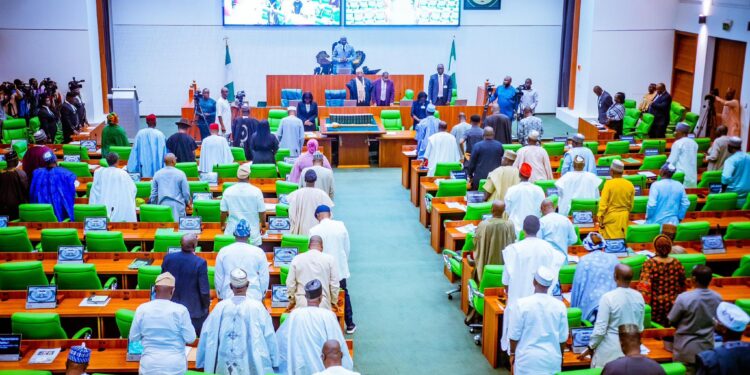
The House of Representatives Nigeria has directed 11 electricity distribution companies (DISCOs) to refund N55.42 billion received under the National Mass Metering Programme (NMMP), citing concerns over the scheme’s performance and accountability.
The directive followed the adoption of a committee report presented on Thursday, mandating the affected firms to repay the funds to the Central Bank of Nigeria within seven months.
The decision highlights growing legislative scrutiny of the NMMP, a key intervention introduced in 2020 to address metering gaps and improve efficiency in Nigeria’s power sector.
According to the committee’s findings, a total of N55.42 billion was disbursed to 11 DISCOs out of N59.28 billion earmarked for the programme. The funds were structured as loans at a 9 percent interest rate, with 6 percent allocated to financiers and 3 percent to the apex bank.
Lawmakers also flagged discrepancies in the utilisation of funds, noting that about N3.85 billion from the approved sum remains unaccounted for.
Beneficiaries of the scheme include Abuja, Eko, Enugu, Ibadan, Ikeja, Jos, Kano, and Yola electricity distribution companies, among others.
The House further raised concerns over payments to Meristem Wealth Management, which reportedly received N450 million and is entitled to 0.5 percent of DISCO collections annually until 2030. The committee questioned the structure and long-term financial implications of such arrangements.
The NMMP, launched as a joint initiative involving the Nigerian Electricity Regulatory Commission and other stakeholders, was designed to provide free electricity meters to consumers, eliminate estimated billing, and promote local meter manufacturing.
However, despite significant funding and policy backing, lawmakers concluded that the programme has not delivered its expected outcomes.
The investigation, which involved multiple stakeholders within the Nigerian Electricity Supply Industry, also examined the broader N200 billion loan facility provided by the apex bank for the initiative.
In recent years, the Federal Government has continued efforts to address the country’s metering deficit. In October 2025, N28 billion was approved under the Meter Acquisition Fund (MAF) Tranche B scheme for meter procurement and installation, while N21 billion had earlier been approved in June 2024 for zero-cost meter provision to end-users.
Despite these interventions, the House maintained that stronger oversight, transparency, and accountability are needed to ensure that such programmes achieve their intended impact.