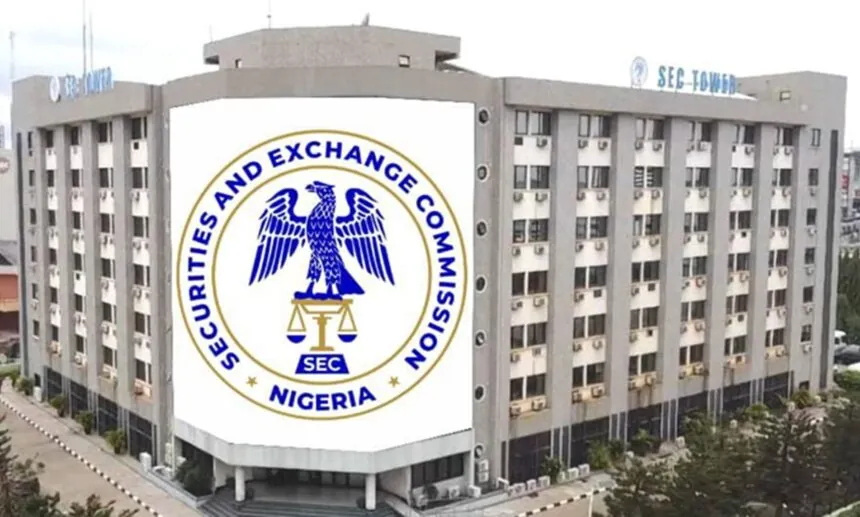
Nigeria’s Securities and Exchange Commission (SEC) has cleared three virtual asset service providers, including Blockchain, for admission into its Accelerated Regulatory Incubation Programme (ARIP) as the regulator strengthens oversight of the country’s growing digital asset market.
The other companies admitted into the programme are Pisi Payments Solution Limited and Yellow Card Financial Limited, according to the SEC.
The admission grants the three companies Approval-in-Principle to operate within the defined scope of the programme, subject to regulatory, operational and supervisory conditions.
The approval does not constitute a final operating licence. Instead, it allows the companies to participate in the SEC’s controlled regulatory environment while demonstrating compliance with requirements governing virtual asset businesses.
For Blockchain, the admission represents a step forward in its efforts to expand its presence in Nigeria, one of Africa’s largest and most active digital asset markets.
The company said its participation in the ARIP would allow it to work directly with the SEC as the regulator evaluates digital asset business models, tests safeguards and develops a longer-term regulatory framework for the industry.
“Nigeria is one of Africa’s most important digital asset markets and participating in the SEC’s ARIP is an important step forward in our long-term commitment to the country,” said Owen Odia, General Manager for Africa at Blockchain.
Blockchain said the programme would provide a controlled environment for it to introduce its global experience to the Nigerian market while working with regulators to promote consumer protection, transparency and responsible innovation.
The admission also deepens Blockchain’s engagement with Nigerian regulators as the country works to establish clearer rules for an industry that has expanded rapidly in recent years.
Blockchain said its participation in Nigeria’s regulatory framework forms part of its broader global strategy of working with authorities in established regulatory jurisdictions.
The company said it has secured licences and registrations in several jurisdictions, including the United Kingdom, European Union and Cayman Islands.
The SEC’s ARIP operates as a regulatory sandbox, providing a controlled environment where financial technology and digital asset companies can test products and business models under regulatory supervision before obtaining full authorisation.
Through the programme, the commission can monitor how virtual asset services operate in practice, assess potential risks and develop safeguards covering areas such as investor protection and anti-money laundering requirements.
For Blockchain, the programme provides an opportunity to test its services for Nigerian users while working with regulators and local stakeholders on compliance and consumer protection measures.
The company said Nigeria remains an important part of its African expansion strategy, citing strong demand for digital assets and an increasingly defined regulatory pathway for operators seeking to serve the market.
Founded in 2011, Blockchain said it has more than 95 million wallets and over 44 million confirmed accounts, with more than $1.2 trillion processed through its platform.
The company operates in more than 70 jurisdictions and provides digital asset services to consumers and institutions.