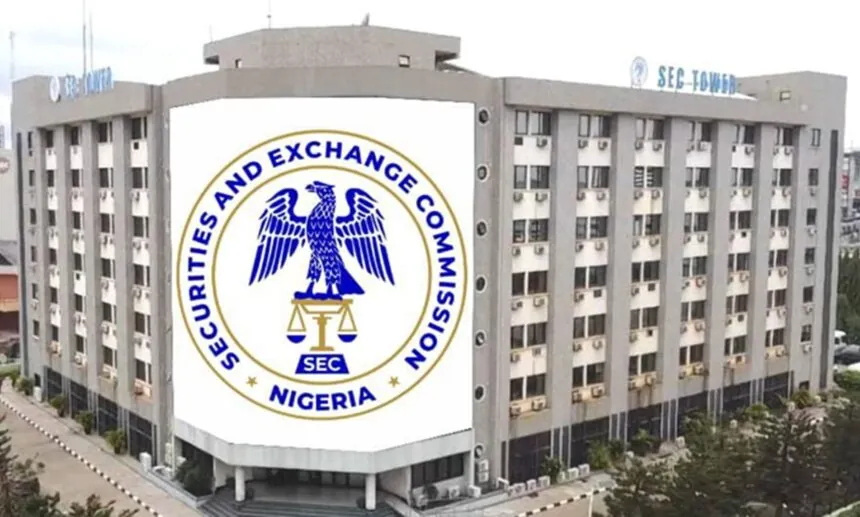
The Securities and Exchange Commission (SEC) Nigeria has proposed new rules governing the public offering of securities by Free Trade Zone Entities (FTZEs), introducing a minimum capital requirement of N7.5 billion for eligible companies.
Under the proposed framework, FTZEs—defined as enterprises established within free trade zones and licensed by a Free Zone Authority—will not be allowed to issue or offer shares to the public without prior approval from the Commission.
The SEC stated that the draft regulation is being developed pursuant to Section 95(1)(f) of the Investment and Securities Act (ISA) 2025, and is intended to establish clear eligibility standards and operational conditions for free zone companies seeking access to Nigeria’s capital market.
According to the proposal, any FTZE intending to conduct a public offering must meet several strict requirements, including a verified minimum paid-up capital of N7.5 billion.
In addition, companies must provide detailed disclosures as part of their registration process. These include certified records of shareholding structure, verified by the relevant Free Trade Zone Authority or an authorised custodian of shareholders’ registers.
The proposed rules also require disclosure of the issuer’s board composition, which must be certified or verified by the Free Trade Zone Authority, alongside a formal “No Objection” letter for the offering and listing of shares.
The SEC further mandates that shares offered by FTZEs must be listed on a registered securities exchange, reinforcing transparency and market accountability.
To qualify for public offerings under the proposed rules, an FTZE must also be duly licensed under applicable free zone legislation and demonstrate at least three years of operational track record, with a minimum of two years of independent activity within a free trade zone.
The regulator added that senior management teams must possess adequate competence and relevant industry experience in line with the entity’s operations.
The new framework is designed to enhance investor protection, improve disclosure standards, and ensure that only financially strong and operationally sound companies access public capital markets from free trade zones.
If adopted, the rules are expected to reshape how FTZEs participate in Nigeria’s capital market, aligning their operations more closely with broader regulatory standards while supporting market integrity and long-term investor confidence.