South Africa is seeking Chinese investment and industrial partnerships to accelerate its energy transition and expand domestic manufacturing of critical electricity infrastructure.
Electricity and Energy Minister Kgosientsho Ramokgopa unveiled the investment drive during a visit to China, where he sought financing, technology support and partnerships to strengthen South Africa’s power sector.
According to Bloomberg, Chinese officials expressed support for South Africa’s electricity expansion plans during discussions with government representatives.
Rather than focusing only on attracting foreign capital, Pretoria is encouraging Chinese companies to establish manufacturing operations in South Africa to produce key energy equipment.
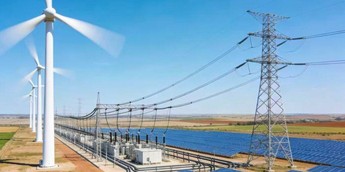
The proposed manufacturing focus includes transformers, batteries, solar components, cables and other grid infrastructure needed to support the country’s electricity expansion programme.
The government said local production would reduce reliance on imports, strengthen industrial capacity, create jobs and support one of Africa’s largest electricity infrastructure development plans.
Speaking during engagements with Chinese investors, Ramokgopa said South Africa represents one of Africa’s biggest long-term energy investment opportunities due to policy reforms and improving electricity reliability.
The investment pipeline includes about 105 gigawatts of new electricity generation capacity and a major expansion of transmission infrastructure through 2039.
The plan includes approximately 14,500 kilometres of new power lines aimed at connecting renewable energy projects and meeting rising industrial electricity demand.
The investment strategy marks a shift in South Africa’s approach to addressing its energy challenges.
For years, rolling power cuts, known locally as load shedding, affected factories, mines and businesses, placing pressure on Africa’s most industrialised economy and limiting economic growth.
With electricity supply conditions improving, the government has shifted its focus from emergency measures to developing long-term infrastructure that can support industrial growth and the transition to cleaner energy.
Officials said expanding transmission networks is as important as increasing electricity generation because renewable energy projects cannot be integrated into the grid quickly without stronger infrastructure.
China’s role in the global clean energy sector makes it a key potential partner for South Africa.
The country is a leading manufacturer of solar panels, batteries, transmission equipment and other renewable energy technologies.
By encouraging Chinese firms to manufacture equipment locally, South Africa hopes to retain more economic value from the energy transition while creating skilled industrial employment.
The strategy also supports Pretoria’s broader industrial policy aimed at strengthening domestic production and connecting local manufacturers to global clean energy supply chains.
South Africa’s investment drive comes as African countries increasingly compete for Chinese investment in renewable energy, mining, electric vehicles and infrastructure.
While Chinese state-backed lending across Africa has slowed in recent years, analysts say commercial investments and industrial partnerships are becoming a growing part of China-Africa economic relations.
If successful, the initiative could position South Africa as a regional manufacturing hub for clean energy equipment while helping address one of the continent’s biggest barriers to industrial growth — unreliable electricity.
The government believes combining large-scale power infrastructure investment with local manufacturing will improve energy security, enhance industrial competitiveness and support long-term economic expansion.