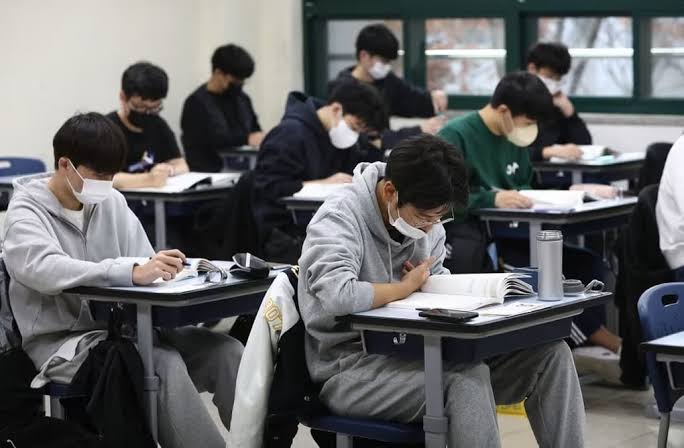
South Korea has reportedly launched an intensified campaign against examination malpractice involving artificial intelligence devices, with President Lee offering a reward of up to $75,000 to individuals who expose students using prohibited technology to cheat in high-stakes university entrance examinations.
The reported initiative comes ahead of the country’s highly competitive college entrance examination, as authorities seek to prevent the use of increasingly sophisticated electronic devices and AI-powered tools to gain an unfair advantage.
The development highlights growing concerns among education authorities about the potential misuse of artificial intelligence in examination environments, particularly as compact devices and emerging technologies make it increasingly difficult to identify unauthorised assistance.
South Korea’s university entrance examination, commonly known as the College Scholastic Ability Test, is a major national event that plays a significant role in determining students’ admission prospects into higher education institutions.
The examination attracts intense attention from students, parents, schools and employers, reflecting the importance attached to academic performance and university placement in the country.
The reported reward scheme is intended to encourage members of the public to provide information that could help authorities identify examination fraud and prevent the use of prohibited technologies.
The challenge has become more complicated as artificial intelligence tools continue to develop. While AI can support learning, research and educational productivity, its use during examinations without authorisation raises concerns about academic integrity and fairness.
Devices capable of providing discreet access to digital information or AI-generated responses could undermine the credibility of examinations if they are not effectively detected and controlled.
South Korea’s reported response reflects a wider international debate over how education systems should regulate artificial intelligence while preserving its benefits for teaching and learning.
As AI becomes more accessible, schools and examination bodies face increasing pressure to update their security procedures, establish clear rules and develop reliable methods of identifying unauthorised technological assistance.
The reported $75,000 reward and the scale of the enforcement effort underscore the seriousness with which the authorities are approaching the issue. The details of the reward scheme and the President’s reported involvement should, however, be confirmed through official government announcements before publication.