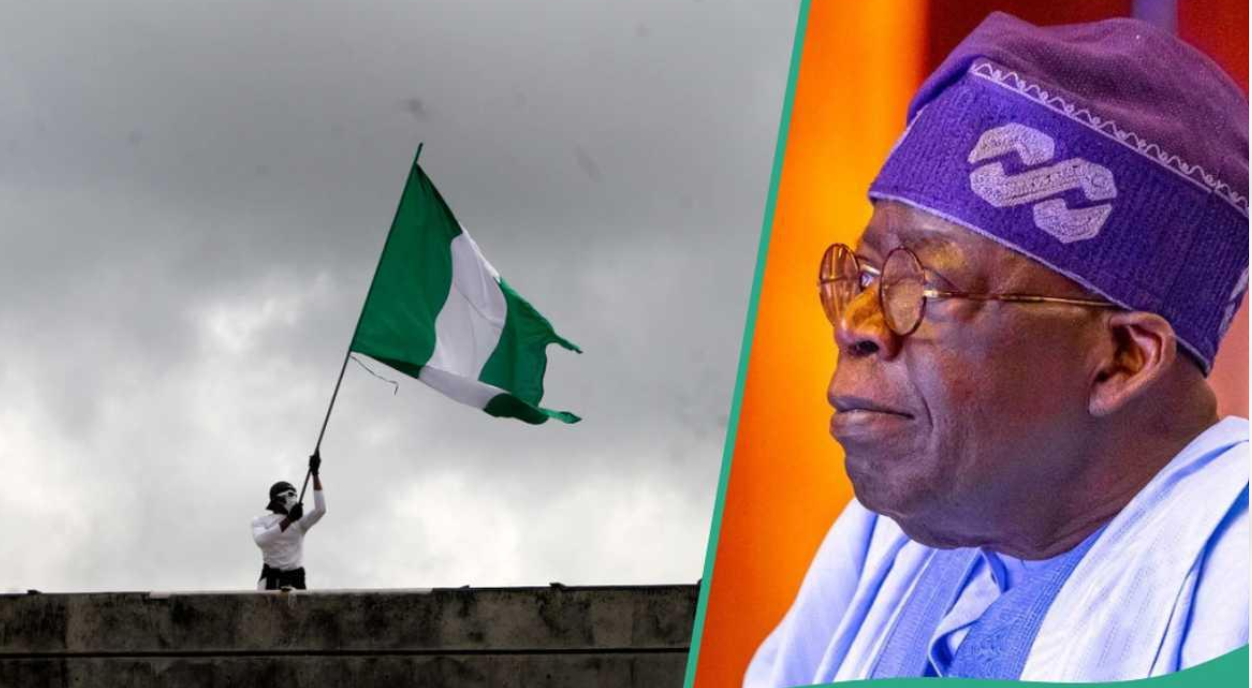
President Bola Tinubu has approached the House of Representatives seeking approval to implement Nigeria’s ₦10.79 trillion external borrowing component contained in the 2026 Appropriation Act.
The request is part of the Federal Government’s financing arrangements for the 2026 budget deficit and is expected to support the implementation of government expenditure commitments.
In a letter addressed to the Speaker of the House of Representatives, Tajudeen Abbas, the President requested legislative authorisation for the government to raise approximately $7.71 billion through external borrowing arrangements.
The letter was read during plenary on Wednesday, November 11, 2026.
According to the President, the proposed external borrowing amounts to ₦10,790,366,835,481, equivalent to $7,707,404,882.49 using the budget exchange rate of ₦1,400 to the dollar.
The request is connected to the borrowing plan already provided for in the 2026 Appropriation Act.
This means that the President is not introducing the entire ₦10.79 trillion as a new borrowing figure into the budget. Instead, the government is seeking the necessary legislative authorisation to proceed with the external borrowing arrangements.
How the borrowing arrangement is structured
Nigeria’s 2026 budget provides for total new borrowing of approximately ₦29.22 trillion to finance part of the Federal Government’s projected budget deficit.
The borrowing plan consists of domestic and external financing.
According to details contained in the presidential letter, the government plans to raise approximately ₦18.28 trillion through domestic borrowing and ₦10.79 trillion from external sources.
Domestic borrowing involves obtaining funds within Nigeria, including through government securities and other local financing arrangements.
External borrowing, on the other hand, involves obtaining funds from international financial institutions, foreign investors, bilateral partners and other overseas sources.
The President explained that the government intended to pursue different financing options simultaneously, taking into consideration the cost of borrowing and the time required to access the funds.
He also indicated that greater emphasis would be placed on Eurobond issuance because of the relatively faster process involved in raising substantial funds through international capital markets.
Eurobonds are debt securities issued in international markets and can provide governments with access to foreign currency financing.
However, they also create repayment obligations that must be managed carefully, particularly when the borrowing is denominated in dollars.
Why the government is seeking legislative approval
The presidential request is linked to the provisions of the Debt Management Office Establishment Act, 2003.
Specifically, Sections 21(1) and 27(1) establish requirements concerning legislative approval of external borrowing arrangements and their terms and conditions.
The provisions are intended to ensure that external borrowing is subjected to appropriate legislative oversight before the government proceeds with implementation.
This oversight is important because borrowing agreements can contain conditions relating to interest rates, repayment periods, fees, currency arrangements and other financial obligations.
By presenting the request to lawmakers, the government is seeking to satisfy the relevant statutory requirements.
The approval process also gives legislators an opportunity to examine the conditions attached to the proposed financing and consider the implications for public finances.
House of Representatives explains the request
Following the presentation of the presidential letter, Speaker Tajudeen Abbas clarified that the President was not seeking approval for an entirely new borrowing plan.
He explained that the ₦10.79 trillion external borrowing had already been provided for in the 2026 Appropriation Act and formed part of the National Assembly-approved borrowing framework.
According to the Speaker, the latest request concerns the statutory authorisation required to implement the external borrowing component.
Abbas also distinguished the request from a separate proposal by the President seeking additional borrowing.
He explained that the two matters were independent and would be considered separately.
The clarification is significant because public borrowing proposals can generate confusion when different financing requests are presented around the same period.
The distinction also means that the latest request should not automatically be interpreted as an increase in the borrowing figure already contained in the 2026 budget.
Nigeria’s growing debt obligations
The request has renewed discussions about Nigeria’s public debt and the government’s dependence on borrowing to finance budgetary expenditure.
The 2026 budget provides for a projected deficit of approximately ₦31.55 trillion, with new borrowing of about ₦29.22 trillion identified as a major financing source.
A budget deficit occurs when government expenditure exceeds its projected revenue.
Governments may borrow to cover the difference, particularly when they need to finance infrastructure, education, healthcare, security and other public programmes.
However, excessive borrowing can create financial pressure when debt repayment obligations consume a large proportion of government revenue.
Nigeria must therefore balance the need to finance development projects with the responsibility of maintaining sustainable public finances.
One major concern is the cost of servicing external debt.
Since many international loans are denominated in foreign currencies, a depreciation of the naira can increase the amount required to repay those obligations when converted into local currency.
For example, a dollar-denominated debt becomes more expensive in naira terms if the exchange rate moves against the local currency.
This can place additional pressure on government finances.
What the borrowing means for businesses and investors
The proposed financing arrangements could provide the government with additional resources to meet its expenditure commitments.
However, the economic benefits will depend on how the funds are used and whether the financed projects generate sufficient value.
Infrastructure investment can support economic activity by improving roads, electricity supply, transportation and other facilities required by businesses.
On the other hand, borrowing that does not translate into productive investment could increase the country’s debt burden without creating sufficient economic returns.
Investors will also monitor the government’s borrowing strategy because public debt levels can influence interest rates, foreign exchange conditions and confidence in the economy.
The Federal Government will therefore face the challenge of implementing its budget while ensuring that borrowing costs remain manageable.
The House of Representatives’ consideration of the request represents an important stage in the process of accessing the external financing already contained in the 2026 budget.