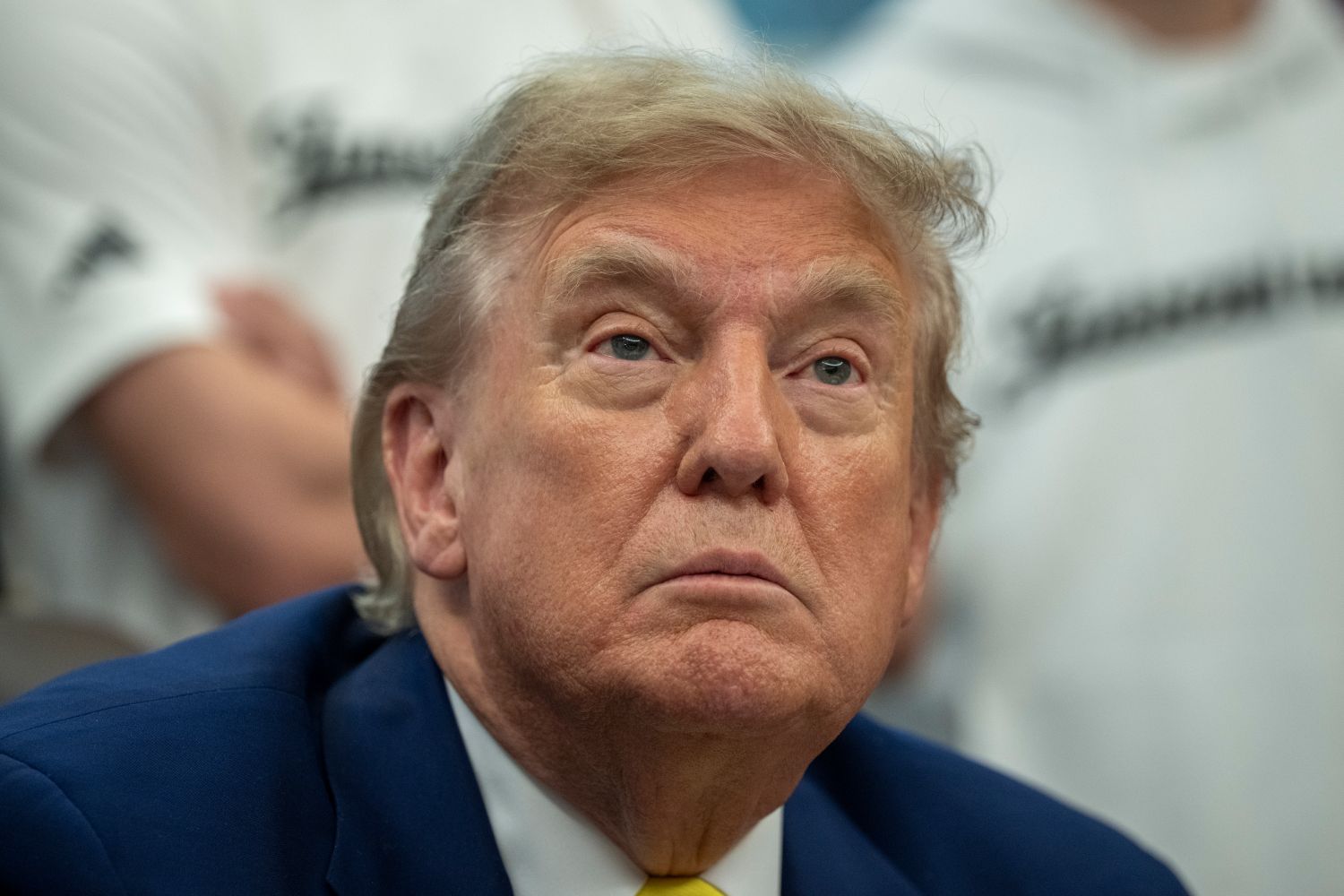
US President Donald Trump has vowed to launch the “most crushing” financial operation against Iran as Washington prepares to roll out new economic sanctions targeting the country’s trade partners.
Iran, in response, has threatened to shut down all oil exports from the Gulf if what it described as an economic war against the country continues.
The latest escalation comes despite the absence of direct military strikes between the warring sides for several weeks. The United States, Israel and Iran have also failed to make meaningful progress towards talks aimed at ending the six-month-old conflict.
Thousands of people have been killed since the United States and Israel began military strikes on February 28, with most of the casualties reported in Iran and Lebanon.
The conflict has significantly weakened Iran’s conventional military capabilities while placing further pressure on its economy.
Investors reacted to the prospect of fresh sanctions by pushing oil prices lower on Monday, with both major crude benchmarks falling 2.3%.
Brent crude was trading at about $92 per barrel as markets assessed the potential impact of Washington’s latest effort to isolate Iran economically.
The uncertainty also weighed on Asian equities, with markets largely lower in early Monday trading.
South Korea’s tech-heavy Kospi fell 1.4% after Samsung Electronics announced that it had spent about $80 billion buying back its own shares following weeks of volatile trading.
Samsung Electronics and rival SK hynix had benefited from strong investor optimism surrounding the artificial intelligence boom, with both stocks reaching peaks in June.
However, the shares have since retreated amid growing investor concerns and a broader sell-off in technology stocks.
Attention is also turning to Nvidia, the world’s most valuable company and one of the most closely watched indicators of the artificial intelligence sector.
Investors are awaiting the US chipmaker’s latest earnings report for signs of whether the massive investment boom in artificial intelligence can continue to generate sufficient returns.
Stephen Innes of SPI Asset Management said investors were increasingly focused on whether the enormous spending on AI infrastructure could continue to justify the valuations attached to the sector.
Alibaba is also drawing attention after the Chinese technology giant announced plans on Sunday to raise $10.2 billion through a new share issue in Hong Kong.
The company intends to use the funds to support its global artificial intelligence ambitions.
Alibaba, which has developed the open-source Qwen family of AI models, has invested tens of billions of dollars in the technology as shareholders seek clearer evidence of how the company plans to monetise those investments.
Asian markets were mixed, with Tokyo, Shanghai, Taipei and Wellington recording losses, while Sydney, Jakarta and Bangkok advanced. Manila and Kuala Lumpur were broadly flat.
Hong Kong’s benchmark also fell more than 2% despite news that fast-fashion retailer Shein plans to make its market debut in the city on September 1.
The long-awaited listing is expected to value the company at approximately $27 billion.
Markets are also awaiting further details from US Treasury Secretary Scott Bessent on Washington’s latest economic pressure campaign against Iran.
The United States warned its allies and China on Thursday to support the new sanctions campaign as the conflict approaches its six-month mark.
US Vice President JD Vance described the effort as a “delicate dance”, acknowledging that Iran could attempt to retaliate by applying economic pressure on the United States.
Bessent said some discussions with China would be better conducted privately but urged Beijing to support Washington’s strategy.
The developments have added another layer of uncertainty to global markets already grappling with inflation, interest rates, elevated government debt and concerns about the sustainability of the AI investment boom.
Investors are also watching this week’s annual gathering of central bankers, economists and finance officials in Jackson Hole, Wyoming, for signals about the direction of US monetary policy.
The gathering comes after the US Treasury purchased its own bonds last week in an effort to push borrowing costs lower following a surge in the 30-year Treasury yield to levels last seen in 2007, shortly before the global financial crisis.
US bond yields have risen amid renewed inflation concerns and mounting worries over the country’s fiscal position.
The United States recently reported that its federal debt had surpassed $40 trillion, adding to pressure on policymakers and increasing investor sensitivity to borrowing costs.
The combination of geopolitical tensions, potential sanctions on Iran, oil-market uncertainty, high US debt and questions over the sustainability of the AI boom is expected to keep global financial markets volatile in the days ahead.