US bond yields climbed to multi-decade highs on Tuesday as oil prices rose for a third consecutive session and renewed tensions between the United States and Iran weighed on global markets.
The yield on the US 30-year Treasury bond rose as much as 1.1 basis points to an intraday high of 5.321%, its highest level in almost 20 years.
The 10-year Treasury yield also increased, trading 0.4 basis point higher at 4.724%.
The move came as the temporary US-Iran truce expired and Tehran threatened to adopt a “fully offensive” military posture, raising concerns about a prolonged conflict and its potential impact on energy supplies.
Oil prices have risen alongside the renewed tensions, with Brent crude extending gains for a third day as investors monitored developments around the Strait of Hormuz.
The rise in long-term US yields reflects growing concerns about the potential inflationary impact of higher energy prices, while investors also remain focused on the outlook for US monetary policy and government borrowing.
“Typically, moves above 4.65% for the U.S. 10-year have been followed by some soothing words from the Trump administration, typically centred on an imminent resolution to the war with Iran,” ING analysts wrote in a note.
“This time, we’re not hearing the same,” they added, noting that the latest indications point to no imminent resolution after the 60-day truce ended.
The rise in Treasury yields also coincided with weaker sentiment in global equities.
S&P 500 E-mini futures fell 0.2%, while MSCI’s broadest index of Asia-Pacific shares outside Japan declined 0.3%, reversing earlier gains.
Asian markets also came under pressure as investors assessed the implications of the renewed geopolitical uncertainty.
South Korea’s KOSPI erased an early gain of more than 3% to trade broadly flat after the market reopened following a holiday.
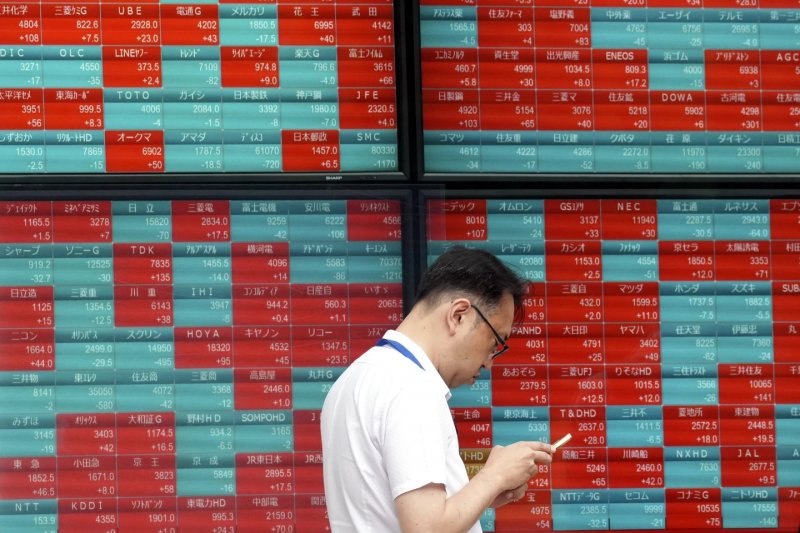
Japan’s Nikkei 225 fell 1.6%.
The combination of higher oil prices, rising bond yields and weaker equity markets highlights the growing pressure on global financial markets as investors assess the economic consequences of the renewed US-Iran tensions.
A prolonged disruption to energy flows through the Strait of Hormuz could push oil prices higher, potentially adding to inflationary pressures and complicating the outlook for interest rates and global economic growth.