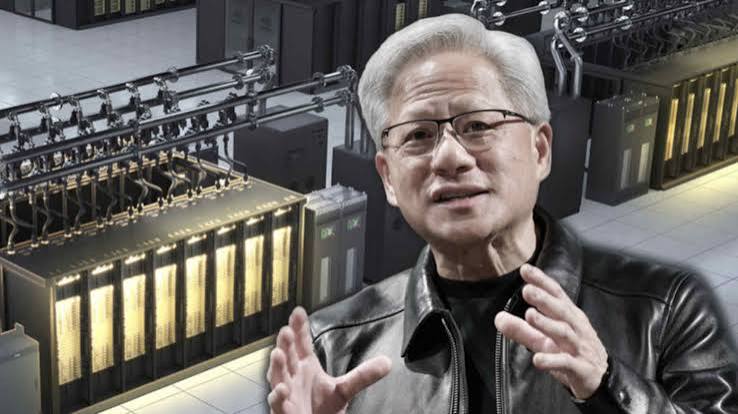
The United States is moving to tighten controls on access to its advanced artificial intelligence chips by Chinese companies, with a proposed regulatory measure targeting data centre operators that provide remote computing services to customers in China.
The proposed restrictions are aimed at limiting the ability of Chinese businesses to access high-performance American AI processors remotely through computing facilities operated outside China, particularly in Southeast Asia.
The development reflects Washington’s growing concern that restrictions on direct exports of advanced semiconductors could be undermined if Chinese companies obtain access to the same technology through overseas data centres and cloud computing providers.
Under the approach described in the report, the US government is seeking to address potential loopholes in its semiconductor export-control framework by extending scrutiny to third-party operators that provide computing capacity to restricted customers.
Southeast Asia has become an important part of the global data centre and semiconductor supply chain, attracting investments from technology companies seeking to expand computing infrastructure and serve growing demand for cloud and AI services.
The region’s strategic importance has also increased as US-China competition over advanced semiconductors, artificial intelligence and other critical technologies intensifies.
Advanced AI chips are essential for training and running large artificial intelligence models, supporting applications ranging from scientific research and industrial automation to defence and cybersecurity.
By restricting remote access, Washington would be seeking to prevent Chinese firms from obtaining computing capabilities that could otherwise be unavailable to them under existing export restrictions.
However, the proposed measures could have wider implications for international cloud service providers, data centre investors and technology companies operating across Southeast Asia.
The extent of the restrictions and their eventual implementation will be important in determining how the new approach affects global AI infrastructure investment and the broader technology relationship between the United States and China.