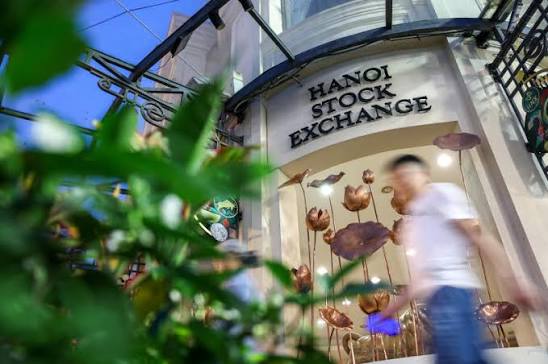
Vietnam has formally joined FTSE Russell’s emerging-market benchmark, marking a major milestone in the country’s long-running effort to modernise its capital market and attract larger international investment flows.
The upgrade follows years of regulatory and market reforms aimed at making Vietnamese equities more accessible to foreign investors.
Vietnam had been working towards the change since 2018, according to Reuters.
The transition will occur in phases, limiting the potential disruption associated with moving the country into indices followed by large global investment funds.
Up to $6bn Could Follow
Market participants estimate that the reclassification could eventually channel as much as $6 billion into Vietnamese equities, although such estimates are not guarantees of actual inflows.
That potential exists because investment funds around the world use FTSE indices as benchmarks.
When the composition of those indices changes, passive funds may need to adjust their portfolios accordingly, while active managers often reconsider their exposure.
Foreign investors were already increasing positions ahead of the transition.
Overseas investors purchased a net 2.7 trillion dong, approximately $104 million, of Vietnamese shares during the previous week.
Inclusion Will Be Gradual
Vietnam is not being added to the benchmark in one step.
The phased process is designed to give investors and market infrastructure time to accommodate the change.
This is particularly important for an emerging market where foreign ownership restrictions and available free float can limit how easily international institutions build large positions.
Those issues have not disappeared simply because FTSE upgraded the country.
Vietnam still faces restrictions affecting foreign ownership in some companies, while market liquidity varies significantly between stocks.
Vanguard Plans Larger Exposure
Major international asset managers are already paying attention.
Reuters reported that Vanguard intends to increase its investment exposure to Vietnam to approximately $2.5 billion.
That demonstrates the practical importance of international index classification.
A country’s equity market can contain profitable businesses, but global investors also care about whether they can easily purchase shares, settle transactions and eventually withdraw their capital.
Vietnam’s reforms have attempted to address those structural barriers.
MSCI Becomes Next Target
FTSE inclusion may not be the end of Vietnam’s market-reform ambitions.
Attention is increasingly shifting towards possible future inclusion in major MSCI emerging-market benchmarks.
One important requirement will be the planned introduction of a central counterparty clearing mechanism, expected in 2027.
Further progress could substantially increase Vietnam’s visibility among global portfolio managers.
The country’s experience also demonstrates how capital-market infrastructure can directly influence access to international money.
Investors consider economic growth and corporate profitability, but they also require efficient settlement systems, transparent regulation and confidence that capital can move freely.
Vietnam has spent years addressing those requirements.
Its entry into FTSE’s emerging-market universe therefore represents more than a change of label.
It is recognition of a broader effort to move the Vietnamese stock market closer to the infrastructure and accessibility standards expected by major international investors.