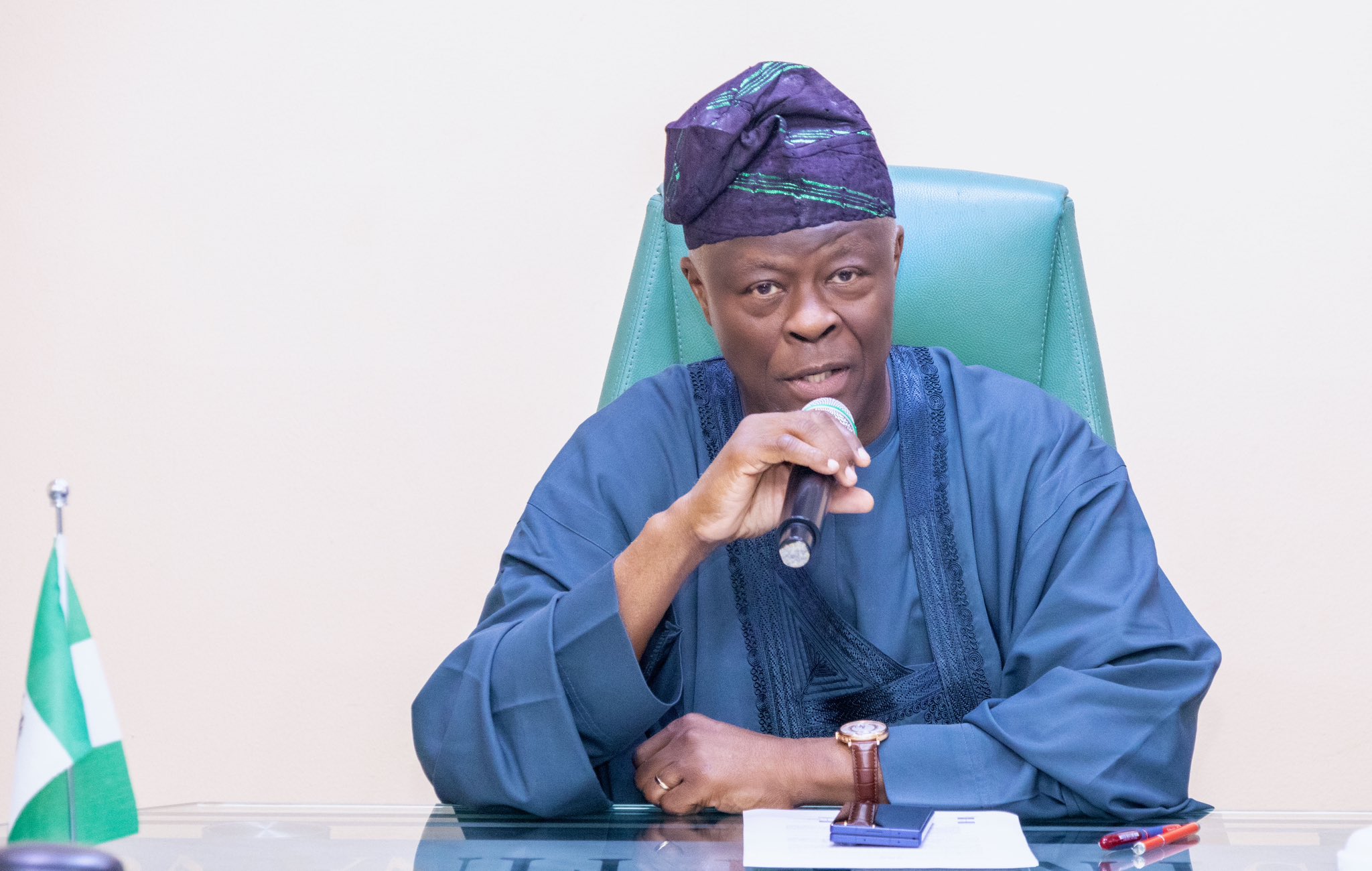
Nigeria’s Minister of Finance and Coordinating Minister of the Economy, Wale Edun, has ruled out any plan by the Federal Government to reintroduce fuel subsidy despite rising petrol prices linked to tensions in the Middle East.
Edun made the clarification on Tuesday during a media briefing of the Intergovernmental Group of Twenty-Four (G-24) on the sidelines of the launch of the April 2026 Global Financial Stability Report by the International Monetary Fund.
The minister, who assumed the chairmanship of the G-24 on November 1, 2025, said Nigeria and other oil-producing countries should prioritise targeted and temporary support for vulnerable populations rather than reversing economic reforms.
Responding to questions about the economic impact of the ongoing tensions involving Iran, Edun explained that the transmission of the crisis to emerging economies differs from what was experienced during the COVID-19 pandemic.
According to him, rising oil prices create mixed outcomes for oil-producing countries.
“It is not a one-way effect. Even oil-producing countries experience the transmission of higher costs, which feed through from gas prices to fertilizer and food prices,” he said.
While nations like Nigeria and Ecuador benefit from increased government revenues due to higher oil prices, the surge also raises costs of gas, fertiliser and food.
Edun stressed that governments must strengthen economic resilience by deploying existing fiscal buffers and implementing targeted relief measures for the poorest citizens.
He, however, firmly ruled out the return of fuel subsidies as a solution to the rising cost of petrol.
The minister noted that Nigeria’s 2023 economic reforms under President Bola Ahmed Tinubu—including the removal of fuel subsidies and the liberalisation of the foreign exchange market—were critical steps that had received positive recognition from global financial institutions.
Although the reforms have begun to produce progress, Edun said they have faced disruptions due to external shocks beyond Nigeria’s control.
He warned that reversing the reforms could undermine the gains already achieved.
“It is important to avoid a return to generalized subsidies or a relapse into policies that have not proven successful in the past,” Edun said.
“Instead, the focus should remain on supporting the poorest and most vulnerable in coping with current pricing pressures.”
The conflict in the Middle East has had a direct impact on global energy markets and Nigeria’s fuel prices.
Following attacks involving the United States and Israel on Iran, disruptions to oil flows through the Strait of Hormuz have tightened global oil supply.
As a result, petrol prices in Nigeria have surged sharply.
Industry data shows that pump prices rose from around ₦799 per litre before the conflict to about ₦1,200 per litre after price adjustments by the Dangote Refinery.
Analysts warn that with tensions escalating and oil shipments facing continued disruption, petrol prices could climb to as high as ₦2,000 per litre in the coming weeks without intervention.
The surge in fuel prices has already pushed up transportation and food costs across the country, worsening Nigeria’s ongoing cost-of-living crisis.