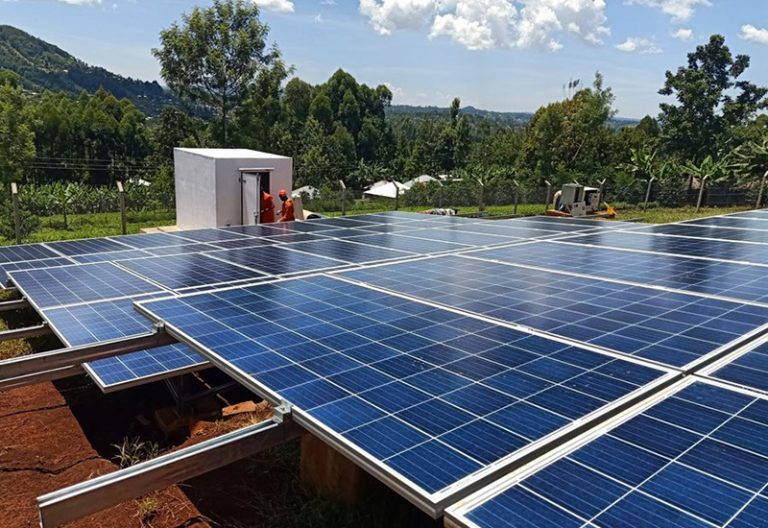
Nigeria imported an estimated 2.9 million solar panels valued at over N435bn in 2025, highlighting a growing shift toward alternative power sources as electricity supply challenges persist across the country.
Latest Foreign Trade Statistics released by the National Bureau of Statistics showed that solar panel imports remained significant throughout the year, placing the product among Nigeria’s top imported commodities.
The data revealed that photovoltaic cells assembled in modules or made into panels were imported in large volumes across all four quarters of 2025.
A breakdown showed that imports were valued at N125.29bn in the first quarter, N117.39bn in the second quarter, N92.00bn in the third quarter, and N100.83bn in the fourth quarter.
Solar panel imports declined by 6.3 per cent between the first and second quarters, before dropping further by 21.6 per cent in the third quarter, marking the sharpest contraction within the year.
However, demand rebounded in the final quarter as imports rose by 9.6 per cent, likely driven by worsening electricity supply and increased installations towards the end of the year.
Overall, the figures represent a 26.6 per cent decline from the peak in Q1 to the lowest point in Q3, before a partial recovery in Q4, bringing the total import value to N435.52bn for the year.
Based on market estimates, analysts say the import value translates to roughly 2.9 million large solar panels, assuming an average cost of N150,000 per unit for high-capacity panels ranging between 400W and 600W.
However, the volume could be significantly higher depending on panel capacity. Smaller panels commonly used by low-income households, priced at about N25,000, could translate to as many as 17.4 million units imported.
Similarly, medium-sized panels used by homes and small businesses, averaging N66,000 per unit, could indicate about 6.6 million units brought into the country during the year.
The wide disparity highlights the rapid adoption of entry-level solar solutions as households and small enterprises increasingly turn to cheaper energy alternatives.
Despite the heavy reliance on imports, the Federal Government has intensified efforts to promote local solar manufacturing.
The Managing Director of the Rural Electrification Agency, Abba Aliyu, said Nigeria’s installed solar module manufacturing capacity has increased to 600 megawatts, up from 110 megawatts previously.
According to him, several facilities have been established across the country, including a 100MW plant in Lagos, a 250MW facility in Abuja, and additional plants in Idu and Port Harcourt.
Aliyu noted that the number of renewable energy service companies operating in Nigeria has also grown significantly, rising from about 10 firms to more than 50 in recent years.
“We are changing the narrative. Nigeria now has the capacity to produce solar panels locally and support the transition to clean energy,” he said.
However, the latest import figures suggest that local production has yet to significantly reduce dependence on foreign solar panels.
China remained the dominant source of solar imports. In the second quarter alone, solar panels worth N88.60bn were imported from the Asian country, followed by N75.34bn in the third quarter and N100.83bn in the fourth quarter.
The surge in solar adoption reflects growing frustration with Nigeria’s unreliable electricity grid, which has been plagued by repeated system collapses, load shedding, and limited generation capacity.
Nigeria’s electricity generation often struggles to exceed 5,000 megawatts for a population of over 200 million, forcing many households and businesses to rely on alternative energy sources such as generators and solar systems.
Recent nationwide blackouts caused by grid failures have further exposed the fragility of the country’s power infrastructure.
The Minister of Power, Adebayo Adelabu, recently apologised to Nigerians for the persistent outages.
He attributed the disruptions to grid instability, gas supply challenges, and infrastructure limitations while assuring that the government is working to stabilise electricity supply.
“I want to apologise to Nigerians… for this temporary issue that is leading to hardship being experienced, especially during this dry season where there is so much heat everywhere,” Adelabu said.
Analysts say the rising adoption of solar power is a positive step toward clean energy transition, but it also reflects deeper structural problems within Nigeria’s power sector.
They warn that unless major investments are made in grid infrastructure, transmission capacity, and gas supply to power plants, the country may continue to see more consumers abandon the national grid in favour of independent energy solutions.