Nigeria’s largest banks posted mixed but largely reassuring financial results for the 2025 financial year, as strong revenue growth and expanding balance sheets helped cushion the impact of rising loan loss provisions and regulatory adjustments.
According to the audited financial statements for the year ended December 31, 2025, tier-one lenders collectively recorded gross earnings of N18.2tn, representing a 7.69 per cent increase from N16.9tn in 2024.
Access Holdings led the earnings growth with gross revenue rising to N5.52tn from N4.87tn in 2024. Zenith Bank followed with N4.07tn from N3.82tn, while First HoldCo posted N3.21tn compared to N3.37tn in the previous year.
United Bank for Africa recorded N2.97tn from N3.1tn, while Guaranty Trust Holding Company reported N2.11tn against N2.15tn in 2024.
The results showed that core banking operations remained resilient despite Nigeria’s challenging macroeconomic environment.
Interest income rose significantly across most lenders due to the country’s high-yield environment. Zenith Bank nearly doubled its interest income to N2.72tn, while GTCO’s figure climbed to N1.32tn.
Non-interest income also remained a key growth driver, particularly through digital banking channels. E-banking revenues across the major lenders increased to N685.5bn from N628.4bn in 2024, reflecting growing reliance on digital financial services.
Balance sheets expanded strongly during the period. Access Holdings grew total assets to N51.5tn from N41.4tn, while UBA and Zenith Bank crossed N33.7tn and N31.4tn respectively.
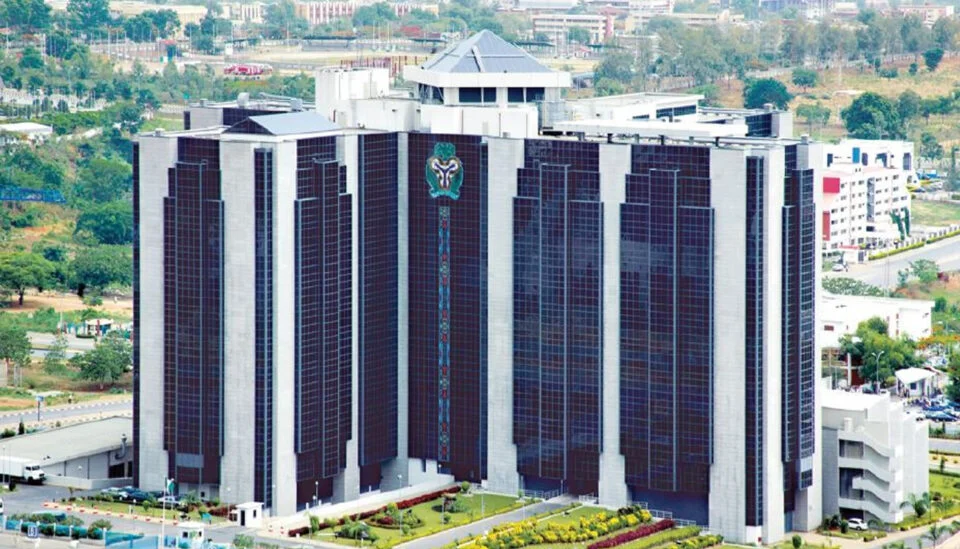
Shareholders’ funds also improved across the banking sector following the recapitalisation exercise introduced by the Central Bank of Nigeria.
The banking industry raised about N4.65tn in fresh capital over a two-year recapitalisation programme, with 33 banks meeting the revised capital requirements set by the apex bank.
The Governor of the Central Bank of Nigeria, Olayemi Cardoso, said the exercise had strengthened the resilience of the banking sector and improved its ability to absorb economic shocks.
Despite the stronger capital base, profitability came under pressure as banks increased provisions for bad loans following the gradual withdrawal of regulatory forbearance.
First HoldCo’s profit after tax dropped sharply to N52bn from N663bn in 2024, while UBA’s profit declined to N404bn from N766bn. GTCO also reported a fall in profit to N865bn from N1.01tn.
However, Zenith Bank maintained steady profitability at N1.04tn, while Access Holdings recorded growth with profit rising to N743bn.
The decline in profitability was largely linked to elevated impairment charges. UBA recorded loan loss provisions of N331bn, while First HoldCo’s impairments increased to N710bn from N371bn. Access Holdings also saw impairment charges on loans and advances surge by 209 per cent to N287.3bn.
UBA and First HoldCo explained that the temporary pause in dividend payments reflected prudent risk management decisions and efforts to strengthen their balance sheets.
Investor sentiment remained positive despite the earnings pressure, as banking stocks helped drive gains on the Nigerian Exchange.
Market data showed the NGX Banking Index rose by 0.36 per cent to 2,290.78 points on May 4, 2026. The broader All-Share Index also advanced by 0.36 per cent to 243,158.97 points, while market breadth remained positive with 54 stocks closing higher.
Banking stocks such as GTCO and Stanbic IBTC Holdings contributed significantly to the rally, gaining 3.70 per cent and 9.70 per cent respectively.
Analysts say the sector’s stronger capital position and ongoing clean-up of loan books could place Nigerian banks in a better position for long-term growth despite short-term pressure on earnings.