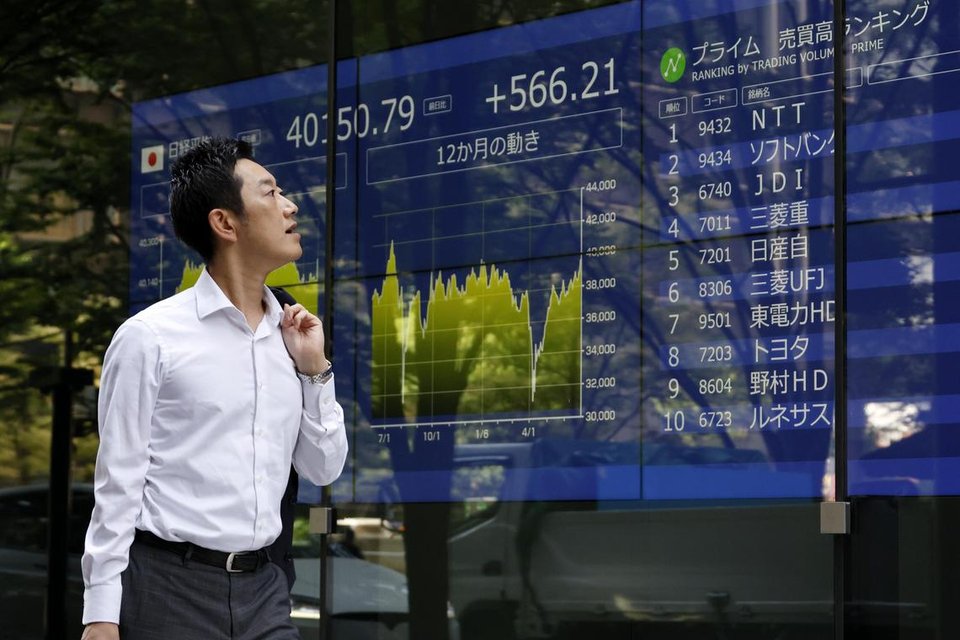
Asian equities retreated from record levels on Friday as rising geopolitical tensions in the Middle East triggered renewed concerns over global energy supplies and economic stability.
The MSCI Asia Pacific Index fell 1.2 percent, with declining stocks outnumbering gainers by more than two to one. Despite the pullback, the index remains on track for its fifth consecutive weekly gain, its longest winning streak since January.
Market sentiment weakened after clashes involving the United States and Iran escalated in the Middle East, raising fears of disruptions to global oil shipments, particularly through the strategically vital Strait of Hormuz.
Crude oil prices reacted sharply, with Brent crude rising about 1 percent to roughly $101 per barrel after three days of losses. However, the commodity remains down more than 6 percent for the week, highlighting volatility in energy markets.
The rebound in oil prices was driven by concerns that prolonged conflict could threaten supply routes and increase global energy costs, potentially slowing economic growth worldwide.
US stock-index futures briefly erased early losses, recovering to a 0.2 percent gain as some investors bet that the impact of the tensions may remain contained in the short term.
The geopolitical escalation follows reported exchanges of fire involving US naval forces and Iranian attacks in the Strait of Hormuz, a critical artery for global oil and gas shipments.
Former US President Donald Trump warned that the United States could respond with greater force if Iran does not reach an agreement quickly, further intensifying market uncertainty.
Analysts say the current market reaction reflects a tug-of-war between strong equity momentum and rising geopolitical risk, particularly in energy-sensitive sectors.