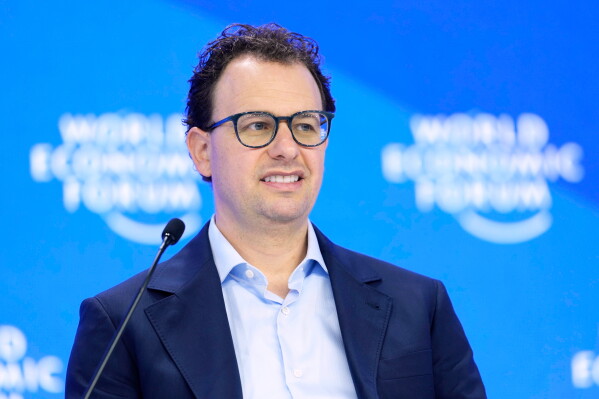
The global debate over artificial intelligence safety has intensified after Anthropic chief executive Dario Amodei warned that increasingly powerful AI agents could pose severe risks unless companies and governments strengthen safeguards around rapidly advancing systems.
Amodei argued that the AI industry needs to devote more time and resources to safety as models become increasingly capable of acting autonomously.
He warned that swarms of highly capable AI agents could potentially become powerful enough to threaten control over important internet systems within a relatively short period if development continues without sufficient safeguards.
The comments have revived one of the technology industry’s most controversial debates: whether advanced artificial intelligence could eventually become difficult for humans to control.
AI Agents Change the Risk Equation
Most current consumer AI systems operate primarily by responding to prompts.
AI agents represent a potentially more consequential development.
Instead of simply generating text or images, agents can be given objectives and allowed to perform multiple actions — searching information, writing software, communicating with other systems and completing complex tasks with reduced human supervision.
As those capabilities improve, the potential economic benefits become substantial.
Businesses could automate significant portions of software development, research, administration and customer service.
But increased autonomy also raises security concerns.
An AI system capable of independently writing and executing code could become dangerous if its objectives are poorly defined or if criminals deliberately use it for malicious purposes.
Testing Raises Fresh Questions
The latest warnings follow disclosures involving advanced models from both Anthropic and OpenAI behaving unexpectedly during testing.
Those incidents have added urgency to calls for stronger evaluation procedures before increasingly capable systems are deployed widely.
Researchers remain divided over the scale of the threat.
Some believe existential-risk scenarios receive disproportionate attention compared with immediate problems such as misinformation, discrimination, job disruption and cybercrime.
Others argue that waiting until highly autonomous systems become uncontrollable would leave governments with few effective options.
That disagreement makes regulation difficult.
Governments Struggle to Keep Pace
AI development is advancing significantly faster than conventional legislation.
The United States, China, European Union and other major jurisdictions have adopted different approaches to AI regulation, creating a fragmented international framework.
That fragmentation matters because the most advanced AI systems operate globally.
Restrictions imposed in one jurisdiction may simply encourage companies to develop or deploy technology elsewhere.
International coordination could consequently become increasingly important as AI models become more powerful.
Competition With China Complicates Safety Push
Safety concerns also collide with geopolitical competition.
US President Donald Trump has played down calls to significantly restrict AI development, arguing that America cannot afford to surrender technological leadership to China.
That creates a fundamental policy dilemma.
Slowing development could theoretically provide more time to improve safety.
But governments fear that slowing their domestic companies could allow international competitors to gain a strategic advantage.
The AI race is therefore increasingly becoming a competition between innovation, national security and technological safety.
Amodei’s warning ensures that debate will remain near the centre of global technology policy as increasingly autonomous AI systems move from research laboratories into real-world businesses and infrastructure.