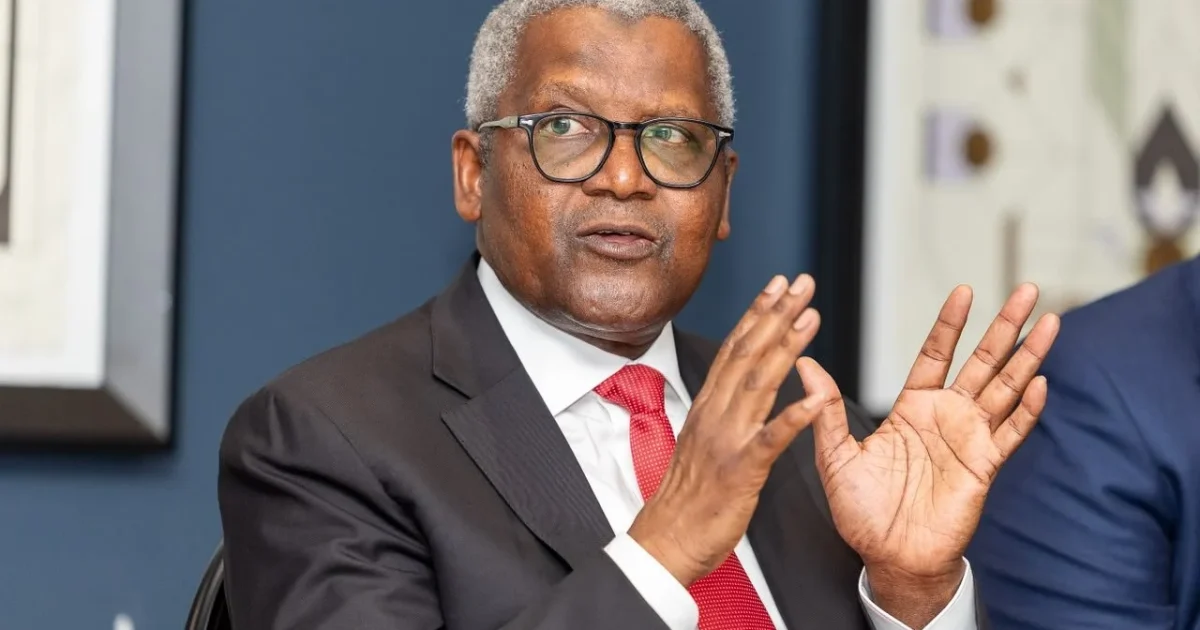
Aliko Dangote plans to invest more than $10 billion in the power sector, placing electricity at the centre of his push for industrial growth in Africa. The proposal could redirect funds from other planned businesses, including steel.
The Nigerian industrialist says unreliable power and unpredictable government policies remain major barriers to investment. His announcement links a potential change in business strategy to a broader argument: factories, jobs and local production need dependable electricity.
However, the commitment remains an investment ambition. The public remarks reviewed for this report do not provide a full project list, financing structure or schedule for delivering new capacity.
Dangote considers shifting capital towards electricity
Dangote outlined the plan in an Al Jazeera interview reported by PUNCH. He said the group could drop one or two proposed ventures and put the money into power instead.
He also argued that Africa needs stronger industrial production to create employment and reduce dependence on imports. In that account, electricity is a basic requirement for growth across several sectors.
The possible reallocation is significant because it concerns how the group would prioritise future spending. It does not establish that particular steel projects have already been cancelled or that electricity projects have reached construction.
Further announcements would need to identify the countries involved, the technologies selected and the customers the projects would serve.
Africa’s electricity gap remains substantial
The proposal comes against a large access deficit. In its 2025 report on electricity access financing, the International Energy Agency estimated that almost 600 million people in Africa lacked electricity.
The agency also found that less than $2.5 billion was committed to new electricity access connections in sub-Saharan Africa in 2023. That figure concerns access-related financing, rather than all investment across the power industry.
The distinction is important when assessing Dangote’s announcement. Investment in a large power station may support industry or existing grid customers. It does not automatically connect households that currently have no supply.
Reaching those households can require distribution lines, local networks, meters and affordable service arrangements, alongside additional generation.
Industrial customers could help support new projects
Dangote’s existing industrial operations could provide an initial customer base for some power investments. That possibility may help explain the commercial appeal of entering the sector.
A power project needs buyers capable of purchasing electricity consistently. If an associated industrial business becomes a customer, it could help make future demand easier to estimate.
That is a potential advantage, rather than a confirmed structure for Dangote’s proposed projects. No detailed electricity purchasing arrangements were disclosed in the remarks reviewed.
It would also leave wider questions about public access. Electricity supplied directly to a factory serves a different purpose from a network designed to connect homes, schools and small businesses.
Both can support development, but their benefits should be assessed separately.
Financing must translate into affordable service
The IEA estimates that achieving universal electricity access in sub-Saharan Africa by 2035 would require almost $150 billion under its access scenario. Spread across a decade, that is roughly $15 billion a year.
The scale highlights why one company’s investment, however substantial, cannot resolve the continent’s needs alone. Governments, utilities, development lenders and other private investors would still have major roles.
Affordability is another part of the challenge. A connection has limited value if customers cannot pay for enough electricity to use it regularly.
The IEA’s analysis identifies financing costs and support for consumers or developers as factors that can affect affordability.
What will determine the plan’s impact?
The next stage will be the conversion of Dangote’s ambition into specific investments. Project locations, capacity, funding and delivery dates would allow a clearer assessment of the proposal.
The customer mix will also matter. Projects focused on industrial users could strengthen manufacturing, while investments in public networks or local electricity systems could reach a different set of beneficiaries.
For businesses, the practical benefits would depend on reliability and cost. For households without power, the central question would be whether the investments help deliver a usable, affordable connection.
Dangote has placed electricity near the top of his investment agenda. The evidence of delivery will come through completed infrastructure and sustained service, rather than the size of the announcement alone.