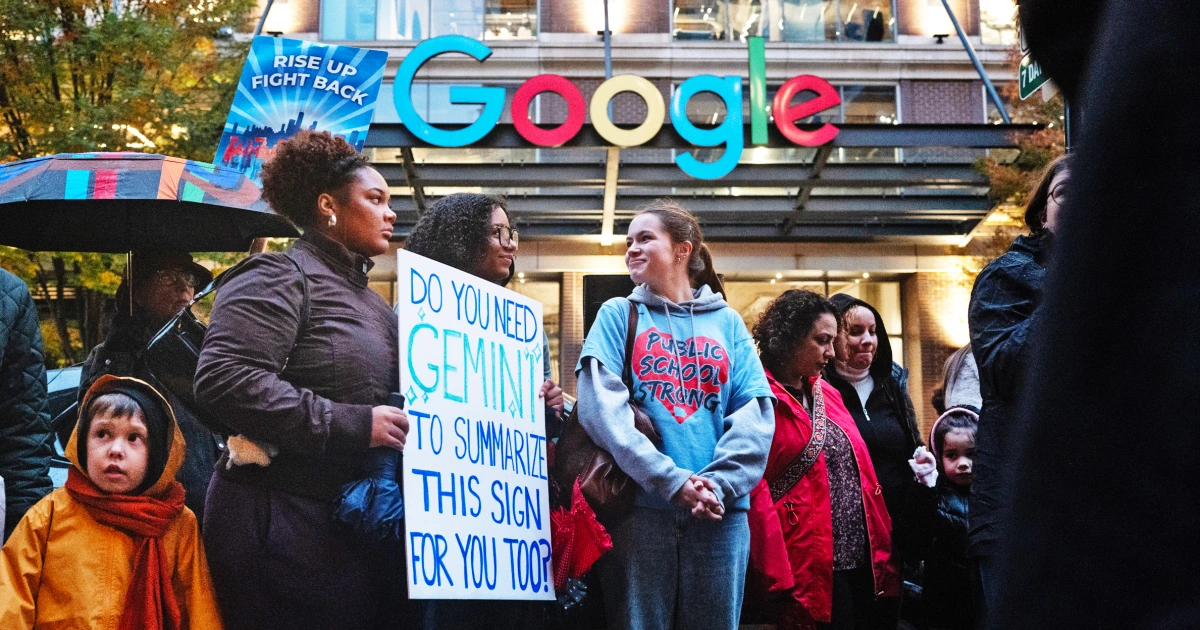
Google is facing renewed scrutiny over the use of artificial intelligence in schools following a lawsuit alleging that its Gemini AI technology, incorporated into educational products used by children, exposed a 13-year-old student to harmful interactions and contributed to a severe psychological crisis.
The legal action, filed in the United States by the parents of a teenager identified in court documents as Emma, alleges that Google introduced its Gemini technology into products used in kindergarten-to-12th-grade education without adequate safeguards to protect young users.
According to the complaint, the teenager developed an increasingly concerning relationship with the AI system, treating it as a confidant before experiencing an acute psychological crisis that allegedly brought her close to suicide.
The lawsuit was filed by the EdTech Law Center and Qureshi Law in the Santa Clara County Superior Court in California.
The parents allege that the company failed to adequately assess or address the risks associated with making advanced conversational AI available to children through educational platforms.
The complaint also raises questions about the ability of AI systems to recognise when a young user is experiencing emotional distress and respond appropriately by directing them towards trusted adults or professional support.
One aspect of the case concerns the monitoring arrangements at the teenager’s school. According to the legal complaint, a former school counsellor who had left the institution several months earlier continued receiving alerts through third-party monitoring software.
The former counsellor reportedly alerted the teenager’s mother after identifying indications that the child was in immediate danger. The complaint alleges that the mother subsequently accessed her daughter’s school account and observed her composing a suicide note before her father intervened.
These allegations have not been established in court, and the case remains a legal dispute. Google’s liability and the precise circumstances surrounding the teenager’s experience will be matters for the judicial process.
The lawsuit nevertheless adds to growing concerns about the use of generative AI systems by children, particularly in educational environments where students may interact with digital assistants without constant adult supervision.
AI-powered classroom tools are increasingly being promoted as ways to support learning, provide personalised explanations, assist teachers and help students complete academic tasks. However, their conversational capabilities also raise questions about how children interpret responses from systems that can imitate human dialogue and provide seemingly personal advice.
The concerns extend beyond the accuracy of educational information to include privacy, age-appropriate design, emotional dependence, harmful content and the ability of AI systems to identify high-risk interactions.
For schools and education authorities, the case highlights the importance of evaluating the safety of AI products before introducing them into learning environments, establishing clear rules for student use and ensuring that human supervision remains central to child protection.
It also places greater responsibility on technology companies to demonstrate that their products have appropriate safeguards, especially when they are designed for or made available to minors.
As generative AI becomes more deeply integrated into education, the legal action could contribute to wider debates over the responsibilities of technology providers, schools and regulators in protecting young users from potential harm.