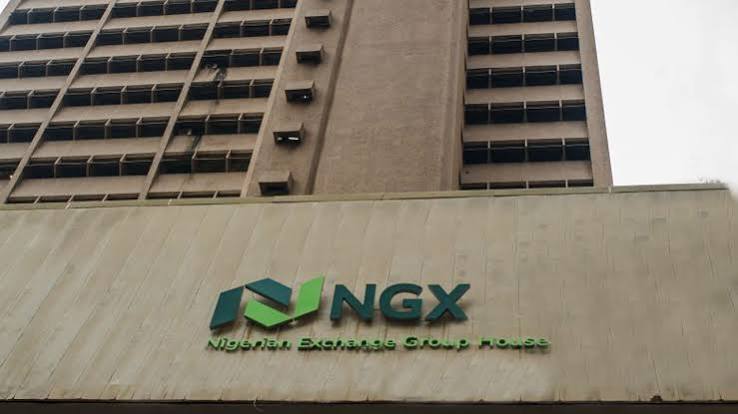
The Nigerian equities market closed Wednesday’s trading session on a bearish note, as losses across major stocks, particularly Unilever Nigeria, Zenith Bank, Nigerian Breweries and HBMNG, dragged the benchmark All-Share Index lower.
The All-Share Index declined by 0.3 per cent to close at 245,685.88 points, reflecting renewed selling pressure in key counters on the Nigerian Exchange (NGX).
The decline pushed the market’s month-to-date return to negative 3.4 per cent, although the year-to-date return remained positive at 57.9 per cent, indicating that the equities market has retained a substantial gain over the course of the year despite the recent pullback.
Among the major decliners, Unilever Nigeria shed 10 per cent, while HBMNG and Nigerian Breweries lost 4.5 per cent and 4.3 per cent, respectively. Zenith Bank also declined by 3.2 per cent, contributing to the overall weakness in the market.
The downturn, however, did not translate into a reduction in trading activity, as total volume advanced by 11 per cent to 489.50 million shares. These shares were exchanged in 31,670 deals, with a combined value of N28.21 billion.
AIICO Insurance emerged as the most actively traded stock by volume, accounting for 72.09 million units, while Presco Plc led transactions by value, with shares worth N6.01 billion changing hands.
Sectoral performance was largely negative, with three of the five major sector indices closing lower. The Consumer Goods Index declined by 0.8 per cent, while the Industrial Goods and Banking indices fell by 0.6 per cent and 0.5 per cent, respectively.
The Insurance Index bucked the broader market trend, gaining five per cent, while the Oil and Gas Index closed unchanged.
Market breadth also reflected the negative sentiment, with 29 stocks recording losses against 22 gainers, representing a market sentiment ratio of 0.8x.
Unilever Nigeria and Legend Internet led the losers’ table, shedding 10 per cent and 9.7 per cent, respectively. On the gaining side, NEM Insurance and Cornerstone Insurance recorded the strongest advances, appreciating by 10 per cent each.
The session’s performance points to continued profit-taking and selective selling across key stocks, even as trading turnover remained relatively strong. The divergence between higher trading activity and the decline in the benchmark index suggests that investors remained active but traded amid a predominantly negative market direction.