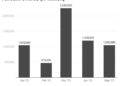
Deposits by Nigerian banks at the Central Bank of Nigeria (CBN) have risen above ₦6 trillion following the repayment of ₦2.41 trillion in matured Open Market Operations (OMO) securities, highlighting the substantial liquidity available within the banking system.
Reports published on October 18 indicated that banks’ net placements at the CBN’s Standing Deposit Facility (SDF) exceeded ₦6 trillion for three consecutive days after the apex bank settled the maturing securities.
The Standing Deposit Facility allows eligible financial institutions to place excess funds with the central bank, earning interest under the applicable monetary-policy framework. Movements in these placements provide an indication of liquidity conditions, although they do not, on their own, establish how much credit banks are willing or able to extend to businesses and households.
The increase followed the repayment of matured OMO instruments, which returned funds to the financial system. Banks may choose to place some of the money with the CBN rather than deploy it immediately into lending or other investments, depending on prevailing returns, liquidity requirements and risk considerations.
The development comes after the CBN reduced its Monetary Policy Rate from 26.5 per cent to 23 per cent at its September 21–22, 2026, meeting, reflecting a change in the monetary-policy stance.
However, a reduction in the benchmark rate does not automatically translate into cheaper loans. Lending rates also depend on banks’ funding costs, borrowers’ creditworthiness, inflation expectations and the perceived risks of different sectors.
For businesses, particularly manufacturers and small enterprises, the key question is whether improved liquidity will eventually translate into greater access to affordable credit. High borrowing costs and collateral requirements have continued to constrain financing for many businesses.
The volume of funds held at the CBN also presents a monetary-policy consideration. While the central bank needs to maintain orderly liquidity conditions, excess funds can influence short-term market rates and the effectiveness of its monetary operations.
The CBN uses instruments including OMO securities and standing facilities to manage liquidity and influence conditions in the financial system. Their effectiveness depends on how banks respond to changing yields and the broader economic outlook.
Meanwhile, the banking sector’s recapitalisation programme has strengthened the focus on capital adequacy and the ability of lenders to support economic activity. CBN Governor Olayemi Cardoso was reported on October 18 as saying that domestic investors provided slightly more than 20 per cent of the ₦4.65 trillion raised by banks under the recapitalisation exercise.
The latest liquidity figures therefore highlight two related but distinct issues: the amount of cash available to banks and the extent to which that liquidity can be converted into productive lending.
For policymakers, the challenge will be to maintain price stability while ensuring that financial conditions support sustainable investment and economic growth.