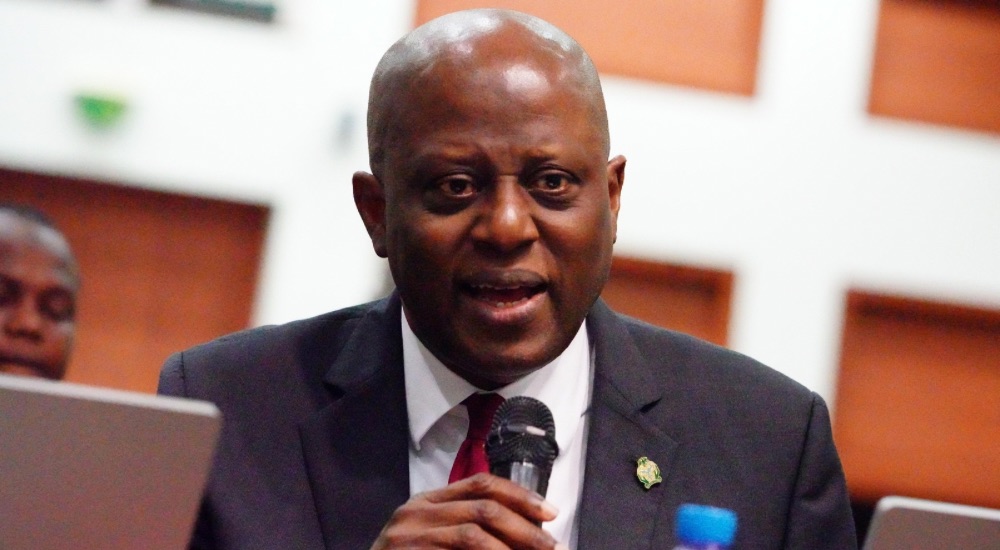
CBN Governor, Olayemi Cardoso, has redefined diaspora remittances as a strategic pillar of Nigeria’s foreign exchange stability, saying the country is deliberately strengthening its external buffers through sustained inflows from Nigerians abroad.
Speaking at a media briefing in Washington DC during the IMF–World Bank Spring Meetings, Cardoso said remittances are no longer being treated as supplementary inflows but as a core component of Nigeria’s evolving FX framework.
He noted that despite fluctuations in external reserves, Nigeria’s fundamentals remain strong and above the International Monetary Fund’s adequacy thresholds.
“What worries me is the anxiety in Nigeria, not the fundamentals,” he said.
Cardoso said Nigeria currently receives about $600 million monthly in diaspora remittances, with plans to raise the figure to $1 billion per month by the end of the year. He described diaspora inflows as one of the most stable sources of foreign exchange in a volatile global economy.
According to him, Nigerians abroad are now seen as key contributors not just to household income but to national macroeconomic stability, especially amid oil price volatility and tightening global liquidity conditions.
The CBN governor said reforms have been introduced to deepen and formalise remittance channels through improved payment systems and expanded access via International Money Transfer Operators (IMTOs).
He also highlighted efforts to address bottlenecks such as delays in Bank Verification Number (BVN) registration, which previously limited participation in formal remittance systems.
“These are not just technical fixes, they are about capturing value that already exists in the system,” he said.
Cardoso said ongoing foreign exchange reforms, including a more market-driven exchange rate regime, have improved transparency and reduced distortions, even if they have led to short-term volatility.
In this framework, he said remittances are playing a stabilising role by providing steady inflows that help balance FX demand pressures.
He maintained that Nigeria’s external position remains fundamentally strong despite recent reserve fluctuations, describing the movements as part of a normal adjustment process in a transitioning FX system.
Minister of Finance and Coordinating Minister of the Economy, Wale Edun, also supported the outlook, saying Nigeria is moving from stabilisation toward growth, backed by fiscal discipline and structural reforms.
Edun added that remittances, alongside improved debt management and fiscal adjustments, are helping to strengthen Nigeria’s external resilience and support recovery.
He said the government is also expanding social safety nets while sustaining reform efforts aimed at long-term economic growth.
The emerging policy direction highlights a shift in Nigeria’s economic thinking: diaspora remittances are increasingly being treated not just as household support flows, but as critical financial infrastructure underpinning national stability.