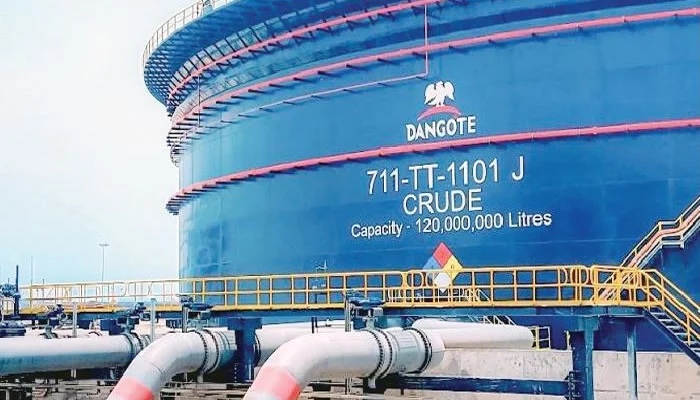
Dangote Petroleum Refinery has challenged claims that it rejected 15.5 million barrels of crude oil offered by local producers in the second quarter of 2026.
The refinery said the figures recently released by the Nigerian Upstream Petroleum Regulatory Commission (NUPRC) do not fully reflect the circumstances surrounding the crude offers, particularly the difference between crude that is nominally allocated and volumes genuinely available for purchase on competitive commercial terms.
The Group Vice President, Oil & Gas and Fertiliser, Dangote Industries Limited, Devakumar Edwin, said the major challenge facing domestic refining is not simply the volume of crude allocated to refiners, but whether the crude is available in sufficient quantities and at commercially viable prices.
“Our position is straightforward. We are ready and willing to purchase Nigerian crude oil, provided it is available in sufficient volumes and at competitive market prices,” Edwin said.
He said the refinery remains committed to purchasing Nigerian crude and supporting the Federal Government’s Domestic Crude Supply Obligation (DCSO), but warned that crude offered above prevailing international benchmarks could undermine the economics of domestic refining.
According to Edwin, the refinery has consistently faced difficulties securing adequate volumes of Nigerian crude directly from domestic producers since the implementation of the DCSO framework.
He explained that a significant portion of the refinery’s crude supply under the DCSO arrangement has had to be sourced through International Oil Companies (IOCs) and third parties because of challenges in obtaining direct supplies from domestic producers.
Edwin said the additional layers of transactions could introduce premiums and other costs, making Nigerian crude more expensive than alternative supplies available on the international market.
“When additional layers of intermediaries introduce premiums, the cost of crude acquisition increases significantly, affecting the overall economics of domestic refining. Ultimately, higher crude costs translate into higher costs of refined petroleum products for the local market,” he said.
The refinery maintained that it is not opposed to purchasing Nigerian crude, but wants domestic supplies to be adequate, accessible and competitively priced.
NUPRC’s Q2 DCSO statistics showed that Dangote Refinery required 63 million barrels of crude during the quarter, while producers offered 68.1 million barrels.
The commission said the 68.1 million barrels offered to Dangote Refinery represented 98 per cent of all crude volumes offered under the arrangement.
According to the NUPRC data, the refinery eventually accepted 52.6 million barrels, representing 78 per cent of the volume offered.
Dangote, however, argued that interpreting the difference between the volume offered and the volume accepted as a straightforward rejection of 15.5 million barrels fails to account for the commercial conditions attached to the crude offers.
The refinery said securing crude at sustainable prices is essential to maintaining efficient domestic refining and ensuring that petroleum products can be supplied to Nigerians at affordable and competitive prices.