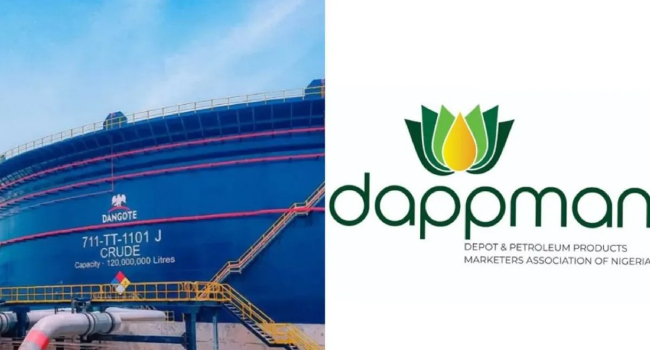
The Depot and Petroleum Products Marketers Association of Nigeria (DAPPMAN) has opposed a fresh lawsuit filed by the Dangote Petroleum Refinery seeking to invalidate fuel import licences issued by the Nigerian Midstream and Downstream Petroleum Regulatory Authority (NMDPRA).
The latest legal dispute follows an earlier court challenge by the refinery against the issuance of import permits to several fuel marketers. Dangote Refinery had argued that the approvals violated the spirit of the Petroleum Industry Act (PIA), which prioritises local refining and allows fuel imports only when there are supply shortages in the domestic market.
Although the refinery previously withdrew the case, fresh court documents seen by Reuters showed that it has now returned to the Federal High Court in Lagos, asking the court to void import licences granted to fuel importers by the NMDPRA.
In a statement issued on Sunday, DAPPMAN said it would resist any attempt that could force its members’ depots into extinction through judicial action.
The association argued that the licences being challenged are not merely administrative approvals but legal instruments issued under the Petroleum Industry Act to ensure Nigeria’s fuel supply security.
The dispute comes shortly after the NMDPRA reportedly granted import licences to some oil marketers to bring more than 600,000 metric tonnes of petrol into the country.
Since the commencement of operations at the 650,000 barrels-per-day Dangote Refinery, the company has consistently maintained that continued issuance of fuel import licences undermines local refining efforts, weakens investor confidence, and encourages continued dependence on imported petroleum products despite existing domestic refining capacity.
DAPPMAN, however, insisted that the NMDPRA acted within its legal powers in issuing the permits.
According to the association, the regulator’s statutory responsibility is to guarantee uninterrupted fuel supply for Nigerians rather than protect the commercial interests of any single refinery, regardless of its scale.
The marketers further stated that their members had invested billions of naira in depot infrastructure, logistics networks, and compliance systems based on the understanding that the import licences granted by the regulator were lawful and protected under Nigerian law.
They warned that any move to retroactively invalidate the approvals could create uncertainty within the downstream petroleum sector at a critical period for fuel supply stability.
“The import licences at the centre of this lawsuit are not administrative courtesies. They are the legal instruments through which Nigeria’s fuel supply chain functions,” the association stated.
According to DAPPMAN, the NMDPRA has consistently defended the issuance of import permits as necessary measures for protecting national energy supply and ensuring market stability.
The association also noted that the regulator’s position had previously been upheld in court and should continue to stand.
While acknowledging Dangote Refinery’s constitutional right to seek legal redress, DAPPMAN rejected what it described as the broader argument that the commercial interests of a private refinery should override the statutory powers and responsibilities of the sector regulator.
Industry analysts say the dispute reflects growing tensions within Nigeria’s downstream petroleum industry as the Dangote Refinery expands its operations and seeks a larger share of the domestic fuel market.
The case is also expected to test the interpretation of the Petroleum Industry Act regarding the balance between promoting local refining and maintaining fuel supply security through imports.