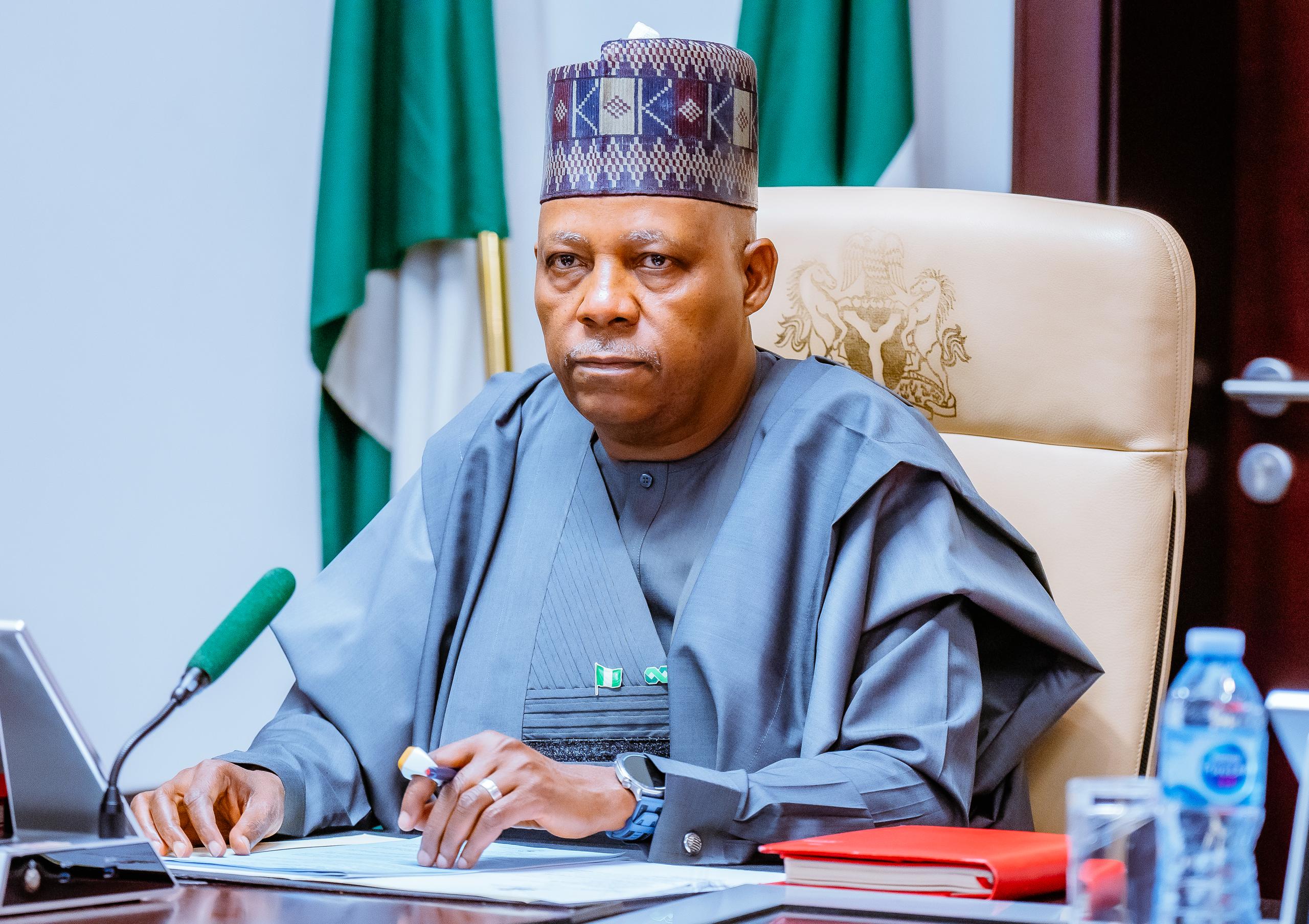
The Federal Government has defended its ongoing economic reforms, saying that although the measures have imposed significant hardship on businesses and households, they have helped stabilise Nigeria’s economy and laid the foundation for sustainable long-term growth.
Vice President Kashim Shettima and the Minister of Finance and Coordinating Minister of the Economy, Wale Edun, made the case for the reforms on Monday at the fifth Nigeria Employers’ Summit in Abuja, where they acknowledged the economic challenges facing Nigerians but insisted that the policies were necessary to avert fiscal collapse.
Represented by his Special Adviser on General Duties, Aliyu Modibbo Umar, Shettima said the administration inherited an economy weighed down by unsustainable fuel subsidies, weak government revenues, a fragmented foreign exchange market and declining investor confidence.
He said postponing difficult decisions would have worsened the country’s economic challenges, stressing that leadership required taking bold actions despite the immediate consequences.
According to the Vice President, the Renewed Hope Agenda was introduced to address long-standing structural distortions that had hindered economic growth and discouraged investment.
Shettima defended the removal of fuel subsidy and the liberalisation of the foreign exchange market, describing both reforms as critical steps toward restoring macroeconomic stability.
He noted that the fuel subsidy regime had become fiscally unsustainable, while the foreign exchange reforms were creating a more transparent and market-driven system.
The Vice President also said the administration’s tax reforms are aimed at reducing the number of taxes, harmonising tax administration, supporting small businesses and expanding the tax base needed to finance critical infrastructure.
He added that interventions in the power sector, gas development, debt management and the Presidential Compressed Natural Gas (CNG) Initiative are intended to reduce energy costs for businesses and households.
Shettima urged the private sector to take advantage of the reforms by investing in productive sectors capable of creating jobs and driving economic growth.
Speaking during a panel session at the summit, the Minister of Finance and Coordinating Minister of the Economy, Wale Edun, admitted that the reforms had been painful but maintained that Nigeria’s economy is in a stronger position than it was three years ago.
He said the administration inherited an economy facing dwindling foreign exchange liquidity, mounting debt obligations and limited fiscal space, making comprehensive reforms unavoidable.
According to Edun, the country has begun to record positive outcomes, including improved external reserves, stronger investor confidence and the expansion of social intervention programmes such as the Nigerian Education Loan Fund (NELFUND).
He noted that more than one million households have benefited from the student loan scheme, enabling families to redirect resources previously spent on tuition towards other household needs and small businesses.
The minister identified policy misunderstanding and declining public trust as some of the biggest challenges confronting the government’s reform agenda.
He lamented the spread of misinformation about government policies, saying it often makes it difficult for citizens to understand the objectives and benefits of ongoing reforms.
On foreign exchange reforms, Edun said Nigeria has moved beyond a period when international investors were reluctant to bring capital into the country due to foreign exchange constraints.
He noted that the country’s external reserves have risen to over $50 billion, while investor confidence continues to improve as reforms take effect.
According to the minister, although large-scale foreign direct investment will take time to materialise, the current economic environment is significantly better than it was before the reforms began.
The fifth Nigeria Employers’ Summit, organised by the Nigeria Employers’ Consultative Association (NECA), brought together policymakers, business leaders and development partners to discuss strategies for improving enterprise competitiveness and promoting inclusive economic growth.
The Tinubu administration’s reforms—including the removal of petrol subsidy, exchange rate liberalisation and ongoing tax reforms—have received support from international financial institutions and investors but have also contributed to rising inflation and increased living and business costs across the country.