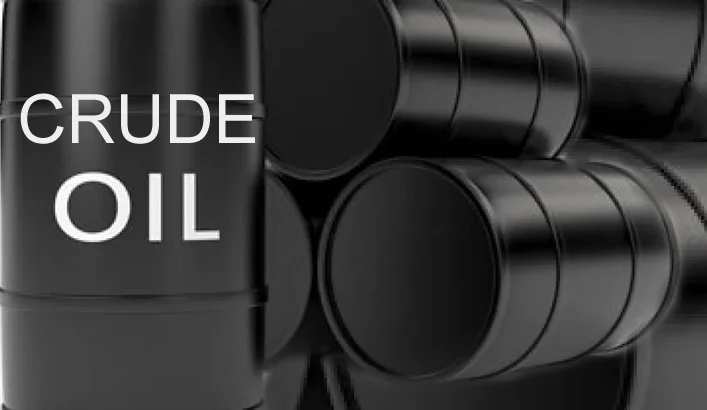
The Federal Government says it is working towards ending crude oil exports as Nigeria expands its refining capacity and positions itself as a major hub for refined petroleum products in Africa.
The Chief Executive of the Nigerian Midstream and Downstream Petroleum Regulatory Authority (NMDPRA), Rabiu Umar, disclosed this on Monday at the 49th Nigeria Annual International Conference and Exhibition organised by the Society of Petroleum Engineers (SPE) Nigeria Council in Lagos.
Umar said Nigeria’s growing refining capacity means the country should increasingly process its crude oil locally instead of exporting it in its raw form.
According to him, the emergence of new private and modular refineries is transforming Nigeria from a crude oil exporter and importer of refined petroleum products into a regional refining hub.
He said the government hopes to increase crude oil production to three million barrels per day over the next few years.
Umar explained that the goal is for the entire volume of crude produced to be refined within Nigeria before being exported as finished petroleum products.
He described the transition as a major shift that would strengthen integration across the upstream, midstream and downstream segments of the petroleum industry.
According to him, exporting refined petroleum products instead of crude oil will enable Nigeria to generate greater economic value from its natural resources.
The NMDPRA chief executive said the authority is working closely with the Nigerian Upstream Petroleum Regulatory Commission (NUPRC) to enforce the domestic crude supply obligation.
He described the policy as critical to ensuring adequate feedstock for the country’s expanding refining industry.
Umar said increased domestic refining would also create additional value across the gas and petrochemical sectors.
He identified energy security, gas expansion and regulatory excellence as key priorities for the authority.
According to him, the NMDPRA is working to maintain sufficient petroleum product reserves across the country to protect against supply disruptions and price volatility.
He said the agency is not only focused on keeping products at coastal depots but also ensuring they are stored closer to key markets.
The authority is also developing a strategic stock management framework that would allow timely product releases to stabilise prices during periods of supply pressure.
Umar added that the agency is removing bottlenecks affecting the development of midstream infrastructure, including pipelines, depots and strategic storage terminals.
He said the NMDPRA is collaborating with the Nigerian National Petroleum Company Limited (NNPC Ltd.) under the Petroleum Industry Act to rehabilitate critical infrastructure, improve asset integrity, sustain throughput and reduce operational losses.
On regulation, Umar said the authority is working to create a more predictable business environment by reducing bureaucratic delays and accelerating regulatory approvals.
He stressed that investors should be able to predict timelines for obtaining licences once all regulatory conditions have been met.
According to him, modern regulation should focus on enabling investment rather than creating unnecessary obstacles.
The NMDPRA chief executive also disclosed that Nigeria is seeking to strengthen its position in the West African petroleum products market by developing a regional pricing benchmark.
He said the initiative is being pursued in collaboration with other West African regulators and S&P Global Commodity Insights.
According to Umar, the objective is to establish common fuel specifications across the region to facilitate cross-border trade and position Nigeria as a regional trading hub.
He urged industry stakeholders to focus on implementing existing policies instead of developing new strategies.
Meanwhile, the Chief Executive of the Nigerian Upstream Petroleum Regulatory Commission (NUPRC), Oritsemeyiwa Eyesan, said collaboration remains essential to the growth of Nigeria’s oil and gas industry.
Eyesan said geopolitical developments, climate concerns, technological innovation, artificial intelligence, changing investment priorities and rising global energy demand are reshaping the energy sector.
She noted that the theme of this year’s conference reflects the realities confronting the industry and emphasised the importance of collaboration among regulators, government agencies, investors, operators and service providers.
According to her, discussions at previous editions of the conference have contributed to shaping reforms in Nigeria’s upstream petroleum sector.
Also speaking, Chairman of the Society of Petroleum Engineers Nigeria Council, Francis Nwaochie, said Nigeria’s energy future depends not only on its natural resources but also on its ability to strengthen institutions, attract investment and develop practical solutions to industry challenges.
Nwaochie said Nigeria possesses abundant hydrocarbon resources, a growing gas economy, resilient indigenous operators, skilled professionals and an expanding technology ecosystem.
He added that recent initiatives, including the 2025 oil and gas licensing round, the Decade of Gas programme and the Federal Government’s plan to settle verified debts owed to power generation companies and gas suppliers through a N4 trillion government-backed bond, demonstrate growing momentum towards greater investment and stability.
He said the industry’s resilience should translate into higher oil production, increased gas commercialisation, improved ease of doing business, stronger regulatory coordination, deeper local content and greater access to long-term capital.