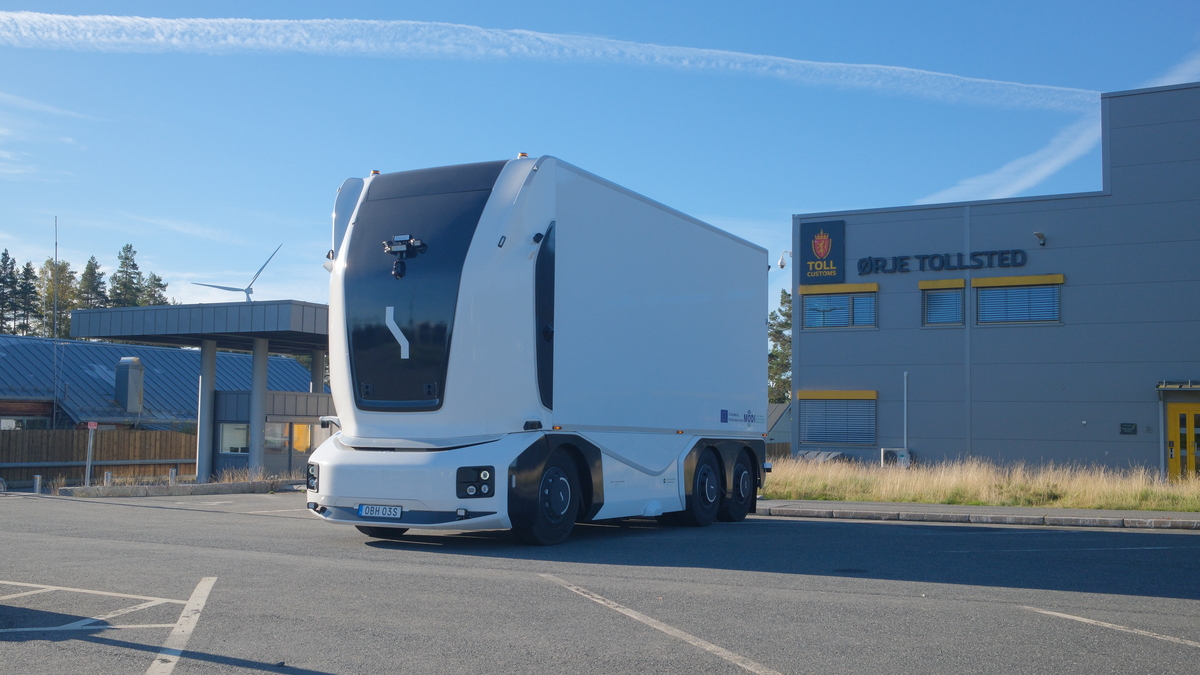
Autonomous transport company Einride and supermarket chain Lidl have deployed what they describe as Germany’s first cab-less autonomous truck in regular operation on public roads, marking an important commercial test for driverless freight technology.
Unlike conventional autonomous trucks that retain a driver’s cab even when operating automatically, Einride’s vehicle has no physical driving compartment.
The truck has entered regular service transporting goods as part of Lidl’s logistics operations, according to Reuters.
The deployment represents an important transition for autonomous vehicle technology.
Rather than demonstrating a prototype at a test facility, the companies are attempting to integrate the vehicle into an actual commercial supply chain.
Why Removing the Cab Matters
Most self-driving trucks being developed around the world still resemble conventional heavy vehicles.
That provides flexibility because a human driver can take control when required.
Einride has pursued a different approach.
Removing the cab allows the company to design a vehicle specifically around autonomous freight movement rather than adapting technology to a truck originally built for humans.
Potential benefits include reduced vehicle weight, different cargo configurations and potentially lower operating costs.
But removing the driver also raises the technological stakes.
The vehicle must be capable of safely navigating roads and responding to unexpected conditions without somebody sitting behind a steering wheel.
Logistics Could Be Autonomous Technology’s Biggest Market
Much of the public discussion about self-driving vehicles has focused on robotaxis.
Freight transportation could prove equally significant.
Truck drivers frequently operate long routes, while logistics companies face pressure to reduce delivery times and costs.
Autonomous vehicles could eventually allow goods to move for longer periods without the same limitations associated with human driving hours.
Electric autonomous trucks could also reduce fuel costs and emissions, particularly on predictable logistics routes between warehouses, distribution centres and industrial facilities.
That makes retailers such as Lidl natural early customers.
Their supply chains involve large volumes of goods moving repeatedly between established locations.
Commercial Deployment Is the Real Test
Autonomous vehicle companies have conducted trials for years.
The harder challenge has always been converting demonstrations into commercially sustainable operations.
Companies must prove that autonomous vehicles are not only technically capable but also sufficiently reliable and economical to replace or supplement conventional fleets.
Germany presents an especially interesting environment for that test because of the country’s large manufacturing and logistics industries.
Success could encourage other European retailers, manufacturers and freight operators to adopt similar systems.
Human Drivers Won’t Disappear Immediately
Driverless trucks also raise inevitable questions about employment.
Road freight remains a major source of employment globally.
But widespread automation is unlikely to happen overnight.
Regulatory requirements, vehicle costs, technological limitations and the complexity of urban roads mean human drivers are likely to remain essential across large parts of the freight industry for years.
The earliest autonomous deployments are more likely to concentrate on highly predictable routes.
Einride and Lidl’s German operation nevertheless represents an important milestone.
Autonomous trucking is gradually moving from technology demonstration to commercial infrastructure — and the disappearance of the driver’s cab makes that transition increasingly difficult to ignore.