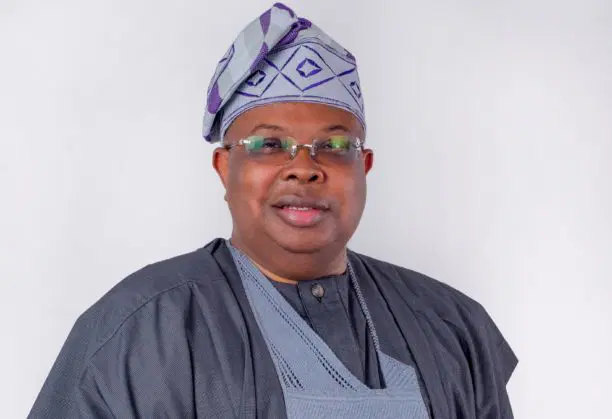
The Federal Government has ruled out any immediate increase in electricity tariffs, saying its focus is to improve power supply, achieve universal metering and ensure consumers pay only for the electricity they consume.
The Minister of Power, Joseph Tegbe, disclosed this on Friday during a media roundtable on the resetting of Nigeria’s power sector in Lagos.
Tegbe said there was no policy by the current administration to increase electricity tariffs beyond existing levels, stressing that improving service delivery remains the government’s immediate priority.
“First, there is no policy by this administration to increase electricity tariffs beyond its current level. Our priority is not tariff increase in the immediate term. Our priority is service improvement, universal metering and ensuring Nigerians pay only for the electricity they actually consume,” the minister said.
He added that the government would continue to explore measures to protect vulnerable electricity consumers while improving the financial sustainability of the Nigerian Electricity Supply Industry.
According to Tegbe, the government’s approach forms part of a broader plan to reset the power sector through reforms aimed at improving electricity supply, strengthening the national grid, restoring investor confidence and creating a financially sustainable electricity market.
He said the reforms were built around the implementation of the Electricity Act, which has allowed states to develop electricity markets based on their economic needs.
The minister also disclosed that the Federal Government was advancing a Power Sector Bond initiative aimed at settling legacy obligations owed to power generation companies, gas suppliers and other market participants.
Tegbe said the Presidential Metering Initiative remains a major component of the sector reforms, with the government working towards universal metering to eliminate estimated billing and improve transparency in electricity charges.
He announced the launch of the Power Force initiative, which will engage 5,000 Nigerian youths in meter installation across the country while providing technical training through the National Power Training Institute of Nigeria.
The minister further disclosed that Nigeria had maintained electricity generation of about 5,000 megawatts over the previous two weeks, attributing the improvement to better operational coordination, increased plant availability and stronger cooperation across the electricity value chain.
“Although much work remains, enhanced operational coordination, improved plant availability and better engagement across the value chain are beginning to produce measurable improvements,” he said.
However, Tegbe stressed that increasing electricity generation alone would not resolve Nigeria’s power challenges, noting that improvements are required across generation, transmission, distribution and market payment systems.
As part of the sector transformation programme, the minister announced plans for a comprehensive technical audit of the national transmission network and the harmonisation of federal and state electricity regulations.
He also highlighted planned investments in major transmission corridors, including the Lagos, Enugu–Port Harcourt and Abuja–Kaduna–Kano routes, as well as the implementation of a “Super Grid Programme” to strengthen Nigeria’s transmission infrastructure.
Tegbe expressed optimism that Nigerians would begin to experience noticeable improvements in electricity availability within the coming months.
He said the government’s long-term goals include building a stronger grid, reducing technical losses, improving market discipline, expanding electricity access and increasing operational capacity within the next two to three years.