Entrepreneurs, investors, and professionals in Nigeria are set to benefit from easier access to the Caribbean after Grenada announced visa-free entry for Nigerians, in a move designed to deepen economic and business relations between both countries.
The development was disclosed in Lagos by Grenada’s Honorary Consul in Nigeria, Bidemi Sonoiki, following a recent working visit to the Caribbean nation. The policy is expected to take effect in July.
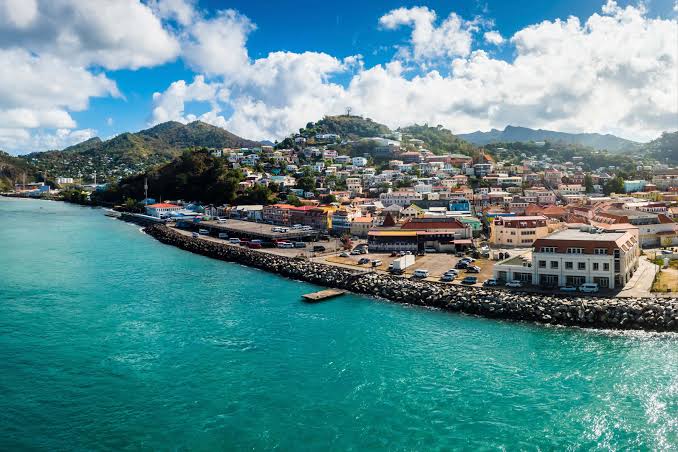
Grenada, an island nation in the eastern Caribbean made up of Grenada, Carriacou, and Petite Martinique, is widely known as the “Spice Isle” due to its production of nutmeg and other spices.
According to Sonoiki, the visa-free arrangement is aimed at encouraging investment exploration, easing business travel, and expanding educational and commercial exchanges between Nigeria and Grenada.
“Today, Grenada presents a compelling opportunity for Nigerian investors and entrepreneurs looking to access new markets beyond Africa,” he said.
He added that growing ties between Africa and the Caribbean are creating a new economic corridor with potential across trade, tourism, education, and investment.
“We are witnessing the emergence of a strategic economic corridor between Africa and the Caribbean, one that offers immense opportunities for trade, investment, tourism, education and business growth,” he said.
Sonoiki also revealed that discussions are ongoing around establishing direct air connectivity between Nigeria and the Caribbean, which he described as essential for boosting cross-border commerce and investment flows.
“Connectivity is one of the most important enablers of economic growth. Establishing direct links between Nigeria and the Caribbean would unlock enormous opportunities for trade, investment and tourism,” he said.
Economic relations between both countries have strengthened since the establishment of the Grenadian Honorary Consulate in Lagos in 2022, leading to increased government engagement, private-sector partnerships, and the creation of the Nigeria-Grenada Chamber of Commerce.
Both nations are also exploring cooperation in sectors including tourism, agriculture, healthcare, logistics, fintech, education, renewable energy, and real estate, as part of efforts to diversify economic engagement beyond traditional markets.
Grenada operates within the Eastern Caribbean economic system, sharing a central bank and currency—the East Caribbean dollar—with other members of the Organisation of Eastern Caribbean States (OECS).
While tourism remains the backbone of Grenada’s economy, the country continues to face fiscal pressures, with a debt-to-GDP ratio reported at 77.53% according to Eastern Caribbean Central Bank data.
Despite these challenges, interest from Nigerians in Grenada has risen sharply. In the fourth quarter of 2025, Nigeria reportedly accounted for about 16% of all applications for Grenadian citizenship, making it the highest source country.
The visa-free policy is expected to further accelerate business mobility and strengthen Grenada’s positioning as a gateway for African investors seeking entry into Caribbean markets.