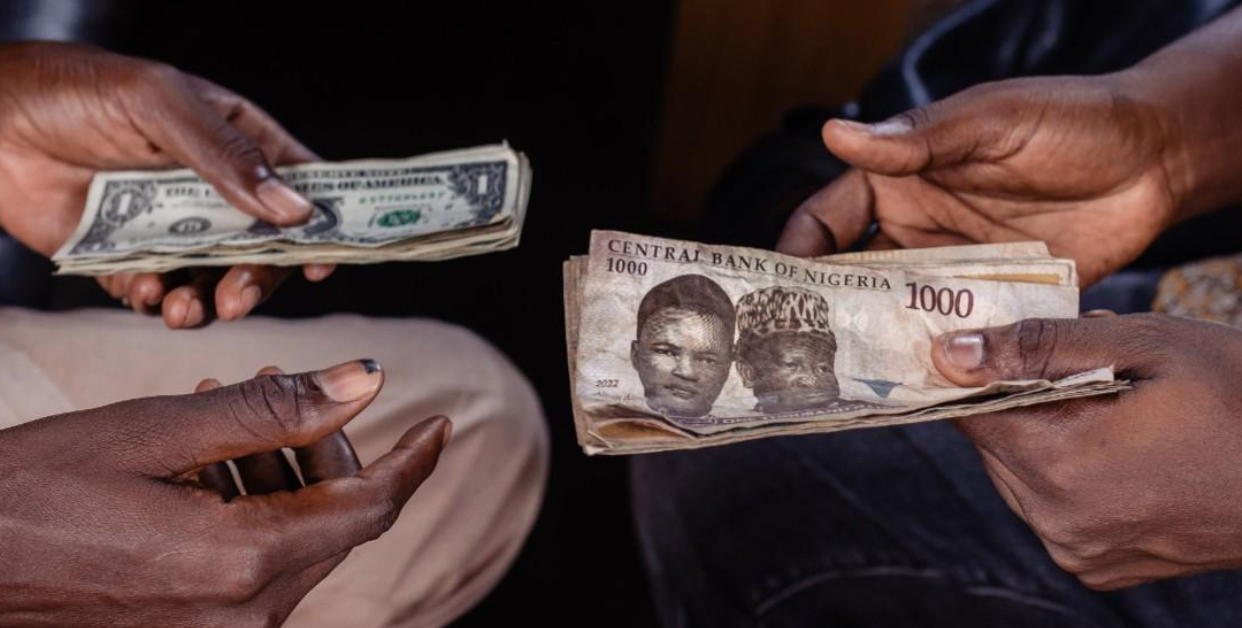
Nigeria’s naira has come under renewed pressure in the foreign exchange market, weakening to approximately N1,394 per dollar in the official market as concerns over foreign currency demand, declining external reserves and economic uncertainty continue to affect the country’s currency outlook.
The depreciation has increased attention on the Central Bank of Nigeria’s foreign exchange management strategy, particularly as businesses and investors assess the country’s economic direction ahead of the 2027 general elections.
According to reports published by The Punch and financial market analysts, the naira exchanged at approximately N1,394 to the dollar at the official market on Friday, November 20.
The currency also weakened in the parallel market, where the dollar traded at approximately N1,460 on Sunday.
The latest movement represents a continuation of the pressure experienced in recent trading sessions, with the naira losing ground against the dollar despite interventions by the monetary authorities.
Financial market analysts have identified several factors contributing to the development, including increased demand for foreign currency, uncertainty surrounding the domestic economic outlook and the narrowing difference between Nigerian interest rates and international rates.
The approaching Christmas season is also expected to increase demand for foreign currency as businesses and individuals prepare for higher spending and international transactions.
Importers typically require additional foreign exchange to purchase goods, raw materials and other supplies from international markets.
When demand rises faster than available foreign currency supply, pressure can build on the exchange rate.
Another factor attracting attention is Nigeria’s foreign exchange reserves.
According to Cordros Securities, the country’s gross external reserves declined from approximately $55.26 billion on October 27 to $54.65 billion on November 19.
The reduction of about $610 million has raised concerns about the country’s ability to maintain sufficient foreign currency buffers while supporting market liquidity.
The CBN has reportedly supplied significant amounts of foreign exchange to the market since September in an effort to improve dollar availability and support exchange-rate stability.
However, analysts believe that sustained demand and changing international financial conditions could continue to influence the naira.
The depreciation also comes at a time when investors are monitoring Nigeria’s monetary policy direction.
The CBN is holding its November Monetary Policy Committee meeting, with financial analysts projecting that the committee could retain the benchmark interest rate at 23 per cent.
A decision to maintain higher interest rates could help preserve the attractiveness of naira-denominated investments and discourage excessive capital outflows.
Nevertheless, elevated interest rates can increase borrowing costs for businesses and households, creating additional pressure on economic activity.
For Nigerian businesses, currency instability presents several challenges.
Manufacturers that depend on imported machinery, chemicals, packaging materials and production inputs may face higher operating costs when the naira loses value.
These increases can eventually be transferred to consumers through higher prices for finished goods and services.
Small businesses are particularly exposed because many lack sufficient financial resources to absorb sudden exchange-rate movements.
The development also has implications for international investors, who consider currency stability when assessing the returns on investments in Nigeria.
A weaker naira can reduce the dollar value of investment returns when funds are converted into foreign currencies.
However, a sustained improvement in foreign exchange supply, increased export earnings and stronger investor confidence could help reduce some of these pressures.
Nigeria’s oil and gas exports remain an important source of foreign exchange, making crude production levels and international oil prices significant factors in the country’s currency outlook.
The government and monetary authorities therefore face the challenge of improving foreign currency inflows while maintaining confidence in the domestic market.
The latest depreciation highlights the importance of exchange-rate stability to Nigeria’s broader economic recovery, particularly as businesses prepare for the final weeks of the year.