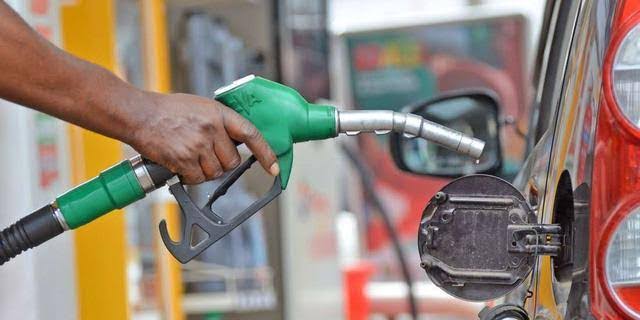
Nigerians consumed about 4.93 billion litres of Premium Motor Spirit (petrol) in the first quarter of 2026, according to an analysis of downstream data released by the Nigerian Midstream and Downstream Petroleum Regulatory Authority.
The figures, drawn from the agency’s monthly downstream fact sheet, show that the volume represents a 7.4 per cent increase compared with the 4.59 billion litres recorded during the same period in 2025.
The data tracks petrol volumes trucked into the domestic market and reflects demand patterns across the country.
However, despite the overall year-on-year increase, petrol consumption showed a steady decline within the quarter. Average daily consumption fell from 60.2 million litres in January to 56.9 million litres in February and dropped further to 47.3 million litres in March.
A breakdown of the monthly figures shows that Nigerians consumed approximately 1.866 billion litres of petrol in January 2026. Consumption fell to about 1.593 billion litres in February and declined further to 1.466 billion litres in March.
The monthly consumption estimates were calculated by multiplying the average daily usage by the number of days in each month. For example, January’s daily consumption of 60.2 million litres multiplied by 31 days produced a total of about 1.87 billion litres.
Similarly, February’s daily average of 56.9 million litres multiplied by 28 days resulted in about 1.59 billion litres, while March’s 47.3 million litres per day multiplied by 31 days yielded roughly 1.47 billion litres.
When combined, the three months produced a total consumption of about 4.93 billion litres for the quarter.
By comparison, Nigerians consumed about 4.586 billion litres in the first quarter of 2025. The breakdown for that period showed consumption of about 1.597 billion litres in January, 1.411 billion litres in February and 1.578 billion litres in March.
This means that first-quarter petrol consumption in 2026 exceeded the 2025 figure by roughly 339 million litres.
A closer monthly comparison shows mixed performance. January 2026 recorded a 16.8 per cent increase compared with January 2025, while February 2026 consumption rose by 12.9 per cent year-on-year.
However, March 2026 recorded a 7.1 per cent decline compared with March 2025, suggesting that fuel demand may be beginning to respond more strongly to rising pump prices.
Within the quarter, petrol consumption fell significantly from month to month. Between January and February, volumes declined by about 273 million litres, representing a 14.6 per cent drop.
Consumption dropped again between February and March by about 127 million litres, representing an additional 8 per cent decline. Overall, petrol usage fell by about 400 million litres between January and March, a cumulative decline of roughly 21.4 per cent.
Analysts say the trend highlights the growing relationship between petrol demand and pricing in Nigeria’s deregulated downstream market.
Since the removal of fuel subsidy, pump prices have become more closely tied to global crude oil prices, exchange rate movements, and domestic refining costs.
Market observers also point to pricing changes from the Dangote Refinery, which reportedly increased petrol prices multiple times to about ₦1,275 per litre in March.
Higher demand in January was attributed to stronger product availability and increased economic activity at the start of the year. However, the sharp decline in March suggests that rising pump prices may be forcing households, transport operators and businesses to cut back on fuel consumption.
Some consumers have also begun exploring alternatives such as compressed natural gas, while others have reduced discretionary travel.
The figures also reflect ongoing adjustments in the downstream market as domestic refining capacity improves and imported petrol volumes decline.
Industry analysts say that while supply stability is gradually improving with local refining, affordability remains the key factor shaping consumption patterns.
They note that in a deregulated market, higher supply does not necessarily lead to higher demand if retail prices remain elevated.
Going forward, petrol consumption trends are expected to continue reflecting pump price movements, inflationary pressures and the pace of economic activity across the country.