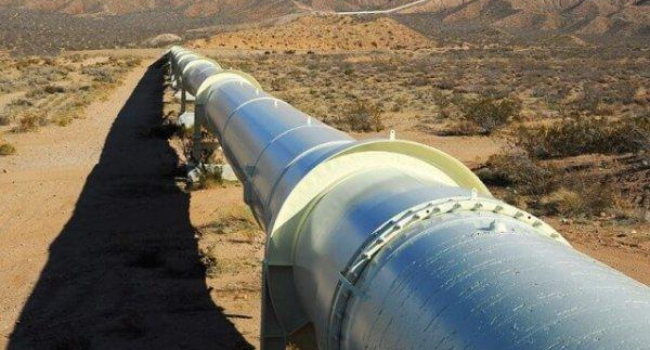
Nigeria and Morocco are expected to sign the intergovernmental agreement (IGA) for the proposed $25 billion African Atlantic Gas Pipeline later this year, marking a major step forward for one of Africa’s most ambitious energy infrastructure projects.
The announcement was made by Amina Benkhadra, head of the National Office of Hydrocarbons and Mines (ONHYM) in Morocco.
Also known as the Nigeria–Morocco Gas Pipeline, the project was first agreed upon about a decade ago and is designed to stretch roughly 6,900 kilometres along a hybrid offshore-onshore route across the West African coastline.
When completed, the pipeline is expected to have a maximum capacity of 30 billion cubic metres (bcm) of natural gas. About 15 bcm is projected to supply Morocco while also supporting gas exports to Europe.
The initiative has the backing of the Economic Community of West African States (ECOWAS) and is seen as a major regional integration project aimed at strengthening energy security and economic cooperation across West Africa.
According to Benkhadra, once the IGA is signed, a high-level governing authority for the pipeline will be established in Nigeria. The body will include ministerial representatives from the 13 participating countries and will oversee political and regulatory coordination for the project.
She added that key preparatory stages—including the feasibility study and the front-end engineering design (FEED)—have already been completed.
To drive the next phase of development, a dedicated project company will be established in Morocco as a joint venture between ONHYM and the Nigerian National Petroleum Company Limited (NNPC). The entity will oversee the project’s execution, financing arrangements, and construction.
Benkhadra said the pipeline would help Morocco position itself as a strategic energy bridge between Africa and Europe while boosting regional development.
Beyond export opportunities, the project is expected to expand electricity generation capacity across West Africa and stimulate industrial and mining activities in participating countries.
The pipeline will be constructed in phases. Early segments will connect Morocco to gas fields in Mauritania and Senegal, while another link will connect Ghana and Côte d’Ivoire further south. A final segment will then connect Ghana to Nigeria’s gas reserves.
First gas from the initial phases is expected to flow by 2031.
Benkhadra explained that the project will not depend on a single final investment decision. Instead, each segment is structured to function as a standalone system, allowing construction and economic benefits to begin earlier.
Although no final funding commitments have been secured, she noted that the project company will lead efforts to raise financing through a combination of equity and debt.
“The project is attracting strong interest due to its scale, its phased structure, and its strategic positioning,” Benkhadra said.